 Add to Chrome
 Add to Firefox
 Add to Edge
Interpreting Agentic Systems: Beyond Model Explanations to System-Level Accountability
Jan 23, 2026
Agentic systems have transformed how Large Language Models (LLMs) can be leveraged to create autonomous systems with goal-directed behaviors, consisting of multi-step planning and the ability to interact with different environments. These systems differ fundamentally from traditional machine learning models, both in architecture and deployment, introducing unique AI safety challenges, including goal misalignment, compounding decision errors, and coordination risks among interacting agents, that necessitate embedding interpretability and explainability by design to ensure traceability and accountability across their autonomous behaviors. Current interpretability techniques, developed primarily for static models, show limitations when applied to agentic systems. The temporal dynamics, compounding decisions, and context-dependent behaviors of agentic systems demand new analytical approaches. This paper assesses the suitability and limitations of existing interpretability methods in the context of agentic systems, identifying gaps in their capacity to provide meaningful insight into agent decision-making. We propose future directions for developing interpretability techniques specifically designed for agentic systems, pinpointing where interpretability is required to embed oversight mechanisms across the agent lifecycle from goal formation, through environmental interaction, to outcome evaluation. These advances are essential to ensure the safe and accountable deployment of agentic AI systems.

Approaches to Responsible Governance of GenAI in Organizations
Apr 23, 2025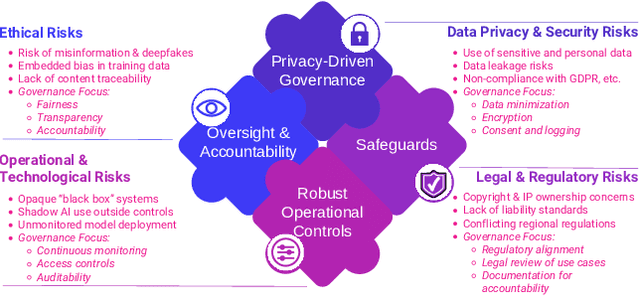
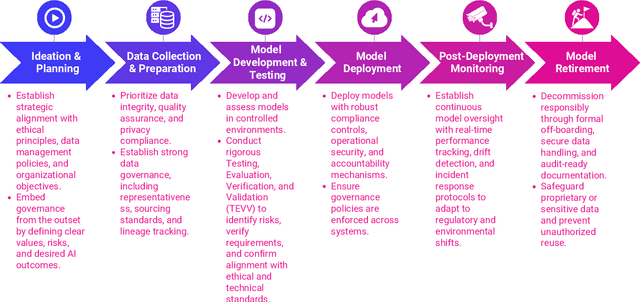
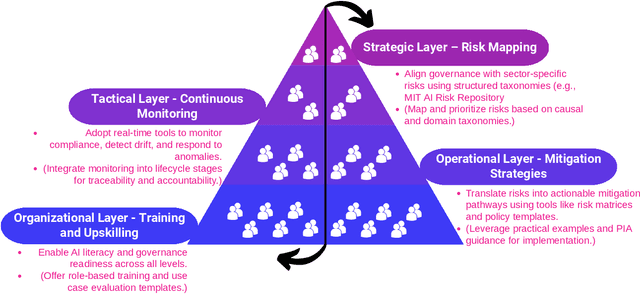
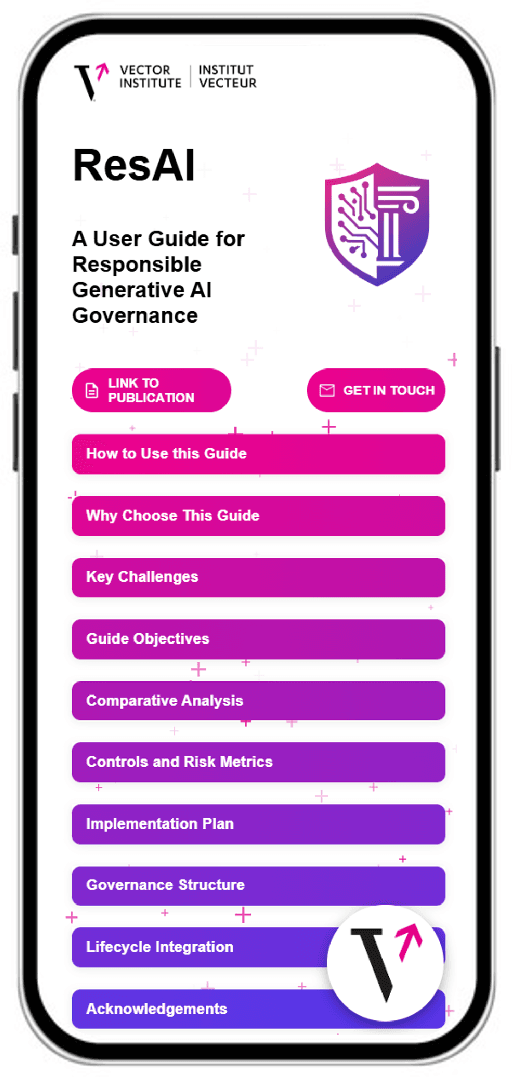
The rapid evolution of Generative AI (GenAI) has introduced unprecedented opportunities while presenting complex challenges around ethics, accountability, and societal impact. This paper draws on a literature review, established governance frameworks, and industry roundtable discussions to identify core principles for integrating responsible GenAI governance into diverse organizational structures. Our objective is to provide actionable recommendations for a balanced, risk-based governance approach that enables both innovation and oversight. Findings emphasize the need for adaptable risk assessment tools, continuous monitoring practices, and cross-sector collaboration to establish trustworthy GenAI. These insights provide a structured foundation and Responsible GenAI Guide (ResAI) for organizations to align GenAI initiatives with ethical, legal, and operational best practices.