 Add to Chrome
 Add to Firefox
 Add to Edge
Enhanced Polarization Locking in VCSELs
Apr 02, 2026
While optical injection locking (OIL) of vertical-cavity surface-emitting lasers (VCSELs) has been widely studied in the past, the polarization dynamics of OIL have received far less attention. Recent studies suggest that polarization locking via OIL could enable novel computational applications such as polarization-encoded Ising computers. However, the inherent polarization preference and limited polarization switchability of VCSELs hinder their use for such purposes. To address these challenges, we fabricate VCSELs with tailored oxide aperture designs and combine these with bias current tuning to study the overall impact on polarization locking. Experimental results demonstrate that this approach reduces the required injection power (to as low as 3.6 μW) and expands the locking range. To investigate the impact of the approach, the spin-flip model (SFM) is used to analyze the effects of amplitude anisotropy and bias current on polarization locking, demonstrating strong coherence with experimental results.

LLaVA-Pose: Enhancing Human Pose and Action Understanding via Keypoint-Integrated Instruction Tuning
Jun 26, 2025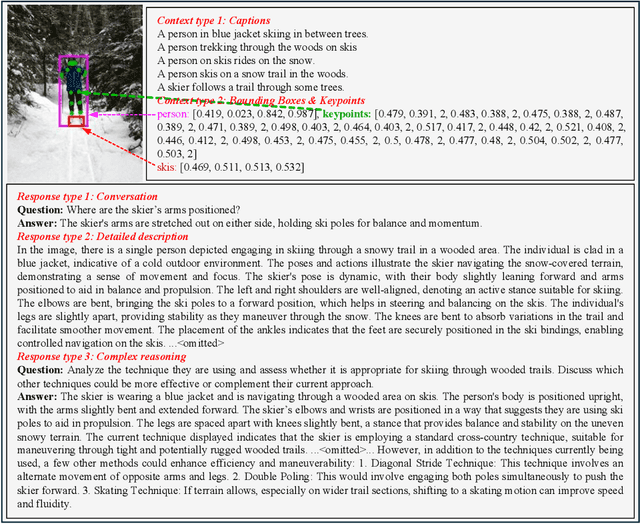
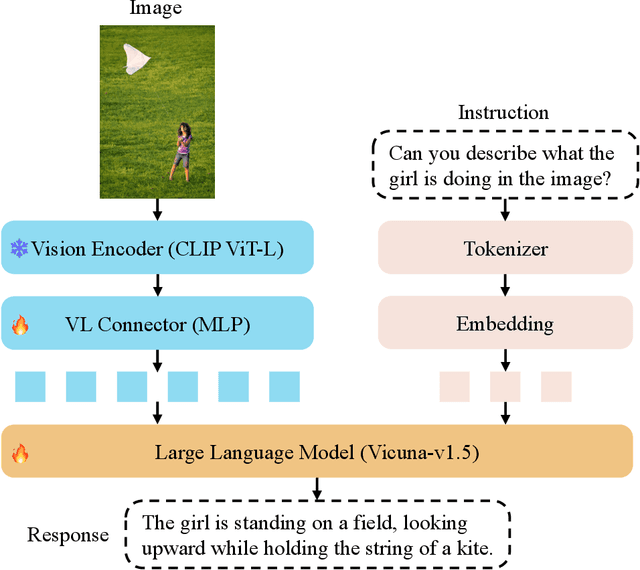
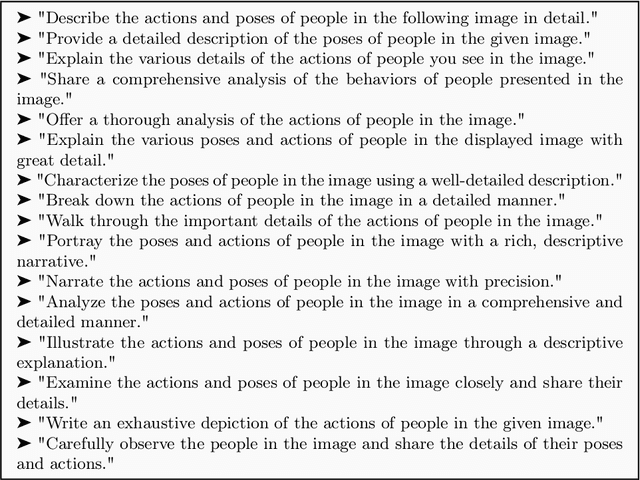
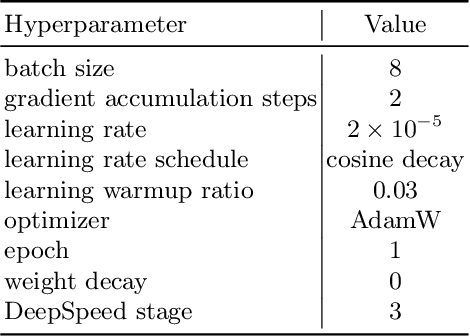
Current vision-language models (VLMs) are well-adapted for general visual understanding tasks. However, they perform inadequately when handling complex visual tasks related to human poses and actions due to the lack of specialized vision-language instruction-following data. We introduce a method for generating such data by integrating human keypoints with traditional visual features such as captions and bounding boxes, enabling more precise understanding of human-centric scenes. Our approach constructs a dataset comprising 200,328 samples tailored to fine-tune models for human-centric tasks, focusing on three areas: conversation, detailed description, and complex reasoning. We establish an Extended Human Pose and Action Understanding Benchmark (E-HPAUB) to assess model performance on human pose and action understanding. We fine-tune the LLaVA-1.5-7B model using this dataset and evaluate our resulting LLaVA-Pose model on the benchmark, achieving significant improvements. Experimental results show an overall improvement of 33.2% compared to the original LLaVA-1.5-7B model. These findings highlight the effectiveness of keypoint-integrated data in enhancing multimodal models for human-centric visual understanding. Code is available at https://github.com/Ody-trek/LLaVA-Pose.
Keypoints-Integrated Instruction-Following Data Generation for Enhanced Human Pose Understanding in Multimodal Models
Sep 14, 2024Current multimodal models are well-suited for general visual understanding tasks. However, they perform inadequately when handling complex visual tasks related to human poses and actions, primarily due to the lack of specialized instruction-following data. We introduce a new method for generating such data by integrating human keypoints with traditional visual features like captions and bounding boxes. Our approach produces datasets designed for fine-tuning models to excel in human-centric activities, focusing on three specific types: conversation, detailed description, and complex reasoning. We fine-tuned the LLaVA-7B model with this novel dataset, achieving significant improvements across various human pose-related tasks. Experimental results show an overall improvement of 21.18% compared to the original LLaVA-7B model. These findings demonstrate the effectiveness of keypoints-assisted data in enhancing multimodal models.