 Add to Chrome
 Add to Firefox
 Add to Edge
Guardrailed Elasticity Pricing: A Churn-Aware Forecasting Playbook for Subscription Strategy
Dec 24, 2025
This paper presents a marketing analytics framework that operationalizes subscription pricing as a dynamic, guardrailed decision system, uniting multivariate demand forecasting, segment-level price elasticity, and churn propensity to optimize revenue, margin, and retention. The approach blends seasonal time-series models with tree-based learners, runs Monte Carlo scenario tests to map risk envelopes, and solves a constrained optimization that enforces business guardrails on customer experience, margin floors, and allowable churn. Validated across heterogeneous SaaS portfolios, the method consistently outperforms static tiers and uniform uplifts by reallocating price moves toward segments with higher willingness-to-pay while protecting price-sensitive cohorts. The system is designed for real-time recalibration via modular APIs and includes model explainability for governance and compliance. Managerially, the framework functions as a strategy playbook that clarifies when to shift from flat to dynamic pricing, how to align pricing with CLV and MRR targets, and how to embed ethical guardrails, enabling durable growth without eroding customer trust.

Guardrailed Uplift Targeting: A Causal Optimization Playbook for Marketing Strategy
Dec 22, 2025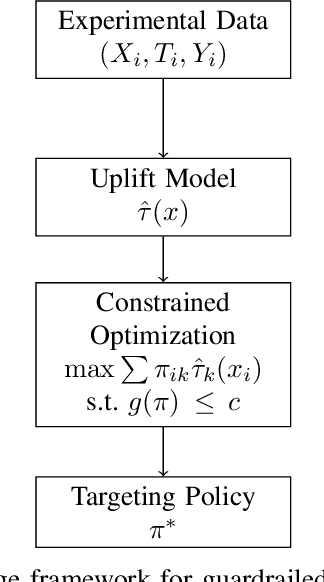
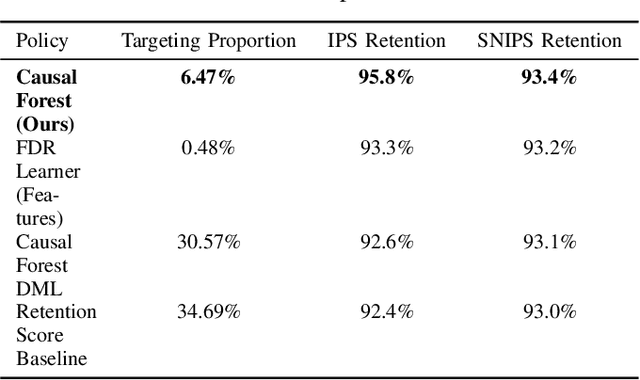
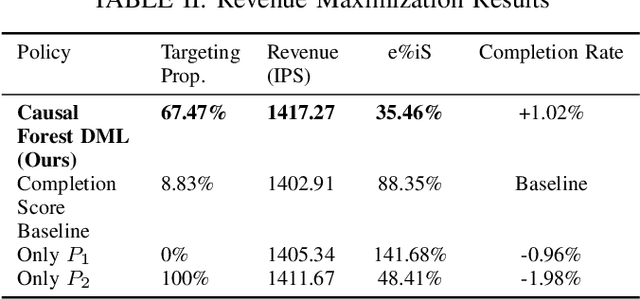
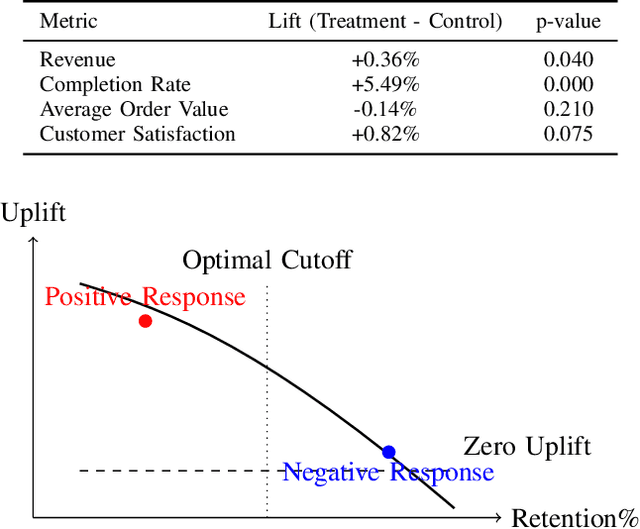
This paper introduces a marketing decision framework that converts heterogeneous-treatment uplift into constrained targeting strategies to maximize revenue and retention while honoring business guardrails. The approach estimates Conditional Average Treatment Effects (CATE) with uplift learners and then solves a constrained allocation to decide who to target and which offer to deploy under limits such as budget or acceptable sales deterioration. Applied to retention messaging, event rewards, and spend-threshold assignment, the framework consistently outperforms propensity and static baselines in offline evaluations using uplift AUC, Inverse Propensity Scoring (IPS), and Self-Normalized IPS (SNIPS). A production-scale online A/B test further validates strategic lift on revenue and completion while preserving customer-experience constraints. The result is a reusable playbook for marketers to operationalize causal targeting at scale, set guardrails, and align campaigns with strategic KPIs.
GeoSense-AI: Fast Location Inference from Crisis Microblogs
Dec 20, 2025
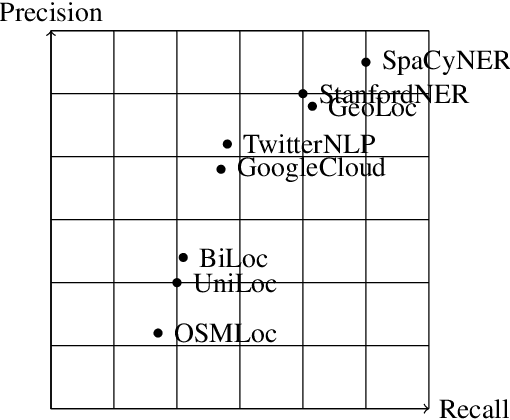
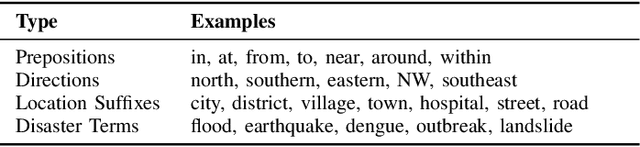
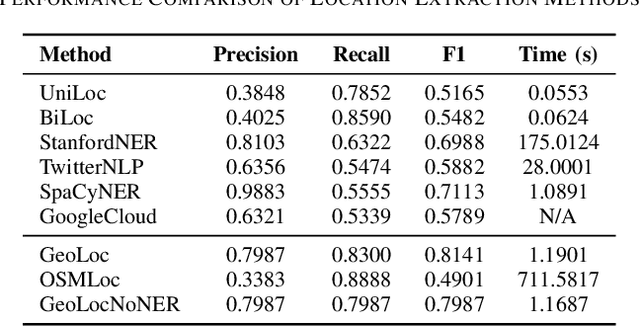
This paper presents an applied AI pipeline for realtime geolocation from noisy microblog streams, unifying statistical hashtag segmentation, part-of-speech-driven proper-noun detection, dependency parsing around disaster lexicons, lightweight named-entity recognition, and gazetteer-grounded disambiguation to infer locations directly from text rather than sparse geotags. The approach operationalizes information extraction under streaming constraints, emphasizing low-latency NLP components and efficient validation against geographic knowledge bases to support situational awareness during emergencies. In head to head comparisons with widely used NER toolkits, the system attains strong F1 while being engineered for orders-of-magnitude faster throughput, enabling deployment in live crisis informatics settings. A production map interface demonstrates end-to-end AI functionality ingest, inference, and visualization--surfacing locational signals at scale for floods, outbreaks, and other fastmoving events. By prioritizing robustness to informal text and streaming efficiency, GeoSense-AI illustrates how domain-tuned NLP and knowledge grounding can elevate emergency response beyond conventional geo-tag reliance.