 Add to Chrome
 Add to Firefox
 Add to Edge
Inverse Critical Experiment Design via Gradient Optimization and a Multigroup Attention-Based Neural Network Architecture
Jun 01, 2026
The validation of advanced nuclear reactor designs and fuel concepts requires critical experiments with high neutronic similarity to the target technology. Neutronic similarity is quantified by the correlation coefficient $c_k$, which captures the shared bias in $k_\text{eff}$ induced by uncertainties in nuclear data. Generally, a $c_k\geq0.9$ is needed for an experiment to be sufficiently similar to a target technology. This work presents a methodology for the inverse design of critical experiments. Deep neural network surrogate modeling and nonparametric gradient optimization are used to generate experiment geometries that maximize $c_k$. A deep neural network is trained on OpenMC-calculated sensitivity vectors for grid-based critical experiment geometries. The model architecture combines a U-Net convolutional encoder-decoder with a novel multigroup attention pooling layer, introduced to capture the differing spatial dependencies of sensitivities. Multigroup attention pooling is shown to achieve better performance than traditional pooling, as well as interpretable internal behavior. The differentiability of the surrogate enables gradient-based optimization of the full combinatorial design space, allowing $c_k$ to be maximized by directly changing the material assignment of each position in the geometry grid. The method is applied to the validation of the TN-Americas TN-LC transportation cask with HALEU fuel, for which existing critical experiment coverage is limited. The optimization procedure is shown to produce experiment geometries achieving $c_k$ scores of 0.97757, 0.81324, and 0.93276 for three configurations of interest. This approach demonstrates the potential of deep learning and gradient optimization to accelerate the development of advanced nuclear technology.

Techno-economic optimization of a heat-pipe microreactor, part I: theory and cost optimization
Dec 17, 2025Microreactors, particularly heat-pipe microreactors (HPMRs), are compact, transportable, self-regulated power systems well-suited for access-challenged remote areas where costly fossil fuels dominate. However, they suffer from diseconomies of scale, and their financial viability remains unconvincing. One step in addressing this shortcoming is to design these reactors with comprehensive economic and physics analyses informing early-stage design iteration. In this work, we present a novel unifying geometric design optimization approach that accounts for techno-economic considerations. We start by generating random samples to train surrogate models, including Gaussian processes (GPs) and multi-layer perceptrons (MLPs). We then deploy these surrogates within a reinforcement learning (RL)-based optimization framework to optimize the levelized cost of electricity (LCOE), all the while imposing constraints on the fuel lifetime, shutdown margin (SDM), peak heat flux, and rod-integrated peaking factor. We study two cases: one in which the axial reflector cost is very high, and one in which it is inexpensive. We found that the operation and maintenance and capital costs are the primary contributors to the overall LCOE particularly the cost of the axial reflectors (for the first case) and the control drum materials. The optimizer cleverly changes the design parameters so as to minimize one of them while still satisfying the constraints, ultimately reducing the LCOE by more than 57% in both instances. A comprehensive integration of fuel and HP performance with multi-objective optimization is currently being pursued to fully understand the interaction between constraints and cost performance.
Multistep Criticality Search and Power Shaping in Microreactors with Reinforcement Learning
Jun 22, 2024
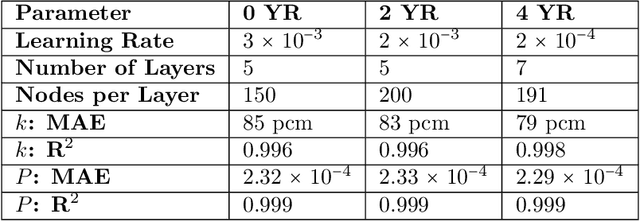


Reducing operation and maintenance costs is a key objective for advanced reactors in general and microreactors in particular. To achieve this reduction, developing robust autonomous control algorithms is essential to ensure safe and autonomous reactor operation. Recently, artificial intelligence and machine learning algorithms, specifically reinforcement learning (RL) algorithms, have seen rapid increased application to control problems, such as plasma control in fusion tokamaks and building energy management. In this work, we introduce the use of RL for intelligent control in nuclear microreactors. The RL agent is trained using proximal policy optimization (PPO) and advantage actor-critic (A2C), cutting-edge deep RL techniques, based on a high-fidelity simulation of a microreactor design inspired by the Westinghouse eVinci\textsuperscript{TM} design. We utilized a Serpent model to generate data on drum positions, core criticality, and core power distribution for training a feedforward neural network surrogate model. This surrogate model was then used to guide a PPO and A2C control policies in determining the optimal drum position across various reactor burnup states, ensuring critical core conditions and symmetrical power distribution across all six core portions. The results demonstrate the excellent performance of PPO in identifying optimal drum positions, achieving a hextant power tilt ratio of approximately 1.002 (within the limit of $<$ 1.02) and maintaining criticality within a 10 pcm range. A2C did not provide as competitive of a performance as PPO in terms of performance metrics for all burnup steps considered in the cycle. Additionally, the results highlight the capability of well-trained RL control policies to quickly identify control actions, suggesting a promising approach for enabling real-time autonomous control through digital twins.