 Add to Chrome
 Add to Firefox
 Add to Edge
CoMedBench: A Multi-Source Benchmark of Synthetic Medical Data Fidelity and Downstream Utility
Aug 13, 2026
Access to clinical data is essential for developing reliable healthcare machine learning systems, but direct use of electronic health records is constrained by privacy regulation, institutional review, data-use agreements, and the risk of re-identification. Synthetic data promises a practical alternative: it can preserve useful statistical and clinical structure while reducing exposure of sensitive patient records. Prior studies often evaluate a single generator, one dataset, or a narrow downstream task, making it difficult to know when synthetic data can support model development and when it fails to preserve task-critical signal. We introduce CoMedBench, a reproducible benchmark that evaluates a family of generators under a common clinical-validity framework and one shared training and evaluation engine, spanning static tabular and temporal downstream tasks on established critical-care datasets. In total the benchmark spans 37 dataset-task pairs across two modalities consists of 20 static tabular and 17 temporal ICU time-series-drawn from seven public data sources: three intensive-care databases (MIMIC-III, MIMIC-IV, and eICU) together with the UCI Machine Learning Repository, the CDC BRFSS diabetes cohort (2015), NHANES (1999-2014), and the pycox survival datasets (GBSG and METABRIC). The benchmark evaluates both statistical fidelity and task utility by comparing models trained and tested across real and synthetic data. In these settings, synthetic training data preserves most of the downstream signal: on tabular tasks the reference generator CoMed-CTGAN retains a mean AUROC utility (the synthetic-to-real performance ratio) of 90.6%, rising to 97.3% for the strongest generator, CoMed-TVAE. Temporal ICU tasks are harder and more generator-sensitive: CoMed-CTGAN retains 81.6% (AUROC) and only 64.0% under the imbalance-sensitive AUPRC, whereas CoMed-TVAE still retains ~95% (AUROC).

American Family Cohort, a data resource description
Sep 22, 2023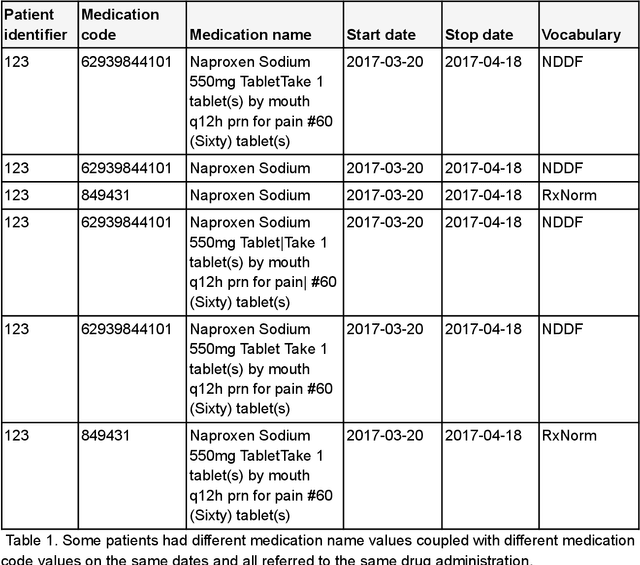

This manuscript is a research resource description and presents a large and novel Electronic Health Records (EHR) data resource, American Family Cohort (AFC). The AFC data is derived from Centers for Medicare and Medicaid Services (CMS) certified American Board of Family Medicine (ABFM) PRIME registry. The PRIME registry is the largest national Qualified Clinical Data Registry (QCDR) for Primary Care. The data is converted to a popular common data model, the Observational Health Data Sciences and Informatics (OHDSI) Observational Medical Outcomes Partnership (OMOP) Common Data Model (CDM). The resource presents approximately 90 million encounters for 7.5 million patients. All 100% of the patients present age, gender, and address information, and 73% report race. Nealy 93% of patients have lab data in LOINC, 86% have medication data in RxNorm, 93% have diagnosis in SNOWMED and ICD, 81% have procedures in HCPCS or CPT, and 61% have insurance information. The richness, breadth, and diversity of this research accessible and research ready data is expected to accelerate observational studies in many diverse areas. We expect this resource to facilitate research in many years to come.