 Add to Chrome
 Add to Firefox
 Add to Edge
Virtual camera detection: Catching video injection attacks in remote biometric systems
Dec 11, 2025
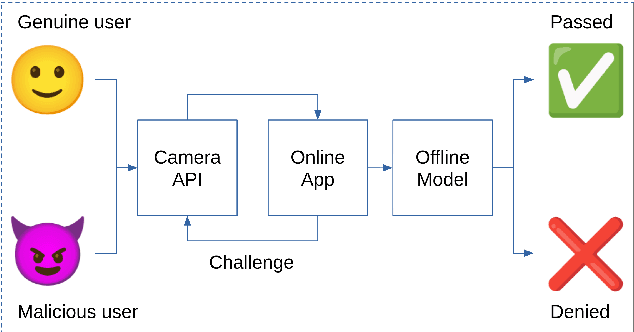
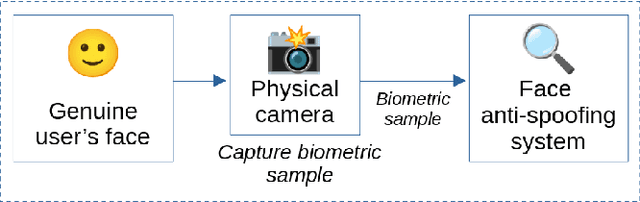
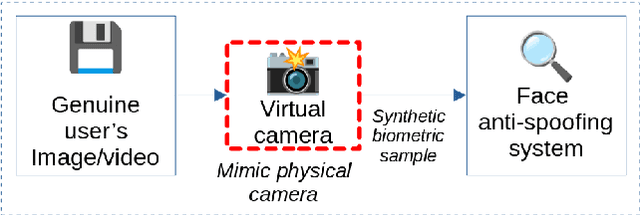
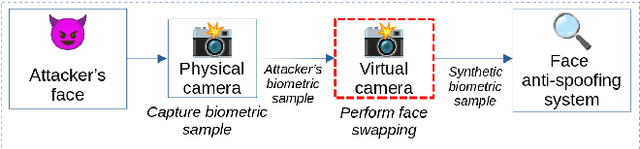
Face anti-spoofing (FAS) is a vital component of remote biometric authentication systems based on facial recognition, increasingly used across web-based applications. Among emerging threats, video injection attacks -- facilitated by technologies such as deepfakes and virtual camera software -- pose significant challenges to system integrity. While virtual camera detection (VCD) has shown potential as a countermeasure, existing literature offers limited insight into its practical implementation and evaluation. This study introduces a machine learning-based approach to VCD, with a focus on its design and validation. The model is trained on metadata collected during sessions with authentic users. Empirical results demonstrate its effectiveness in identifying video injection attempts and reducing the risk of malicious users bypassing FAS systems.

HKR For Handwritten Kazakh & Russian Database
Jul 08, 2020


In this paper, we present a new Russian and Kazakh database (with about 95% of Russian and 5% of Kazakh words/sentences respectively) for offline handwriting recognition. A few pre-processing and segmentation procedures have been developed together with the database. The database is written in Cyrillic and shares the same 33 characters. Besides these characters, the Kazakh alphabet also contains 9 additional specific characters. This dataset is a collection of forms. The sources of all the forms in the datasets were generated by \LaTeX which subsequently was filled out by persons with their handwriting. The database consists of more than 1400 filled forms. There are approximately 63000 sentences, more than 715699 symbols produced by approximately 200 different writers. It can serve researchers in the field of handwriting recognition tasks by using deep and machine learning.