 Add to Chrome
 Add to Firefox
 Add to Edge
Distribution-Aware Conformal Prediction: A Framework for generating efficient prediction intervals for time series
May 26, 2026
We present Distribution-aware Conformal Prediction (DCP), a unified framework integrating probabilistic predictors like Monte Carlo dropout, deep ensembles, and quantile regression with score-agnostic conformal calibration to produce valid and efficient prediction intervals. Leveraging a numerical inversion approach to construct interval bounds, DCP accommodates arbitrary combinations of distribution generating predictors and nonconformity scores. Benchmark analysis on synthetic and real-world time series data demonstrate DCP's ability to adaptively calibrate prediction intervals under varying uncertainty regimes. Crucially, DCP's modular design facilitates plug-and-play experimentation with different predictor-score pairings, quantitatively supported by a newly introduced modified Winkler score that balances validity and efficiency by explicitly penalizing undercoverage. While DCP generalizes and extends existing approaches like Conformalized Quantile Regression and Conformalized Monte Carlo, its modular design allows further extensions, setting a foundation for advancing uncertainty quantification in dynamic environments and high-risk applications.

Using consumer behavior data to reduce energy consumption in smart homes
Oct 01, 2015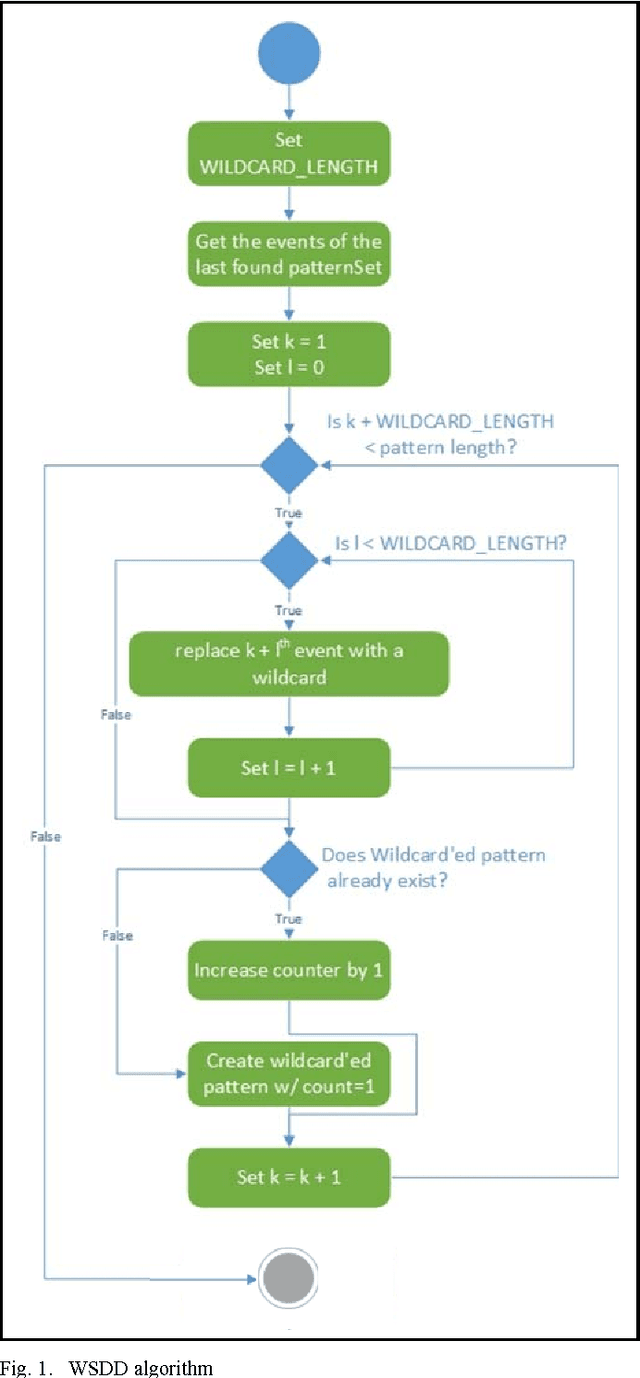
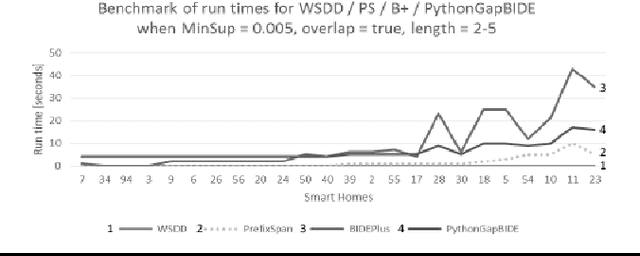
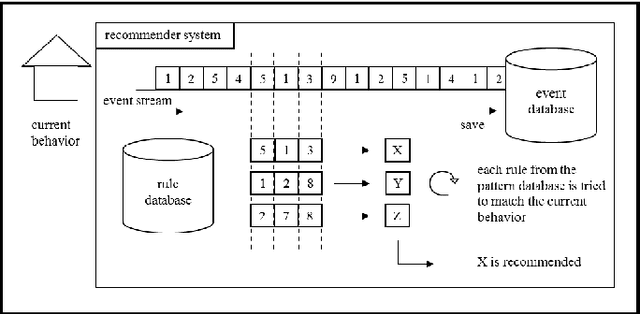
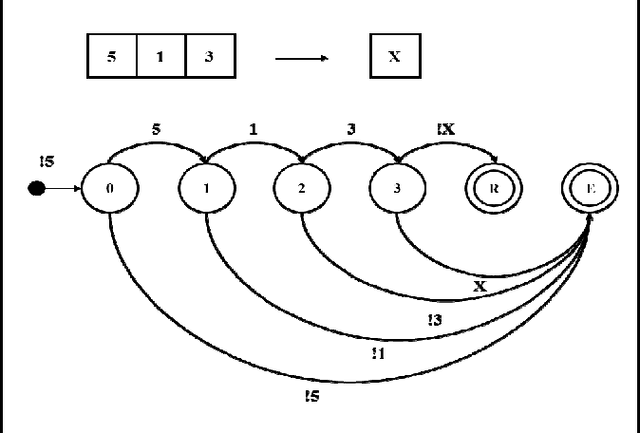
This paper discusses how usage patterns and preferences of inhabitants can be learned efficiently to allow smart homes to autonomously achieve energy savings. We propose a frequent sequential pattern mining algorithm suitable for real-life smart home event data. The performance of the proposed algorithm is compared to existing algorithms regarding completeness/correctness of the results, run times as well as memory consumption and elaborates on the shortcomings of the different solutions. We also present a recommender system based on the developed algorithm that provides recommendations to the users to reduce their energy consumption. The recommender system was deployed to a set of test homes. The test participants rated the impact of the recommendations on their comfort. We used this feedback to adjust the system parameters and make it more accurate during a second test phase.