 Add to Chrome
 Add to Firefox
 Add to Edge
Enhanced Leukemic Cell Classification Using Attention-Based CNN and Data Augmentation
Jan 03, 2026
We present a reproducible deep learning pipeline for leukemic cell classification, focusing on system architecture, experimental robustness, and software design choices for medical image analysis. Acute lymphoblastic leukemia (ALL) is the most common childhood cancer, requiring expert microscopic diagnosis that suffers from inter-observer variability and time constraints. The proposed system integrates an attention-based convolutional neural network combining EfficientNetV2-B3 with Squeeze-and-Excitation mechanisms for automated ALL cell classification. Our approach employs comprehensive data augmentation, focal loss for class imbalance, and patient-wise data splitting to ensure robust and reproducible evaluation. On the C-NMC 2019 dataset (12,528 original images from 62 patients), the system achieves a 97.89% F1-score and 97.89% accuracy on the test set, with statistical validation through 100-iteration Monte Carlo experiments confirming significant improvements (p < 0.001) over baseline methods. The proposed pipeline outperforms existing approaches by up to 4.67% while using 89% fewer parameters than VGG16 (15.2M vs. 138M). The attention mechanism provides interpretable visualizations of diagnostically relevant cellular features, demonstrating that modern attention-based architectures can improve leukemic cell classification while maintaining computational efficiency suitable for clinical deployment.

CP HDR: A feature point detection and description library for LDR and HDR images
Mar 29, 2024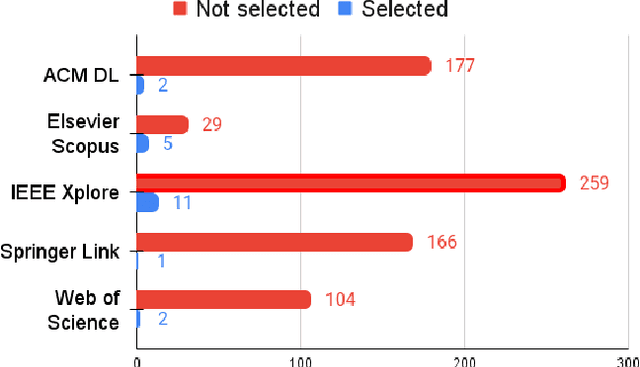

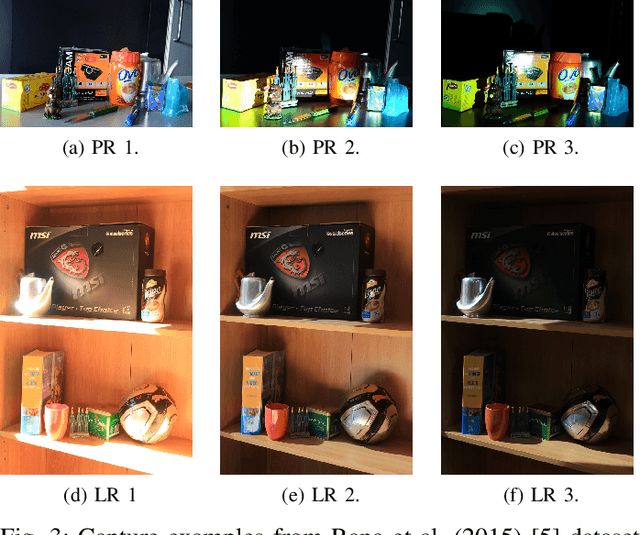
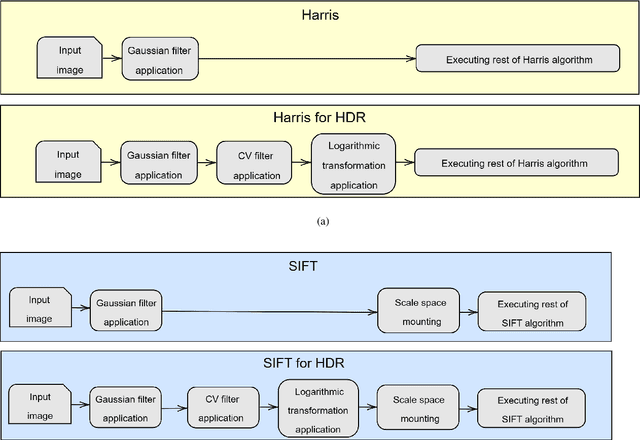
In computer vision, characteristics refer to image regions with unique properties, such as corners, edges, textures, or areas with high contrast. These regions can be represented through feature points (FPs). FP detection and description are fundamental steps to many computer vision tasks. Most FP detection and description methods use low dynamic range (LDR) images, sufficient for most applications involving digital images. However, LDR images may have saturated pixels in scenes with extreme light conditions, which degrade FP detection. On the other hand, high dynamic range (HDR) images usually present a greater dynamic range but FP detection algorithms do not take advantage of all the information in such images. In this study, we present a systematic review of image detection and description algorithms that use HDR images as input. We developed a library called CP_HDR that implements the Harris corner detector, SIFT detector and descriptor, and two modifications of those algorithms specialized in HDR images, called SIFT for HDR (SfHDR) and Harris for HDR (HfHDR). Previous studies investigated the use of HDR images in FP detection, but we did not find studies investigating the use of HDR images in FP description. Using uniformity, repeatability rate, mean average precision, and matching rate metrics, we compared the performance of the CP_HDR algorithms using LDR and HDR images. We observed an increase in the uniformity of the distribution of FPs among the high-light, mid-light, and low-light areas of the images. The results show that using HDR images as input to detection algorithms improves performance and that SfHDR and HfHDR enhance FP description.
Feature point detection in HDR images based on coefficient of variation
Apr 20, 2023Feature point (FP) detection is a fundamental step of many computer vision tasks. However, FP detectors are usually designed for low dynamic range (LDR) images. In scenes with extreme light conditions, LDR images present saturated pixels, which degrade FP detection. On the other hand, high dynamic range (HDR) images usually present no saturated pixels but FP detection algorithms do not take advantage of all the information present in such images. FP detection frequently relies on differential methods, which work well in LDR images. However, in HDR images, the differential operation response in bright areas overshadows the response in dark areas. As an alternative to standard FP detection methods, this study proposes an FP detector based on a coefficient of variation (CV) designed for HDR images. The CV operation adapts its response based on the standard deviation of pixels inside a window, working well in both dark and bright areas of HDR images. The proposed and standard detectors are evaluated by measuring their repeatability rate (RR) and uniformity. Our proposed detector shows better performance when compared to other standard state-of-the-art detectors. In uniformity metric, our proposed detector surpasses all the other algorithms. In other hand, when using the repeatability rate metric, the proposed detector is worse than Harris for HDR and SURF detectors.