 Add to Chrome
 Add to Firefox
 Add to Edge
Symmetry Guarantees Statistic Recovery in Variational Inference
Apr 20, 2026
Variational inference (VI) is a central tool in modern machine learning, used to approximate an intractable target density by optimising over a tractable family of distributions. As the variational family cannot typically represent the target exactly, guarantees on the quality of the resulting approximation are crucial for understanding which of its properties VI can faithfully capture. Recent work has identified instances in which symmetries of the target and the variational family enable the recovery of certain statistics, even under model misspecification. However, these guarantees are inherently problem-specific and offer little insight into the fundamental mechanism by which symmetry forces statistic recovery. In this paper, we overcome this limitation by developing a general theory of symmetry-induced statistic recovery in variational inference. First, we characterise when variational minimisers inherit the symmetries of the target and establish conditions under which these pin down identifiable statistics. Second, we unify existing results by showing that previously known statistic recovery guarantees in location-scale families arise as special cases of our theory. Third, we apply our framework to distributions on the sphere to obtain novel guarantees for directional statistics in von Mises-Fisher families. Together, these results provide a modular blueprint for deriving new recovery guarantees for VI in a broad range of symmetry settings.

Interpretable histopathology-based prediction of disease relevant features in Inflammatory Bowel Disease biopsies using weakly-supervised deep learning
Mar 20, 2023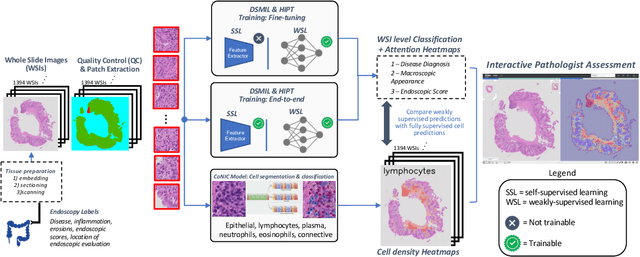
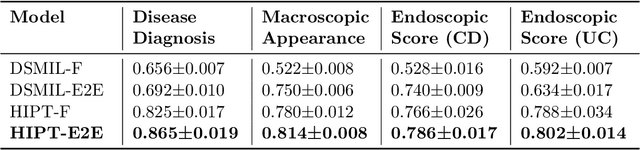
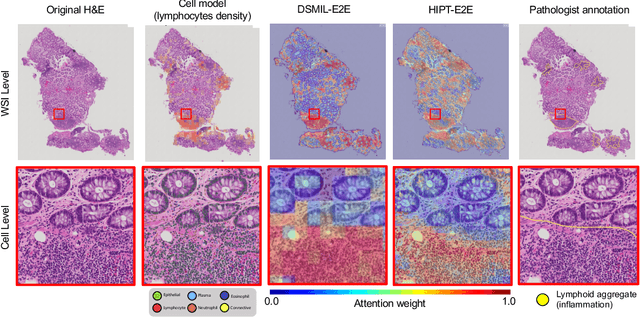

Crohn's Disease (CD) and Ulcerative Colitis (UC) are the two main Inflammatory Bowel Disease (IBD) types. We developed deep learning models to identify histological disease features for both CD and UC using only endoscopic labels. We explored fine-tuning and end-to-end training of two state-of-the-art self-supervised models for predicting three different endoscopic categories (i) CD vs UC (AUC=0.87), (ii) normal vs lesional (AUC=0.81), (iii) low vs high disease severity score (AUC=0.80). We produced visual attention maps to interpret what the models learned and validated them with the support of a pathologist, where we observed a strong association between the models' predictions and histopathological inflammatory features of the disease. Additionally, we identified several cases where the model incorrectly predicted normal samples as lesional but were correct on the microscopic level when reviewed by the pathologist. This tendency of histological presentation to be more severe than endoscopic presentation was previously published in the literature. In parallel, we utilised a model trained on the Colon Nuclei Identification and Counting (CoNIC) dataset to predict and explore 6 cell populations. We observed correlation between areas enriched with the predicted immune cells in biopsies and the pathologist's feedback on the attention maps. Finally, we identified several cell level features indicative of disease severity in CD and UC. These models can enhance our understanding about the pathology behind IBD and can shape our strategies for patient stratification in clinical trials.