 Add to Chrome
 Add to Firefox
 Add to Edge
Analysing Calls to Order in German Parliamentary Debates
Mar 27, 2026
Parliamentary debate constitutes a central arena of political power, shaping legislative outcomes and public discourse. Incivility within this arena signals political polarization and institutional conflict. This study presents a systematic investigation of incivility in the German Bundestag by examining calls to order (CtO; plural: CtOs) as formal indicators of norm violations. Despite their relevance, CtOs have received little systematic attention in parliamentary research. We introduce a rule-based method for detecting and annotating CtOs in parliamentary speeches and present a novel dataset of German parliamentary debates spanning 72 years that includes annotated CtO instances. Additionally, we develop the first classification system for CtO triggers and analyze the factors associated with their occurrence. Our findings show that, despite formal regulations, the issuance of CtOs is partly subjective and influenced by session presidents and parliamentary dynamics, with certain individuals disproportionately affected. An insult towards individuals is the most frequent cause of CtO. In general, male members and those belonging to opposition parties receive more calls to order than their female and coalition-party counterparts. Most CtO triggers were detected in speeches dedicated to governmental affairs and actions of the presidency. The CtO triggers dataset is available at: https://github.com/kalawinka/cto_analysis.

Evaluating LLM-Generated Q&A Test: a Student-Centered Study
May 10, 2025This research prepares an automatic pipeline for generating reliable question-answer (Q&A) tests using AI chatbots. We automatically generated a GPT-4o-mini-based Q&A test for a Natural Language Processing course and evaluated its psychometric and perceived-quality metrics with students and experts. A mixed-format IRT analysis showed that the generated items exhibit strong discrimination and appropriate difficulty, while student and expert star ratings reflect high overall quality. A uniform DIF check identified two items for review. These findings demonstrate that LLM-generated assessments can match human-authored tests in psychometric performance and user satisfaction, illustrating a scalable approach to AI-assisted assessment development.
Applying Text Mining to Analyze Human Question Asking in Creativity Research
Jan 03, 2025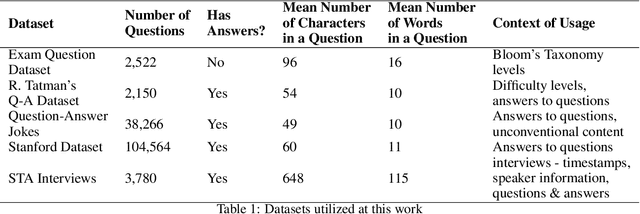
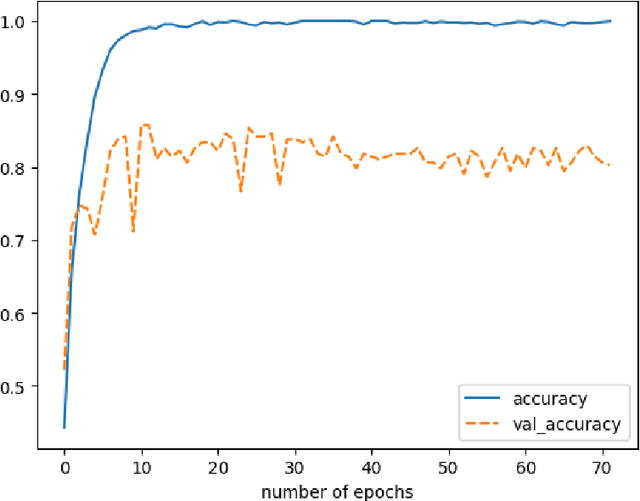
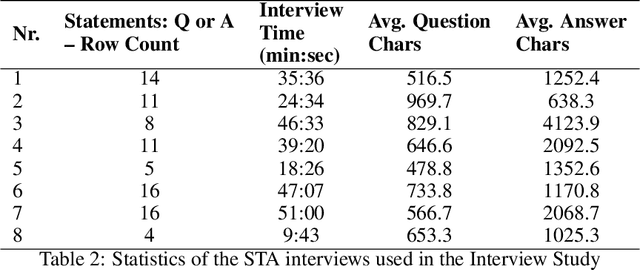
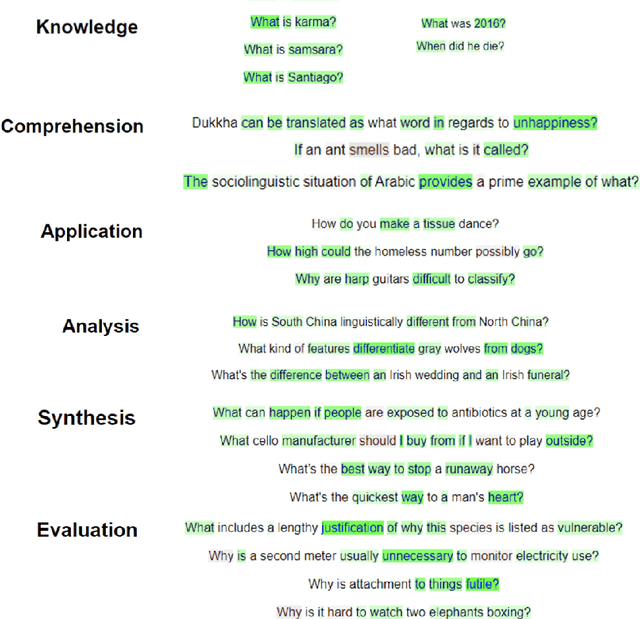
Creativity relates to the ability to generate novel and effective ideas in the areas of interest. How are such creative ideas generated? One possible mechanism that supports creative ideation and is gaining increased empirical attention is by asking questions. Question asking is a likely cognitive mechanism that allows defining problems, facilitating creative problem solving. However, much is unknown about the exact role of questions in creativity. This work presents an attempt to apply text mining methods to measure the cognitive potential of questions, taking into account, among others, (a) question type, (b) question complexity, and (c) the content of the answer. This contribution summarizes the history of question mining as a part of creativity research, along with the natural language processing methods deemed useful or helpful in the study. In addition, a novel approach is proposed, implemented, and applied to five datasets. The experimental results obtained are comprehensively analyzed, suggesting that natural language processing has a role to play in creative research.
Mining United Nations General Assembly Debates
Jun 19, 2024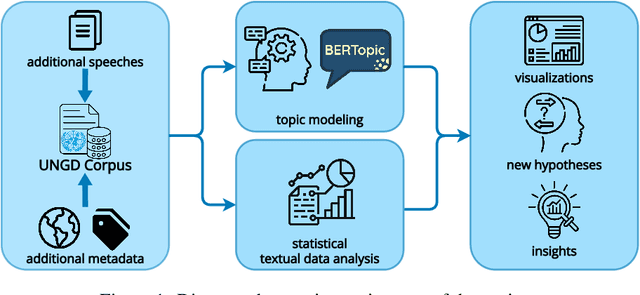
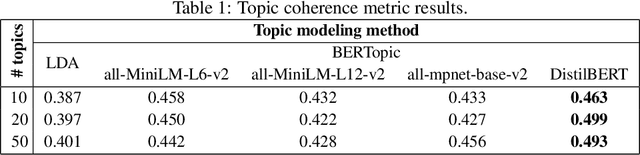
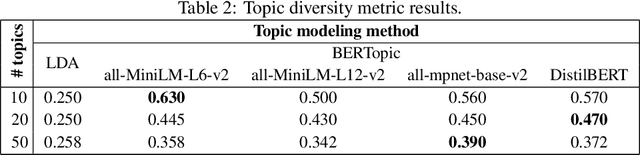
This project explores the application of Natural Language Processing (NLP) techniques to analyse United Nations General Assembly (UNGA) speeches. Using NLP allows for the efficient processing and analysis of large volumes of textual data, enabling the extraction of semantic patterns, sentiment analysis, and topic modelling. Our goal is to deliver a comprehensive dataset and a tool (interface with descriptive statistics and automatically extracted topics) from which political scientists can derive insights into international relations and have the opportunity to have a nuanced understanding of global diplomatic discourse.