 Add to Chrome
 Add to Firefox
 Add to Edge
Metriplector: From Field Theory to Neural Architecture
Mar 31, 2026
We present Metriplector, a neural architecture primitive in which the input configures an abstract physical system -- fields, sources, and operators -- and the dynamics of that system is the computation. Multiple fields evolve via coupled metriplectic dynamics, and the stress-energy tensor $T^{μν}$, derived from Noether's theorem, provides the readout. The metriplectic formulation admits a natural spectrum of instantiations: the dissipative branch alone yields a screened Poisson equation solved exactly via conjugate gradient; activating the full structure -- including the antisymmetric Poisson bracket -- gives field dynamics for image recognition and language modeling. We evaluate Metriplector across four domains, each using a task-specific architecture built from this shared primitive with progressively richer physics: F1=1.0 on maze pathfinding, generalizing from 15x15 training grids to unseen 39x39 grids; 97.2% exact Sudoku solve rate with zero structural injection; 81.03% on CIFAR-100 with 2.26M parameters; and 1.182 bits/byte on language modeling with 3.6x fewer training tokens than a GPT baseline.

Criticality & Deep Learning II: Momentum Renormalisation Group
May 31, 2017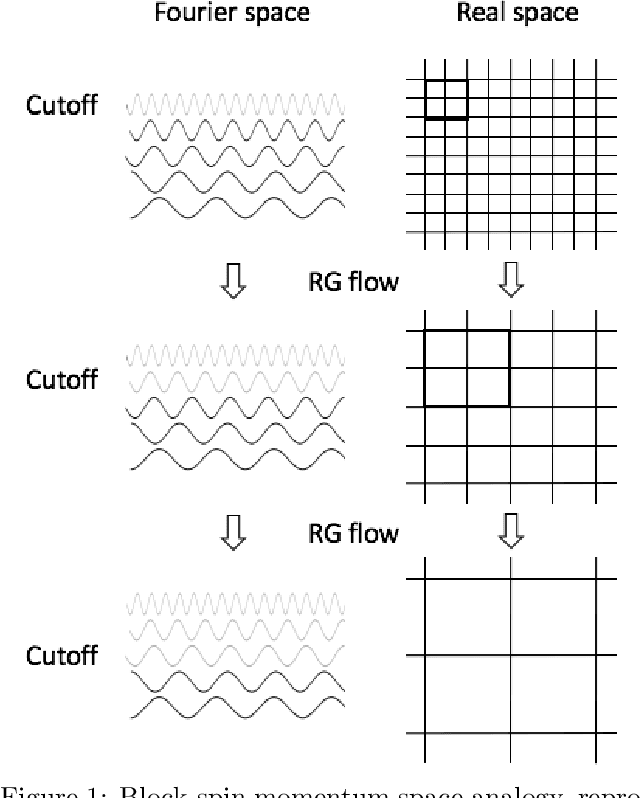
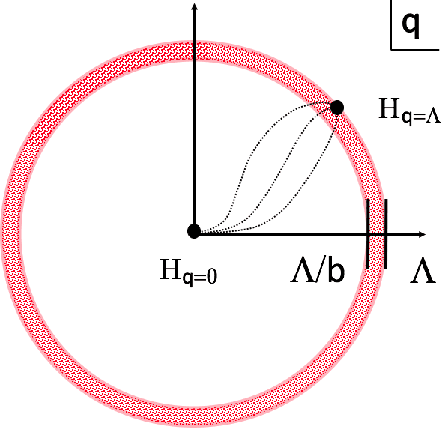
Guided by critical systems found in nature we develop a novel mechanism consisting of inhomogeneous polynomial regularisation via which we can induce scale invariance in deep learning systems. Technically, we map our deep learning (DL) setup to a genuine field theory, on which we act with the Renormalisation Group (RG) in momentum space and produce the flow equations of the couplings; those are translated to constraints and consequently interpreted as "critical regularisation" conditions in the optimiser; the resulting equations hence prove to be sufficient conditions for - and serve as an elegant and simple mechanism to induce scale invariance in any deep learning setup.
Criticality & Deep Learning I: Generally Weighted Nets
May 31, 2017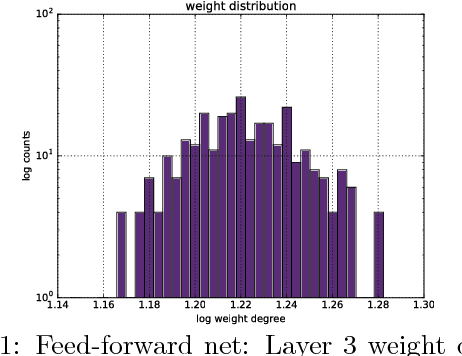
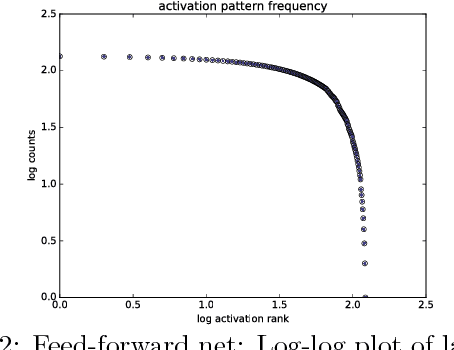
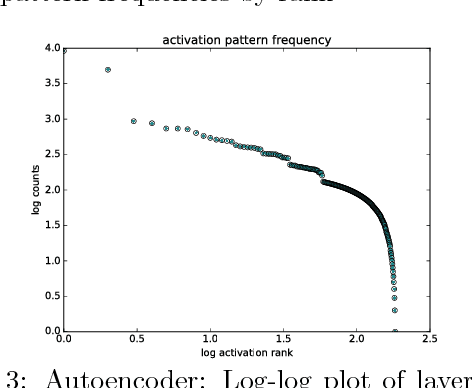
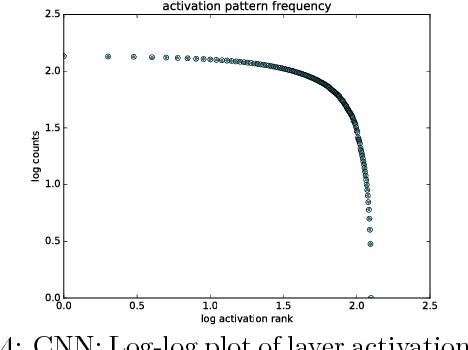
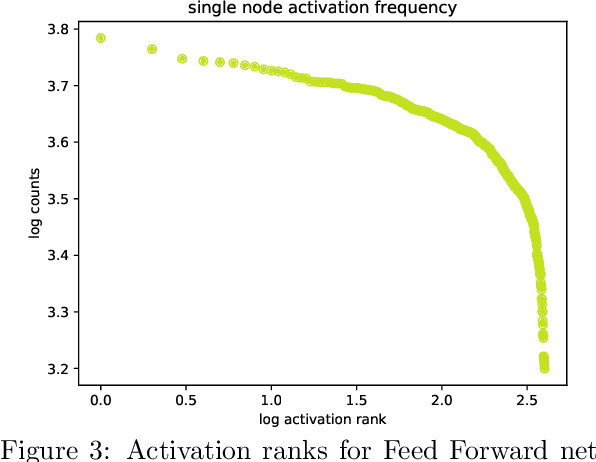
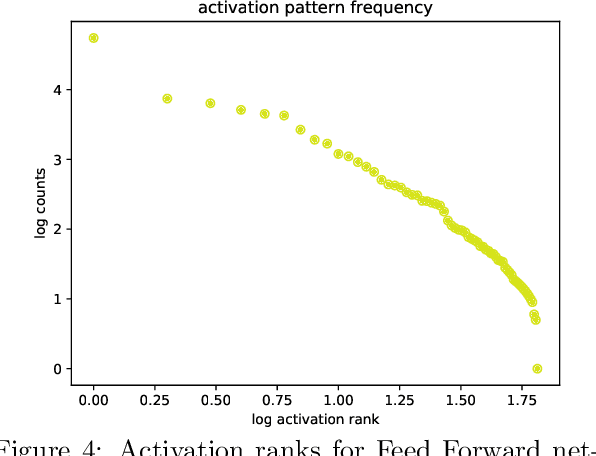
Motivated by the idea that criticality and universality of phase transitions might play a crucial role in achieving and sustaining learning and intelligent behaviour in biological and artificial networks, we analyse a theoretical and a pragmatic experimental set up for critical phenomena in deep learning. On the theoretical side, we use results from statistical physics to carry out critical point calculations in feed-forward/fully connected networks, while on the experimental side we set out to find traces of criticality in deep neural networks. This is our first step in a series of upcoming investigations to map out the relationship between criticality and learning in deep networks.