 Add to Chrome
 Add to Firefox
 Add to Edge
Dreamcrafter: Immersive Editing of 3D Radiance Fields Through Flexible, Generative Inputs and Outputs
Dec 23, 2025
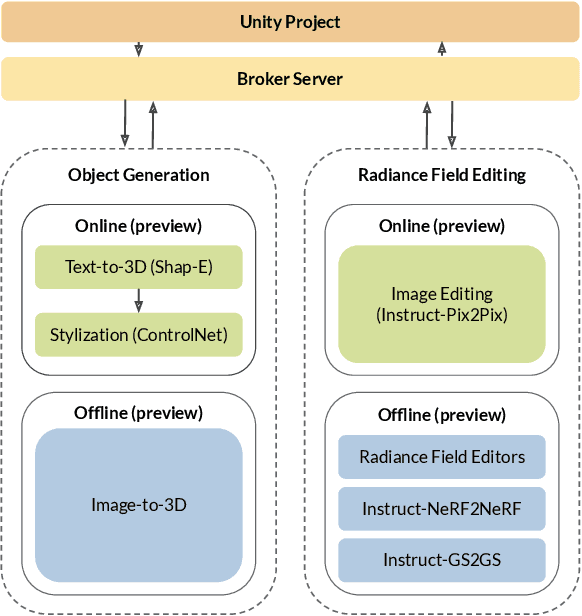
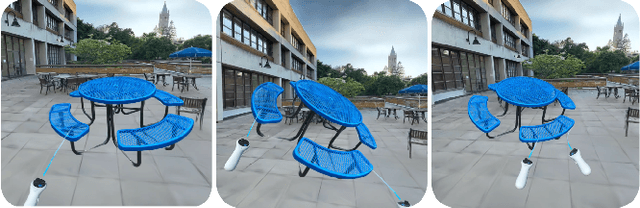
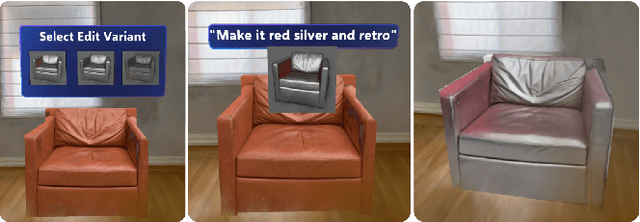
Authoring 3D scenes is a central task for spatial computing applications. Competing visions for lowering existing barriers are (1) focus on immersive, direct manipulation of 3D content or (2) leverage AI techniques that capture real scenes (3D Radiance Fields such as, NeRFs, 3D Gaussian Splatting) and modify them at a higher level of abstraction, at the cost of high latency. We unify the complementary strengths of these approaches and investigate how to integrate generative AI advances into real-time, immersive 3D Radiance Field editing. We introduce Dreamcrafter, a VR-based 3D scene editing system that: (1) provides a modular architecture to integrate generative AI algorithms; (2) combines different levels of control for creating objects, including natural language and direct manipulation; and (3) introduces proxy representations that support interaction during high-latency operations. We contribute empirical findings on control preferences and discuss how generative AI interfaces beyond text input enhance creativity in scene editing and world building.

AI-Driven Stylization of 3D Environments
Nov 09, 2024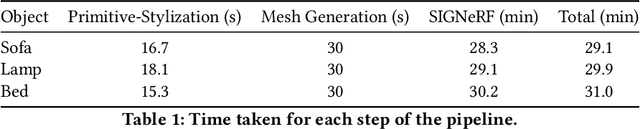
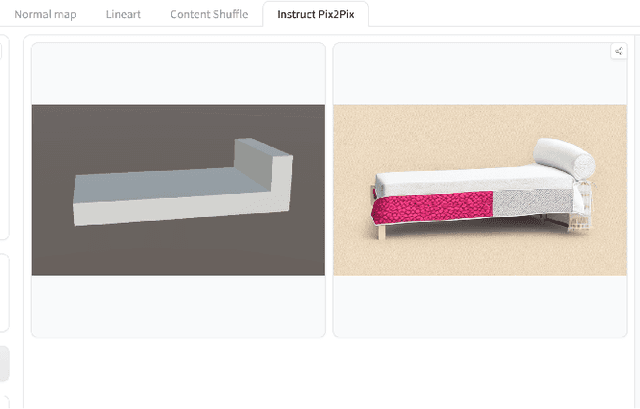
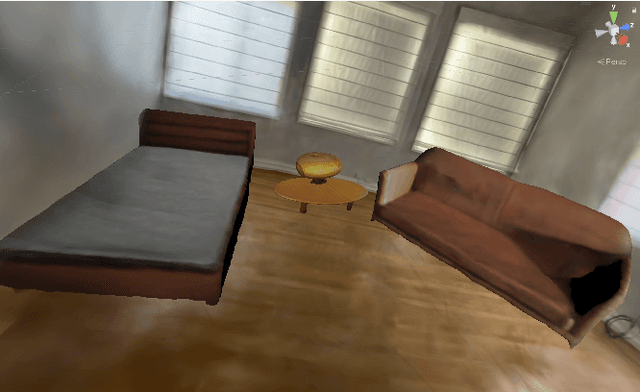
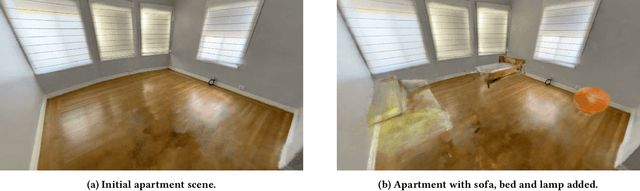
In this system, we discuss methods to stylize a scene of 3D primitive objects into a higher fidelity 3D scene using novel 3D representations like NeRFs and 3D Gaussian Splatting. Our approach leverages existing image stylization systems and image-to-3D generative models to create a pipeline that iteratively stylizes and composites 3D objects into scenes. We show our results on adding generated objects into a scene and discuss limitations.