 Add to Chrome
 Add to Firefox
 Add to Edge
Radiomics and Clinical Features in Predictive Modelling of Brain Metastases Recurrence
Dec 17, 2025
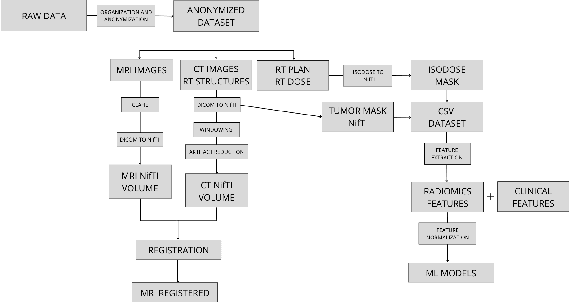
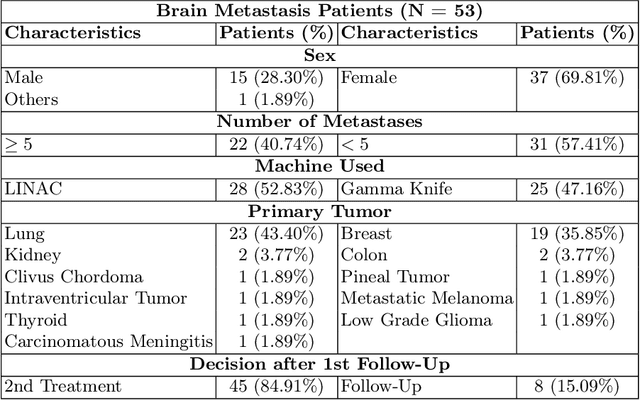
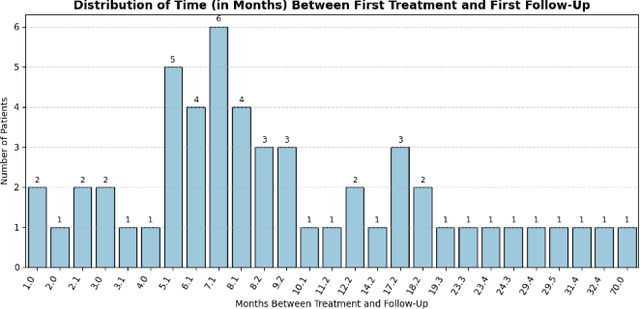

Brain metastases affect approximately between 20% and 40% of cancer patients and are commonly treated with radiotherapy or radiosurgery. Early prediction of recurrence following treatment could enable timely clinical intervention and improve patient outcomes. This study proposes an artificial intelligence based approach for predicting brain metastasis recurrence using multimodal imaging and clinical data. A retrospective cohort of 97 patients was collected, including Computed Tomography (CT) and Magnetic Resonance Imaging (MRI) acquired before treatment and at first follow-up, together with relevant clinical variables. Image preprocessing included CT windowing and artifact reduction, MRI enhancement, and multimodal CT MRI registration. After applying inclusion criteria, 53 patients were retained for analysis. Radiomics features were extracted from the imaging data, and delta radiomics was employed to characterize temporal changes between pre-treatment and follow-up scans. Multiple machine learning classifiers were trained and evaluated, including an analysis of discrepancies between treatment planning target volumes and delivered isodose volumes. Despite limitations related to sample size and class imbalance, the results demonstrate the feasibility of radiomics based models, namely ensemble models, for recurrence prediction and suggest a potential association between radiation dose discrepancies and recurrence risk. This work supports further investigation of AI-driven tools to assist clinical decision-making in brain metastasis management.

RFUDS -- A Brain Metastases Imaging Dataset of Radiotherapy Follow-Up
Dec 21, 2024Brain metastases are a common diagnosis that affects between 20% and 40% of cancer patients. Subsequent to radiation therapy, patients with brain metastases undergo follow-up sessions during which the response to treatment is monitored. In this study, a dataset of medical images from 44 patients with at least one brain metastasis and different primary tumor locations was collected and processed. Each patient was treated with either a linear accelerator or a gamma knife. Computed Tomography (CT) and Magnetic Resonance Imaging (MRI) scans were collected at various time points, including before treatment and during follow-up sessions. The CT datasets were processed using windowing and artifact reduction techniques, while the MRI datasets were subjected to CLAHE. The NifTI files corresponding to the CT and MRI images were made public available. In order to align the datasets of each patient, a multimodal registration was performed between the CT and MRI datasets, with different software options being tested. The fusion matrices were provided together with the dataset. The aforementioned steps resulted in the creation of an optimized dataset, prepared for use in a range of studies related to brain metastases. RFUds is publicity available at zenodo under the DOI 10.5281/zenodo.14524784.
Treatment And Follow-Up Guidelines For Multiple Brain Metastases: A Systematic Review
Jul 20, 2023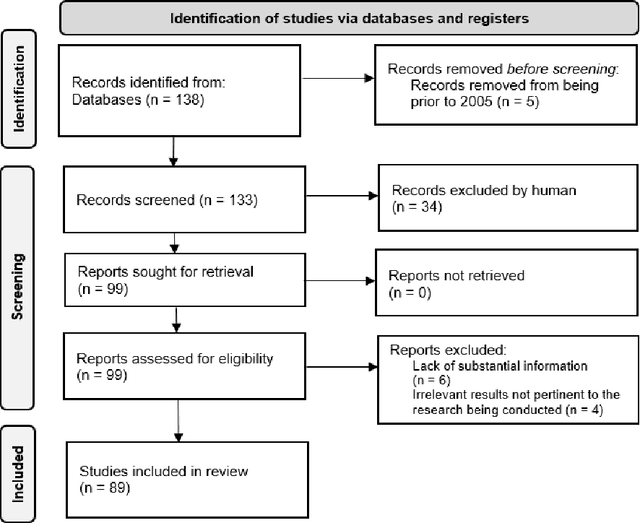
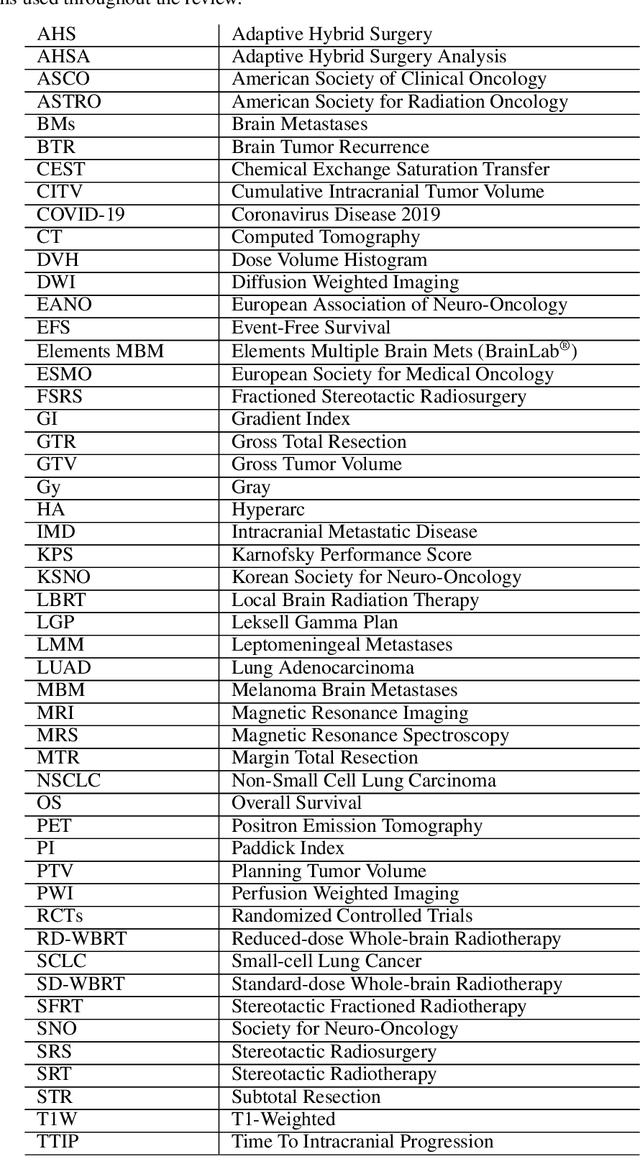
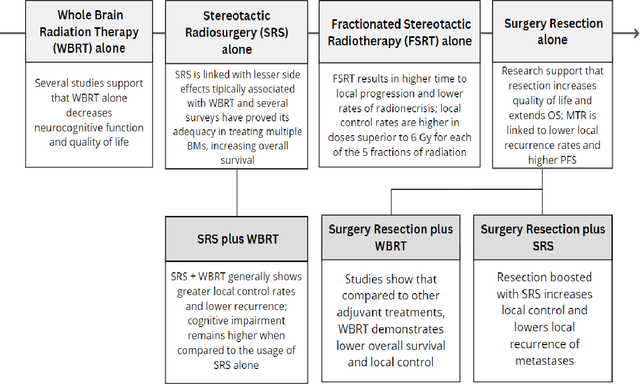
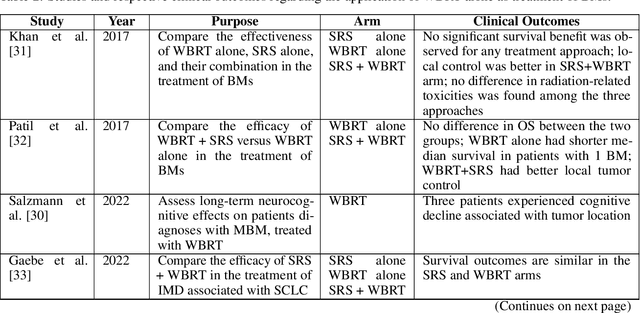
Brain metastases are a complication of primary cancer, representing the most common type of brain tumor in adults. The management of multiple brain metastases represents a clinical challenge worldwide in finding the optimal treatment for patients considering various individual aspects. Managing multiple metastases with stereotactic radiosurgery (SRS) is being increasingly used because of quality of life and neurocognitive preservation, which do not present such good outcomes when dealt with whole brain radiation therapy (WBRT). After treatment, analyzing the progression of the disease still represents a clinical issue, since it is difficult to determine a standard schedule for image acquisition. A solution could be the applying artificial intelligence, namely predictive models to forecast the incidence of new metastases in post-treatment images. Although there aren't many works on this subject, this could potentially bennefit medical professionals in early decision of the best treatment approaches