 Add to Chrome
 Add to Firefox
 Add to Edge
Learning Linear Temporal Specifications from Demonstrations with Uncertainty
Jul 12, 2026
Learning temporal logic specifications from system demonstrations is essential for tasks such as formal verification and controller synthesis, especially in safety-critical domains. Existing approaches typically assume demonstrations are correct or only affected by misclassification errors. In practice, however, system traces are often uncertain or incomplete due to sensor faults, measurement errors, or data loss. We present a framework for learning minimal Linear Temporal Logic (LTL) formulas from demonstrations with uncertainty. Our approach models uncertainty via Hamming distance to generate possible estimates around each observed trace, which are grouped with constraints requiring that at least one trace per group is consistent with the learned formula. Our problem is then reduced to an equivalent Pseudo-Boolean Optimization. We evaluate our method against state-of-the-art LTL learning approaches and show that it recovers specifications that more closely align with ground-truth formulas under uncertainty.

One-shot backpropagation for multi-step prediction in physics-based system identification -- EXTENDED VERSION
Nov 21, 2023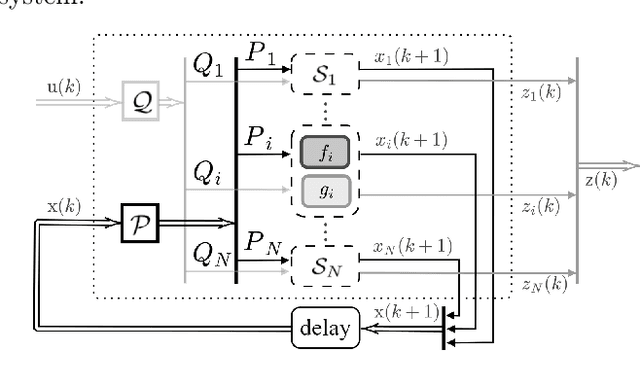

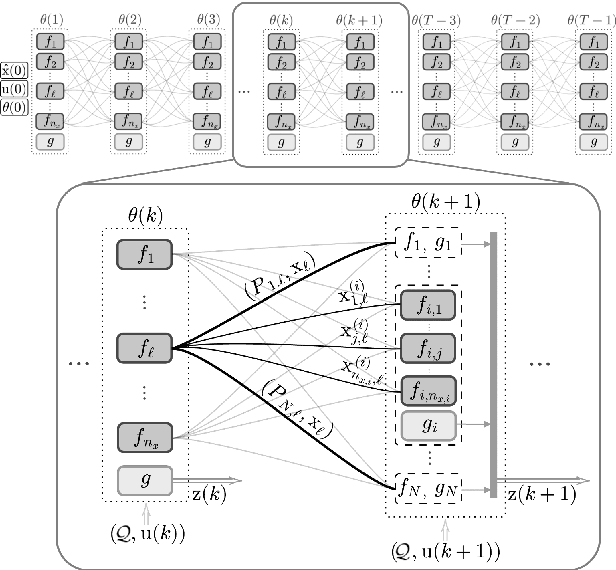
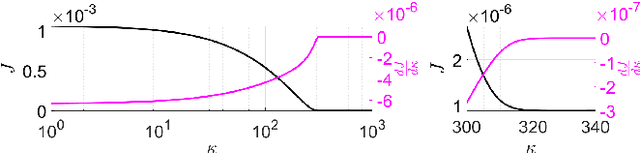
The aim of this paper is to present a novel physics-based framework for the identification of dynamical systems, in which the physical and structural insights are reflected directly into a backpropagation-based learning algorithm. The main result is a method to compute in closed form the gradient of a multi-step loss function, while enforcing physical properties and constraints. The derived algorithm has been exploited to identify the unknown inertia matrix of a space debris, and the results show the reliability of the method in capturing the physical adherence of the estimated parameters.