 Add to Chrome
 Add to Firefox
 Add to Edge
Manipulation Planning for Construction Activities with Repetitive Tasks
May 13, 2026
In this paper, we study the problem of manipulation skill acquisition for performing construction activities consisting of repetitive tasks (e.g., building a wall or installing ceiling tiles). Our approach involves setting up a simulated construction activity in a Virtual Reality (VR) environment, where the user can provide demonstrations of the object manipulation skills needed to perform the construction activity. We then exploit the screw geometry of motion to approximate the demonstrated motion as a sequence of constant screw motions. For performing the construction activity, we generate the sequence of manipulation task instances and then compute the joint space motion plan corresponding to each instance using Screw Linear Interpolation (ScLERP) and Resolved Motion Rate Control (RMRC). We evaluate our framework by executing two representative construction tasks: constructing brick walls and installing multiple ceiling tiles. Each task is performed using only a single demonstration, a pick-and-place action for the bricks, and a single ceiling tile installation. Our experiments with a 7-DoF robot in both simulation and hardware demonstrate that the approach generalizes robustly to arbitrarily long construction activities that involve repetitive motions and demand precision, even when provided with just one demonstration. For instance, we can construct walls of arbitrary layout and length by leveraging a single demonstration of placing one brick on top of another.

AnySlot: Goal-Conditioned Vision-Language-Action Policies for Zero-Shot Slot-Level Placement
Apr 14, 2026Vision-Language-Action (VLA) policies have emerged as a versatile paradigm for generalist robotic manipulation. However, precise object placement under compositional language instructions remains a major challenge for modern monolithic VLA policies. Slot-level tasks require both reliable slot grounding and sub-centimeter execution accuracy. To this end, we propose AnySlot, a framework that reduces compositional complexity by introducing an explicit spatial visual goal as an intermediate representation between language grounding and control. AnySlot turns language into an explicit visual goal by generating a scene marker, then executes this goal with a goal-conditioned VLA policy. This hierarchical design effectively decouples high-level slot selection from low-level execution, ensuring both semantic accuracy and spatial robustness. Furthermore, recognizing the lack of existing benchmarks for such precision-demanding tasks, we introduce SlotBench, a comprehensive simulation benchmark featuring nine task categories tailored to evaluate structured spatial reasoning in slot-level placement. Extensive experiments show that AnySlot significantly outperforms flat VLA baselines and previous modular grounding methods in zero-shot slot-level placement.
Sample-Efficient Robot Skill Learning for Construction Tasks: Benchmarking Hierarchical Reinforcement Learning and Vision-Language-Action VLA Model
Dec 16, 2025
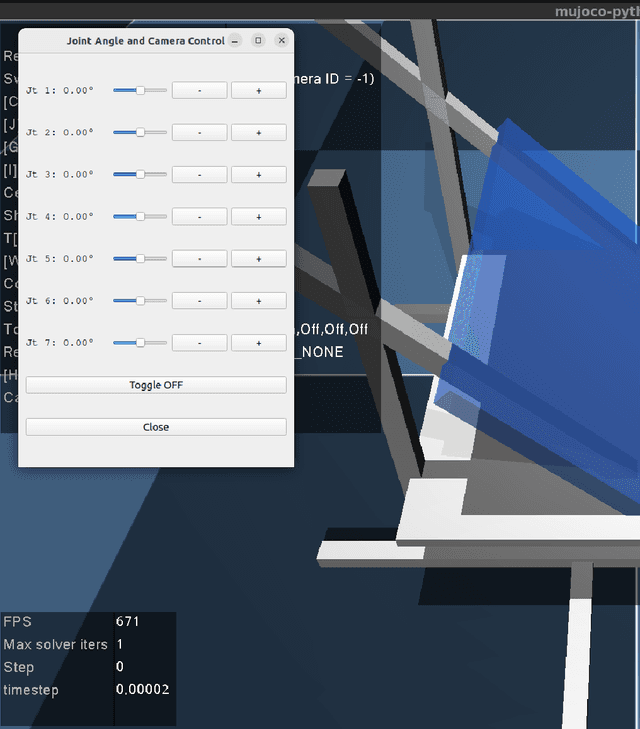

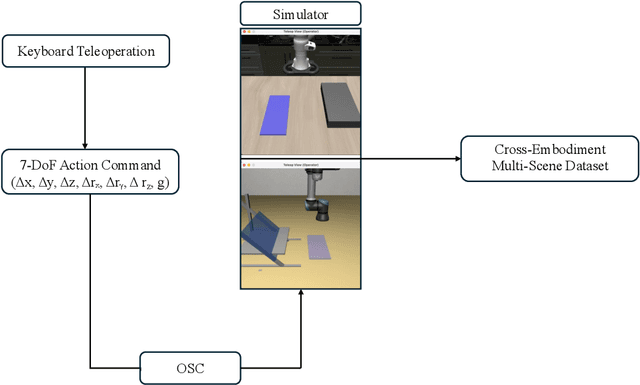
This study evaluates two leading approaches for teaching construction robots new skills to understand their applicability for construction automation: a Vision-Language-Action (VLA) model and Reinforcement Learning (RL) methods. The goal is to understand both task performance and the practical effort needed to deploy each approach on real jobs. The authors developed two teleoperation interfaces to control the robots and collect the demonstrations needed, both of which proved effective for training robots for long-horizon and dexterous tasks. In addition, the authors conduct a three-stage evaluation. First, the authors compare a Multi-Layer Perceptron (MLP) policy with a Deep Q-network (DQN) imitation model to identify the stronger RL baseline, focusing on model performance, generalization, and a pick-up experiment. Second, three different VLA models are trained in two different scenarios and compared with each other. Third, the authors benchmark the selected RL baseline against the VLA model using computational and sample-efficiency measures and then a robot experiment on a multi-stage panel installation task that includes transport and installation. The VLA model demonstrates strong generalization and few-shot capability, achieving 60% and 100% success in the pickup phase. In comparison, DQN can be made robust but needs additional noise during tuning, which increases the workload. Overall, the findings indicate that VLA offers practical advantages for changing tasks by reducing programming effort and enabling useful performance with minimal data, while DQN provides a viable baseline when sufficient tuning effort is acceptable.
Ethics of Artificial Intelligence and Robotics in the Architecture, Engineering, and Construction Industry
Oct 09, 2023Artificial intelligence (AI) and robotics research and implementation emerged in the architecture, engineering, and construction (AEC) industry to positively impact project efficiency and effectiveness concerns such as safety, productivity, and quality. This shift, however, warrants the need for ethical considerations of AI and robotics adoption due to its potential negative impacts on aspects such as job security, safety, and privacy. Nevertheless, this did not receive sufficient attention, particularly within the academic community. This research systematically reviews AI and robotics research through the lens of ethics in the AEC community for the past five years. It identifies nine key ethical issues namely job loss, data privacy, data security, data transparency, decision-making conflict, acceptance and trust, reliability and safety, fear of surveillance, and liability, by summarizing existing literature and filtering it further based on its AEC relevance. Furthermore, thirteen research topics along the process were identified based on existing AEC studies that had direct relevance to the theme of ethics in general and their parallels are further discussed. Finally, the current challenges and knowledge gaps are discussed and seven specific future research directions are recommended. This study not only signifies more stakeholder awareness of this important topic but also provides imminent steps towards safer and more efficient realization.