 Add to Chrome
 Add to Firefox
 Add to Edge
Ethical Asymmetry in Human-Robot Interaction - An Empirical Test of Sparrow's Hypothesis
Feb 02, 2026
The ethics of human-robot interaction (HRI) have been discussed extensively based on three traditional frameworks: deontology, consequentialism, and virtue ethics. We conducted a mixed within/between experiment to investigate Sparrow's proposed ethical asymmetry hypothesis in human treatment of robots. The moral permissibility of action (MPA) was manipulated as a subject grouping variable, and virtue type (prudence, justice, courage, and temperance) was controlled as a within-subjects factor. We tested moral stimuli using an online questionnaire with Perceived Moral Permissibility of Action (PMPA) and Perceived Virtue Scores (PVS) as response measures. The PVS measure was based on an adaptation of the established Questionnaire on Cardinal Virtues (QCV), while the PMPA was based on Malle et al. [39] work. We found that the MPA significantly influenced the PMPA and perceived virtue scores. The best-fitting model to describe the relationship between PMPA and PVS was cubic, which is symmetrical in nature. Our study did not confirm Sparrow's asymmetry hypothesis. The adaptation of the QCV is expected to have utility for future studies, pending additional psychometric property assessments.

The Imitation Game According To Turing
Jan 29, 2025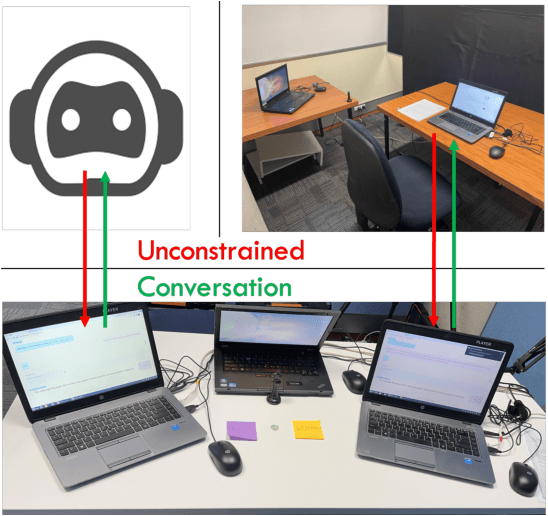
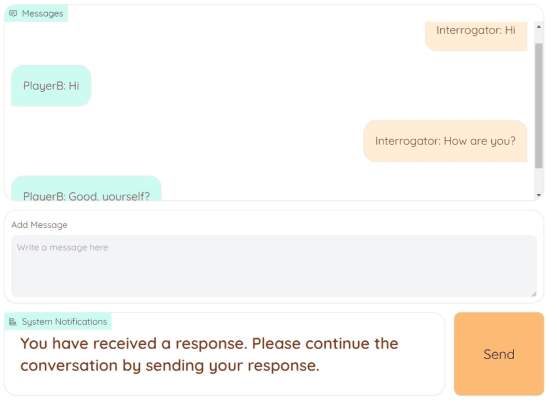

The current cycle of hype and anxiety concerning the benefits and risks to human society of Artificial Intelligence is fuelled, not only by the increasing use of generative AI and other AI tools by the general public, but also by claims made on behalf of such technology by popularizers and scientists. In particular, recent studies have claimed that Large Language Models (LLMs) can pass the Turing Test-a goal for AI since the 1950s-and therefore can "think". Large-scale impacts on society have been predicted as a result. Upon detailed examination, however, none of these studies has faithfully applied Turing's original instructions. Consequently, we conducted a rigorous Turing Test with GPT-4-Turbo that adhered closely to Turing's instructions for a three-player imitation game. We followed established scientific standards where Turing's instructions were ambiguous or missing. For example, we performed a Computer-Imitates-Human Game (CIHG) without constraining the time duration and conducted a Man-Imitates-Woman Game (MIWG) as a benchmark. All but one participant correctly identified the LLM, showing that one of today's most advanced LLMs is unable to pass a rigorous Turing Test. We conclude that recent extravagant claims for such models are unsupported, and do not warrant either optimism or concern about the social impact of thinking machines.
Detecting The Corruption Of Online Questionnaires By Artificial Intelligence
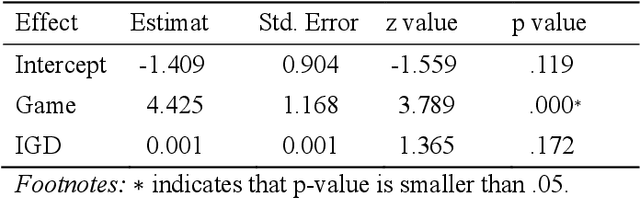
Aug 14, 2023Online questionnaires that use crowd-sourcing platforms to recruit participants have become commonplace, due to their ease of use and low costs. Artificial Intelligence (AI) based Large Language Models (LLM) have made it easy for bad actors to automatically fill in online forms, including generating meaningful text for open-ended tasks. These technological advances threaten the data quality for studies that use online questionnaires. This study tested if text generated by an AI for the purpose of an online study can be detected by both humans and automatic AI detection systems. While humans were able to correctly identify authorship of text above chance level (76 percent accuracy), their performance was still below what would be required to ensure satisfactory data quality. Researchers currently have to rely on the disinterest of bad actors to successfully use open-ended responses as a useful tool for ensuring data quality. Automatic AI detection systems are currently completely unusable. If AIs become too prevalent in submitting responses then the costs associated with detecting fraudulent submissions will outweigh the benefits of online questionnaires. Individual attention checks will no longer be a sufficient tool to ensure good data quality. This problem can only be systematically addressed by crowd-sourcing platforms. They cannot rely on automatic AI detection systems and it is unclear how they can ensure data quality for their paying clients.