 Add to Chrome
 Add to Firefox
 Add to Edge
Multi-View In-Cabin Monitoring System for Public Transport Vehicles
Jun 10, 2026
We introduce a multi-view in-cabin monitoring dataset for public transportation with synchronized RGB and depth images from four inward-facing cameras and a rotating LiDAR covering the vehicle interior of a digitalized and partly automated German city bus. The dataset contains 9.136 synchronized samples with annotations and is accompanied by a calibration and pseudo-labeling pipeline that generates 3D human pose estimates and oriented 3D bounding boxes for occupants. We further provide a nuScenes-format conversion and benchmark representative multi-view 3D detection models (e.g., Lift-Splat-Shoot and BEVFusion), supporting comparative evaluation and small-scale training of multi-view in-cabin perception models. The dataset and tools are available at https://github.com/EvgenyGorelik/multiview_incabin_dataset.

Benchmarking real-time algorithms for in-phase auditory stimulation of low amplitude slow waves with wearable EEG devices during sleep
Mar 04, 2022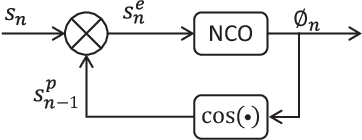
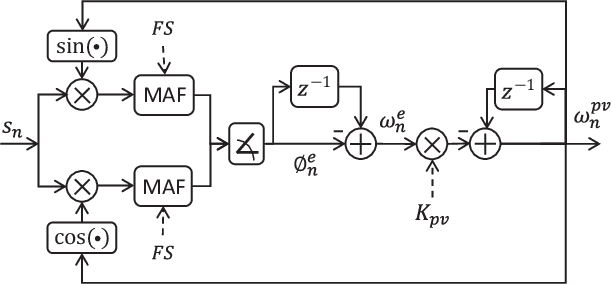
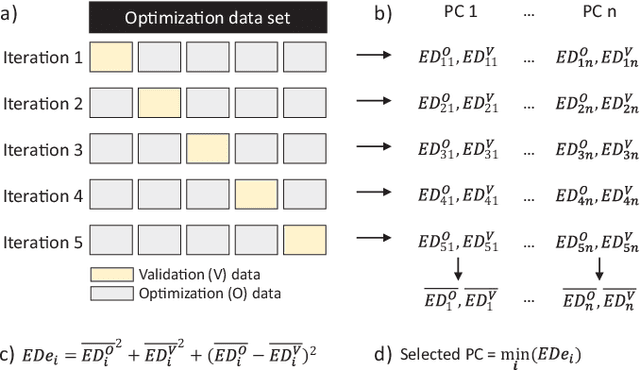
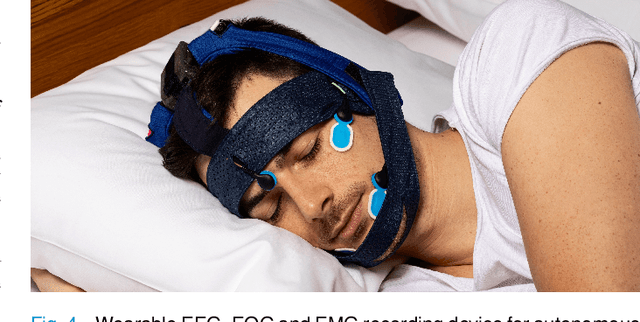
Auditory stimulation of EEG slow waves (SW) during non-rapid eye movement (NREM) sleep has shown to improve cognitive function when it is delivered at the up-phase of SW. SW enhancement is particularly desirable in subjects with low-amplitude SW such as older adults or patients suffering from neurodegeneration such as Parkinson disease (PD). However, existing algorithms to estimate the up-phase suffer from a poor phase accuracy at low EEG amplitudes and when SW frequencies are not constant. We introduce two novel algorithms for real-time EEG phase estimation on autonomous wearable devices. The algorithms were based on a phase-locked loop (PLL) and, for the first time, a phase vocoder (PV). We compared these phase tracking algorithms with a simple amplitude threshold approach. The optimized algorithms were benchmarked for phase accuracy, the capacity to estimate phase at SW amplitudes between 20 and 60 microV, and SW frequencies above 1 Hz on 324 recordings from healthy older adults and PD patients. Furthermore, the algorithms were implemented on a wearable device and the computational efficiency and the performance was evaluated on simulated sleep EEG, as well as prospectively during a recording with a PD patient. All three algorithms delivered more than 70% of the stimulation triggers during the SW up-phase. The PV showed the highest capacity on targeting low-amplitude SW and SW with frequencies above 1 Hz. The testing on real-time hardware revealed that both PV and PLL have marginal impact on microcontroller load, while the efficiency of the PV was 4% lower than the PLL. Active auditory stimulation did not influence the phase tracking. This work demonstrated that phase-accurate auditory stimulation can be delivered during home-based sleep interventions with a wearable device also in populations with low-amplitude SW.