 Add to Chrome
 Add to Firefox
 Add to Edge
Temporal-Spatial Feature Extraction Based on Convolutional Neural Networks for Travel Time Prediction
Oct 30, 2021
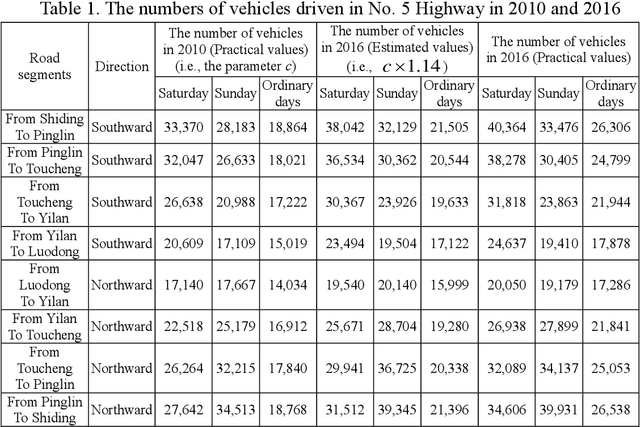
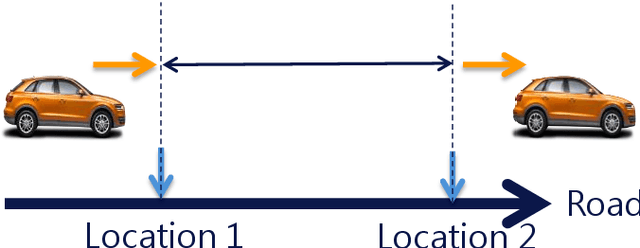
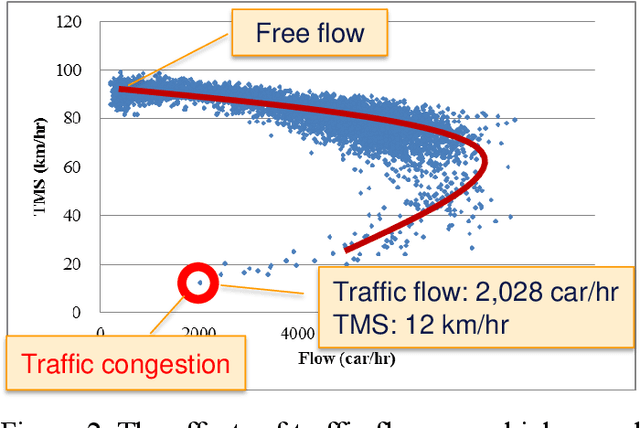
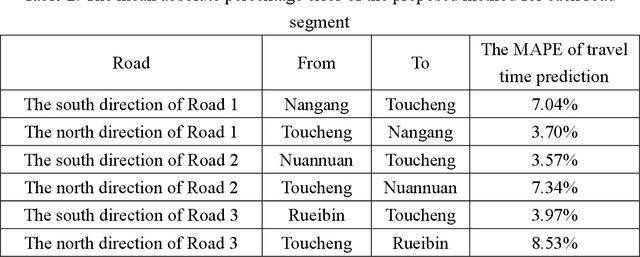
In recent years, some traffic information prediction methods have been proposed to provide the precise information of travel time, vehicle speed, and traffic flow for highways. However, big errors may be obtained by these methods for urban roads or the alternative roads of highways. Therefore, this study proposes a travel time prediction method based on convolutional neural networks to extract important factors for the improvement of traffic information prediction. In practical experimental environments, the travel time records of No. 5 Highway and the alternative roads of its were collected and used to evaluate the proposed method. The results showed that the mean absolute percentage error of the proposed method was about 5.69%. Therefore, the proposed method based on deep learning techniques can improve the accuracy of travel time prediction.

ExpDNN: Explainable Deep Neural Network
Apr 26, 2020
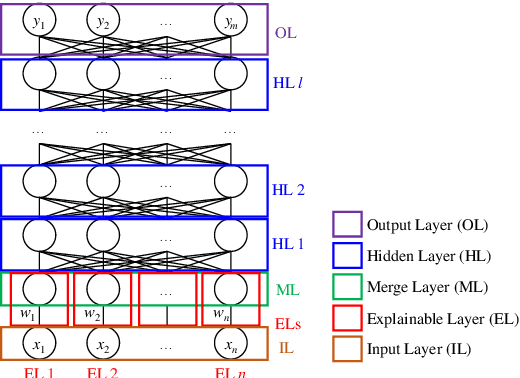


In recent years, deep neural networks have been applied to obtain high performance of prediction, classification, and pattern recognition. However, the weights in these deep neural networks are difficult to be explained. Although a linear regression method can provide explainable results, the method is not suitable in the case of input interaction. Therefore, an explainable deep neural network (ExpDNN) with explainable layers is proposed to obtain explainable results in the case of input interaction. Three cases were given to evaluate the proposed ExpDNN, and the results showed that the absolute value of weight in an explainable layer can be used to explain the weight of corresponding input for feature extraction.
An Exercise Fatigue Detection Model Based on Machine Learning Methods
Mar 07, 2018This study proposes an exercise fatigue detection model based on real-time clinical data which includes time domain analysis, frequency domain analysis, detrended fluctuation analysis, approximate entropy, and sample entropy. Furthermore, this study proposed a feature extraction method which is combined with an analytical hierarchy process to analyze and extract critical features. Finally, machine learning algorithms were adopted to analyze the data of each feature for the detection of exercise fatigue. The practical experimental results showed that the proposed exercise fatigue detection model and feature extraction method could precisely detect the level of exercise fatigue, and the accuracy of exercise fatigue detection could be improved up to 98.65%.