 Add to Chrome
 Add to Firefox
 Add to Edge
SmartEval: A Benchmark for Evaluating LLM-Generated Smart Contracts from Natural Language Specifications
May 10, 2026
We introduce SmartEval, a benchmark for systematically evaluating the quality of Solidity smart contracts generated by large language models (LLMs) from natural language specifications. SmartEval provides a corpus of 9,000 generated contracts paired with expert-written ground-truth implementations drawn from the FSMSCG dataset, a five-dimensional evaluation rubric covering functional completeness, variable fidelity, state-machine correctness, business-logic fidelity, and code quality, and a reproducible generation-and-evaluation pipeline. To validate the benchmark's reliability, we conduct three independent empirical studies: a five-condition ablation study (N=300 per condition) isolating the contribution of each pipeline component, a human expert evaluation by three Columbia University PhD researchers confirming automated scores align with expert judgment to within 0.34 points, and external security analysis via the Slither static analyzer confirming 79.4% agreement between the LLM auditor and a non-LLM rule-based tool. Systematic analysis of 9,000 generated contracts reveals characteristic failure modes (logic omissions at 35.3%, state transition errors at 23.4%, and complexity-driven degradation) and quantifies a +8.29 composite-score advantage of generated contracts over ground-truth implementations, attributable to LLMs' literal specification-following behavior. SmartEval establishes a reproducible, validated foundation for empirical research on LLM smart contract synthesis quality, with all data, evaluation code, and generated contracts publicly released.

An end-to-end agentic pipeline for smart contract translation and quality evaluation
Feb 14, 2026We present an end-to-end framework for systematic evaluation of LLM-generated smart contracts from natural-language specifications. The system parses contractual text into structured schemas, generates Solidity code, and performs automated quality assessment through compilation and security checks. Using CrewAI-style agent teams with iterative refinement, the pipeline produces structured artifacts with full provenance metadata. Quality is measured across five dimensions, including functional completeness, variable fidelity, state-machine correctness, business-logic fidelity, and code quality aggregated into composite scores. The framework supports paired evaluation against ground-truth implementations, quantifying alignment and identifying systematic error modes such as logic omissions and state transition inconsistencies. This provides a reproducible benchmark for empirical research on smart contract synthesis quality and supports extensions to formal verification and compliance checking.
Infectious Disease Forecasting in India using LLM's and Deep Learning
Oct 26, 2024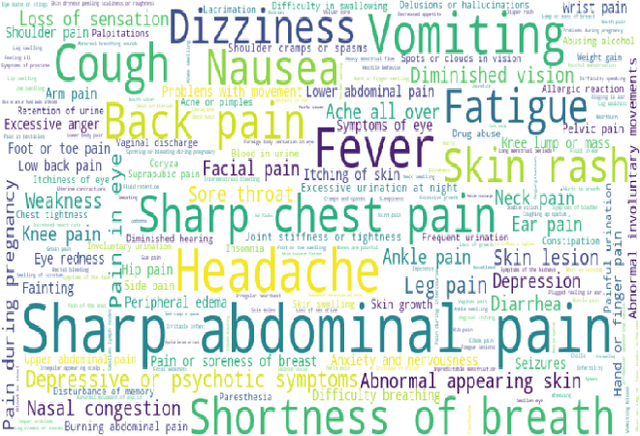
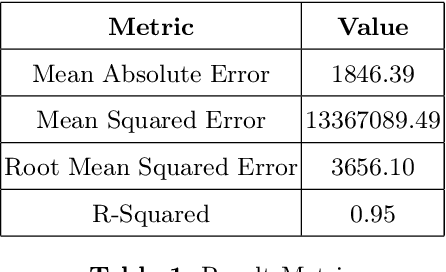
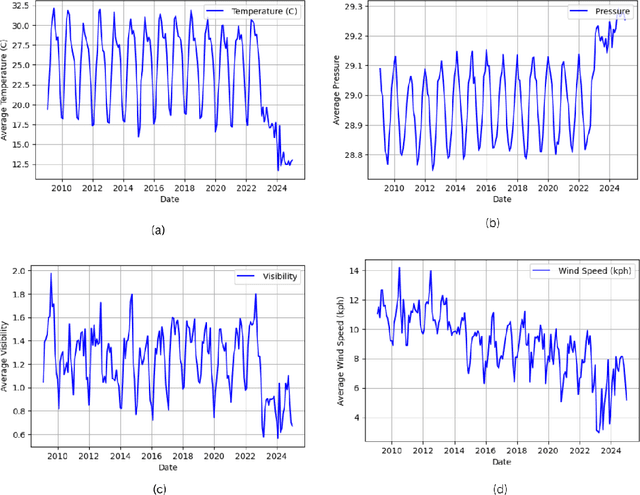
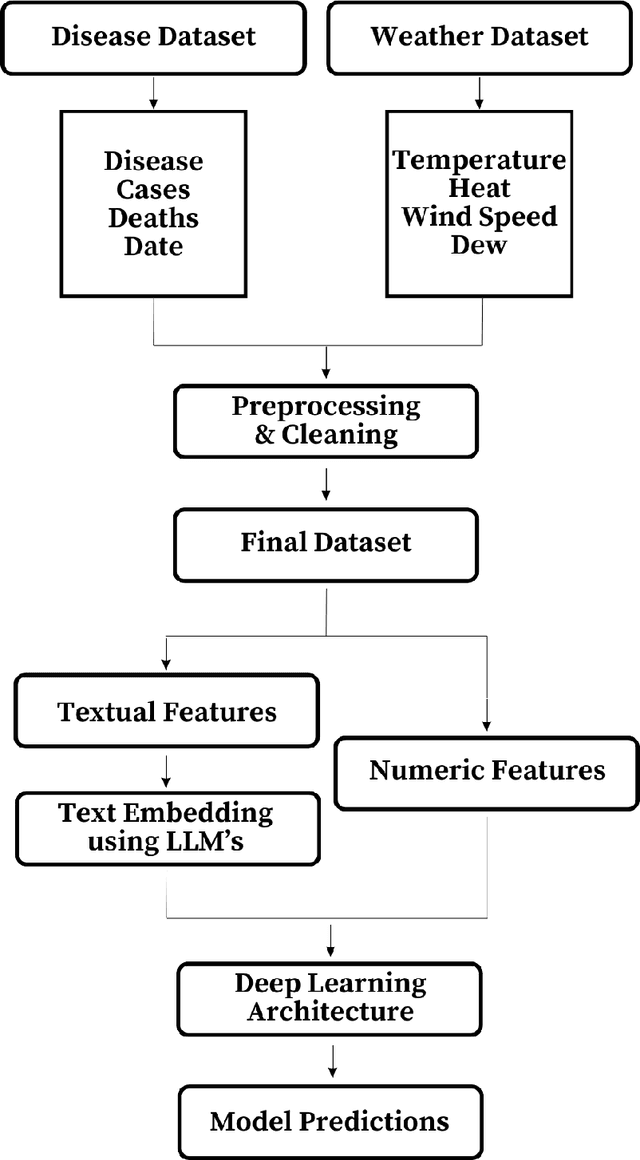
Many uncontrollable disease outbreaks of the past exposed several vulnerabilities in the healthcare systems worldwide. While advancements in technology assisted in the rapid creation of the vaccinations, there needs to be a pressing focus on the prevention and prediction of such massive outbreaks. Early detection and intervention of an outbreak can drastically reduce its impact on public health while also making the healthcare system more resilient. The complexity of disease transmission dynamics, influence of various directly and indirectly related factors and limitations of traditional approaches are the main bottlenecks in taking preventive actions. Specifically, this paper implements deep learning algorithms and LLM's to predict the severity of infectious disease outbreaks. Utilizing the historic data of several diseases that have spread in India and the climatic data spanning the past decade, the insights from our research aim to assist in creating a robust predictive system for any outbreaks in the future.
Cyberbullying or just Sarcasm? Unmasking Coordinated Networks on Reddit
Oct 26, 2024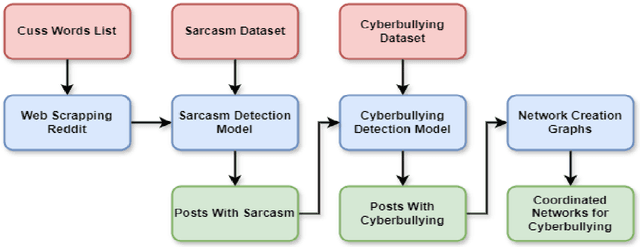
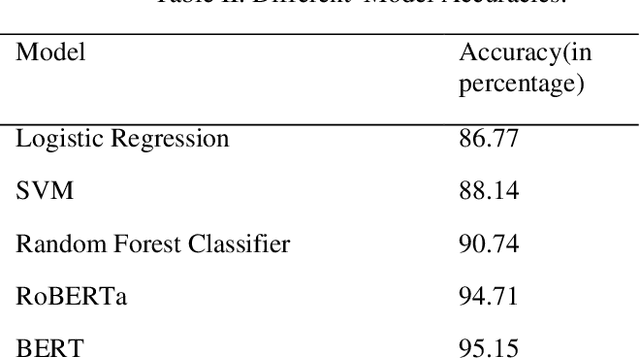
With the rapid growth of social media usage, a common trend has emerged where users often make sarcastic comments on posts. While sarcasm can sometimes be harmless, it can blur the line with cyberbullying, especially when used in negative or harmful contexts. This growing issue has been exacerbated by the anonymity and vast reach of the internet, making cyberbullying a significant concern on platforms like Reddit. Our research focuses on distinguishing cyberbullying from sarcasm, particularly where online language nuances make it difficult to discern harmful intent. This study proposes a framework using natural language processing (NLP) and machine learning to differentiate between the two, addressing the limitations of traditional sentiment analysis in detecting nuanced behaviors. By analyzing a custom dataset scraped from Reddit, we achieved a 95.15% accuracy in distinguishing harmful content from sarcasm. Our findings also reveal that teenagers and minority groups are particularly vulnerable to cyberbullying. Additionally, our research uncovers coordinated graphs of groups involved in cyberbullying, identifying common patterns in their behavior. This research contributes to improving detection capabilities for safer online communities.