 Add to Chrome
 Add to Firefox
 Add to Edge
Development and evaluation of CADe systems in low-prevalence setting: The RARE25 challenge for early detection of Barrett's neoplasia
Apr 13, 2026
Computer-aided detection (CADe) of early neoplasia in Barrett's esophagus is a low-prevalence surveillance problem in which clinically relevant findings are rare. Although many CADe systems report strong performance on balanced or enriched datasets, their behavior under realistic prevalence remains insufficiently characterized. The RARE25 challenge addresses this gap by introducing a large-scale, prevalence-aware benchmark for neoplasia detection. It includes a public training set and a hidden test set reflecting real-world incidence. Methods were evaluated using operating-point-specific metrics emphasizing high sensitivity and accounting for prevalence. Eleven teams from seven countries submitted approaches using diverse architectures, pretraining, ensembling, and calibration strategies. While several methods achieved strong discriminative performance, positive predictive values remained low, highlighting the difficulty of low-prevalence detection and the risk of overestimating clinical utility when prevalence is ignored. All methods relied on fully supervised classification despite the dominance of normal findings, indicating a lack of prevalence-agnostic approaches such as anomaly detection or one-class learning. By releasing a public dataset and a reproducible evaluation framework, RARE25 aims to support the development of CADe systems robust to prevalence shift and suitable for clinical surveillance workflows.

Scaling up self-supervised learning for improved surgical foundation models
Jan 16, 2025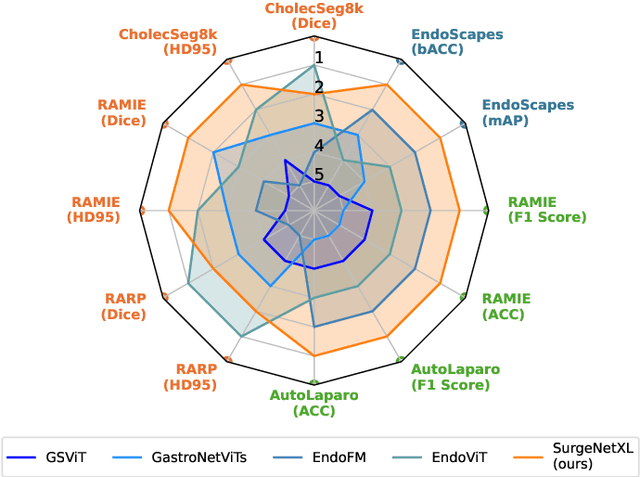
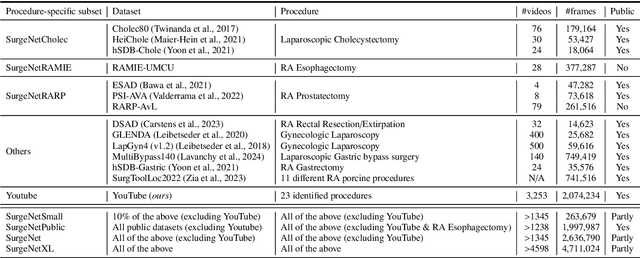
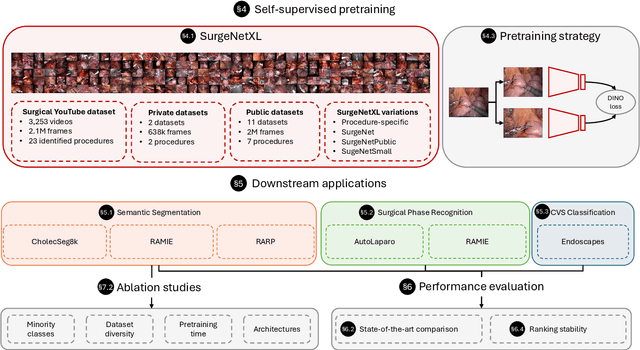
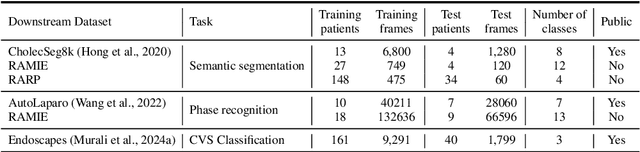
Foundation models have revolutionized computer vision by achieving vastly superior performance across diverse tasks through large-scale pretraining on extensive datasets. However, their application in surgical computer vision has been limited. This study addresses this gap by introducing SurgeNetXL, a novel surgical foundation model that sets a new benchmark in surgical computer vision. Trained on the largest reported surgical dataset to date, comprising over 4.7 million video frames, SurgeNetXL achieves consistent top-tier performance across six datasets spanning four surgical procedures and three tasks, including semantic segmentation, phase recognition, and critical view of safety (CVS) classification. Compared with the best-performing surgical foundation models, SurgeNetXL shows mean improvements of 2.4, 9.0, and 12.6 percent for semantic segmentation, phase recognition, and CVS classification, respectively. Additionally, SurgeNetXL outperforms the best-performing ImageNet-based variants by 14.4, 4.0, and 1.6 percent in the respective tasks. In addition to advancing model performance, this study provides key insights into scaling pretraining datasets, extending training durations, and optimizing model architectures specifically for surgical computer vision. These findings pave the way for improved generalizability and robustness in data-scarce scenarios, offering a comprehensive framework for future research in this domain. All models and a subset of the SurgeNetXL dataset, including over 2 million video frames, are publicly available at: https://github.com/TimJaspers0801/SurgeNet.
Exploring the Effect of Dataset Diversity in Self-Supervised Learning for Surgical Computer Vision
Jul 26, 2024Over the past decade, computer vision applications in minimally invasive surgery have rapidly increased. Despite this growth, the impact of surgical computer vision remains limited compared to other medical fields like pathology and radiology, primarily due to the scarcity of representative annotated data. Whereas transfer learning from large annotated datasets such as ImageNet has been conventionally the norm to achieve high-performing models, recent advancements in self-supervised learning (SSL) have demonstrated superior performance. In medical image analysis, in-domain SSL pretraining has already been shown to outperform ImageNet-based initialization. Although unlabeled data in the field of surgical computer vision is abundant, the diversity within this data is limited. This study investigates the role of dataset diversity in SSL for surgical computer vision, comparing procedure-specific datasets against a more heterogeneous general surgical dataset across three different downstream surgical applications. The obtained results show that using solely procedure-specific data can lead to substantial improvements of 13.8%, 9.5%, and 36.8% compared to ImageNet pretraining. However, extending this data with more heterogeneous surgical data further increases performance by an additional 5.0%, 5.2%, and 2.5%, suggesting that increasing diversity within SSL data is beneficial for model performance. The code and pretrained model weights are made publicly available at https://github.com/TimJaspers0801/SurgeNet.