 Add to Chrome
 Add to Firefox
 Add to Edge
Graph Regularized PCA
Jan 15, 2026
High-dimensional data often exhibit dependencies among variables that violate the isotropic-noise assumption under which principal component analysis (PCA) is optimal. For cases where the noise is not independent and identically distributed across features (i.e., the covariance is not spherical) we introduce Graph Regularized PCA (GR-PCA). It is a graph-based regularization of PCA that incorporates the dependency structure of the data features by learning a sparse precision graph and biasing loadings toward the low-frequency Fourier modes of the corresponding graph Laplacian. Consequently, high-frequency signals are suppressed, while graph-coherent low-frequency ones are preserved, yielding interpretable principal components aligned with conditional relationships. We evaluate GR-PCA on synthetic data spanning diverse graph topologies, signal-to-noise ratios, and sparsity levels. Compared to mainstream alternatives, it concentrates variance on the intended support, produces loadings with lower graph-Laplacian energy, and remains competitive in out-of-sample reconstruction. When high-frequency signals are present, the graph Laplacian penalty prevents overfitting, reducing the reconstruction accuracy but improving structural fidelity. The advantage over PCA is most pronounced when high-frequency signals are graph-correlated, whereas PCA remains competitive when such signals are nearly rotationally invariant. The procedure is simple to implement, modular with respect to the precision estimator, and scalable, providing a practical route to structure-aware dimensionality reduction that improves structural fidelity without sacrificing predictive performance.

Deep Reinforcement Learning for Power Trading
Jan 19, 2023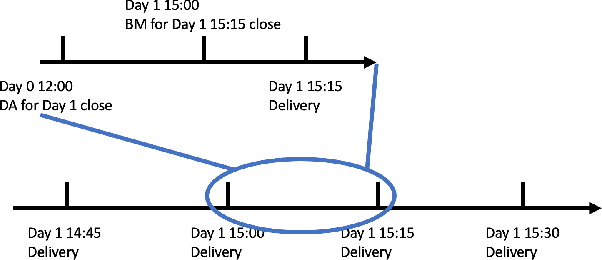
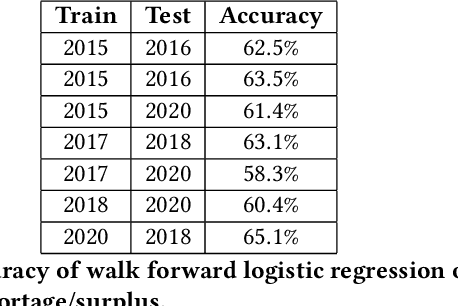
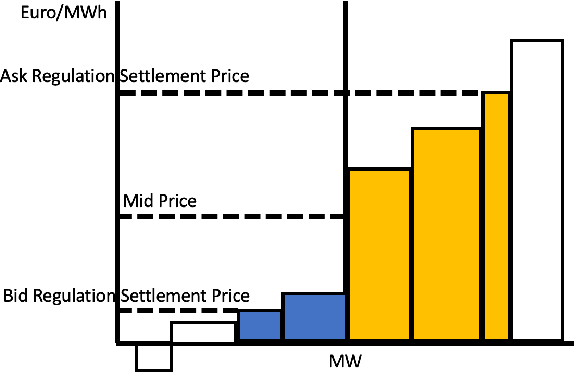

The Dutch power market includes a day-ahead market and an auction-like intraday balancing market. The varying supply and demand of power and its uncertainty induces an imbalance, which causes differing power prices in these two markets and creates an opportunity for arbitrage. In this paper, we present collaborative dual-agent reinforcement learning (RL) for bi-level simulation and optimization of European power arbitrage trading. Moreover, we propose two novel practical implementations specifically addressing the electricity power market. Leveraging the concept of imitation learning, the RL agent's reward is reformed by taking into account prior domain knowledge results in better convergence during training and, moreover, improves and generalizes performance. In addition, tranching of orders improves the bidding success rate and significantly raises the P&L. We show that each method contributes significantly to the overall performance uplifting, and the integrated methodology achieves about three-fold improvement in cumulative P&L over the original agent, as well as outperforms the highest benchmark policy by around 50% while exhibits efficient computational performance.