 Add to Chrome
 Add to Firefox
 Add to Edge
Solver-Aided Verification of Policy Compliance in Tool-Augmented LLM Agents
Mar 20, 2026
Tool-augmented Large Language Models (TaLLMs) extend LLMs with the ability to invoke external tools, enabling them to interact with real-world environments. However, a major limitation in deploying TaLLMs in sensitive applications such as customer service and business process automation is a lack of reliable compliance with domain-specific operational policies regarding tool-use and agent behavior. Current approaches merely steer LLMs to adhere to policies by including policy descriptions in the LLM context, but these provide no guarantees that policy violations will be prevented. In this paper, we introduce an SMT solver-aided framework to enforce tool-use policy compliance in TaLLM agents. Specifically, we use an LLM-assisted, human-guided approach to translate natural-language-specified tool-use policies into formal logic (SMT-LIB-2.0) constraints over agent-observable state and tool arguments. At runtime, planned tool calls are intercepted and checked against the constraints using the Z3 solver as a pre-condition to the tool call. Tool invocations that violate the policy are blocked. We evaluated on the TauBench benchmark and demonstrate that solver-aided policy checking reduces policy violations while maintaining overall task accuracy. These results suggest that integrating formal reasoning into TaLLM execution can improve tool-call policy compliance and overall reliability.

A Retrospective on ICSE 2022
Jul 26, 2022The 44th International Conference on Software Engineering (ICSE 2022) was held in person from May 22 to May 27, 2022 in Pittsburgh, PA, USA. Here, we summarize themes of research and the direction of research in the field of software engineering and testing that we observed at the conference.
Repairing Brain-Computer Interfaces with Fault-Based Data Acquisition
Mar 20, 2022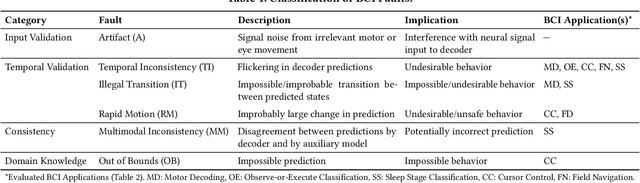
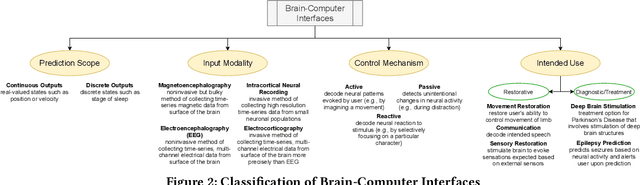
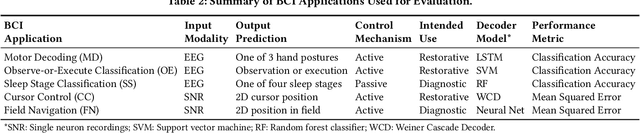
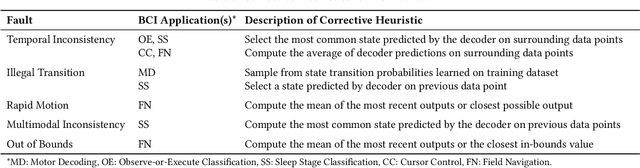
Brain-computer interfaces (BCIs) decode recorded neural signals from the brain and/or stimulate the brain with encoded neural signals. BCIs span both hardware and software and have a wide range of applications in restorative medicine, from restoring movement through prostheses and robotic limbs to restoring sensation and communication through spellers. BCIs also have applications in diagnostic medicine, e.g., providing clinicians with data for detecting seizures, sleep patterns, or emotions. Despite their promise, BCIs have not yet been adopted for long-term, day-to-day use because of challenges related to reliability and robustness, which are needed for safe operation in all scenarios. Ensuring safe operation currently requires hours of manual data collection and recalibration, involving both patients and clinicians. However, data collection is not targeted at eliminating specific faults in a BCI. This paper presents a new methodology for characterizing, detecting, and localizing faults in BCIs. Specifically, it proposes partial test oracles as a method for detecting faults and slice functions as a method for localizing faults to characteristic patterns in the input data or relevant tasks performed by the user. Through targeted data acquisition and retraining, the proposed methodology improves the correctness of BCIs. We evaluated the proposed methodology on five BCI applications. The results show that the proposed methodology (1) precisely localizes faults and (2) can significantly reduce the frequency of faults through retraining based on targeted, fault-based data acquisition. These results suggest that the proposed methodology is a promising step towards repairing faulty BCIs.