 Add to Chrome
 Add to Firefox
 Add to Edge
WATSON-Net: Vetting, Validation, and Analysis of Transits from Space Observations with Neural Networks
Nov 11, 2025
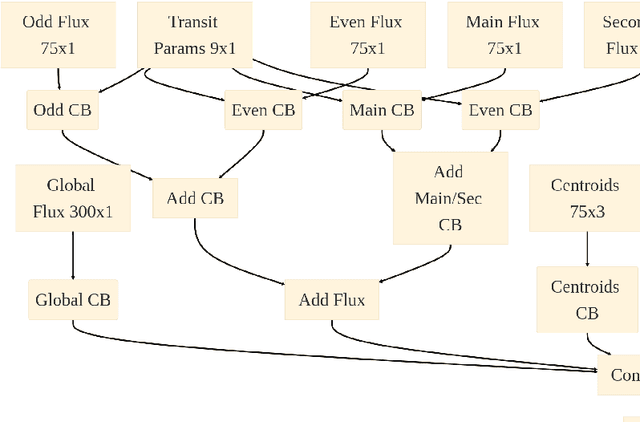
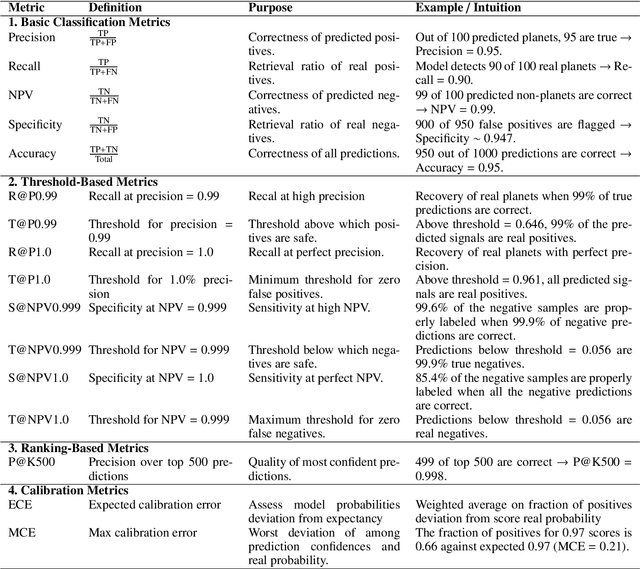
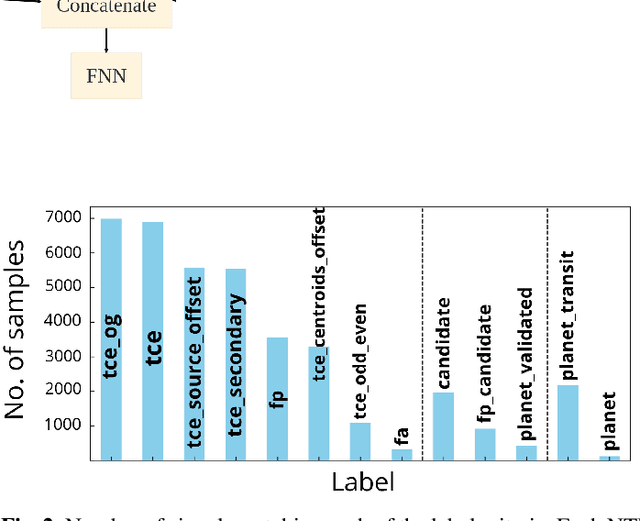
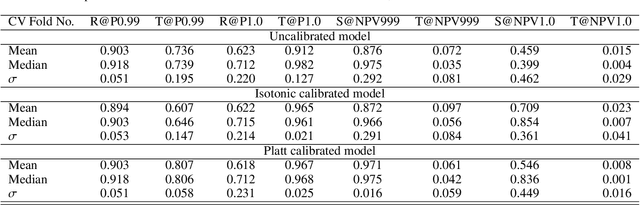
Context. As the number of detected transiting exoplanet candidates continues to grow, the need for robust and scalable automated tools to prioritize or validate them has become increasingly critical. Among the most promising solutions, deep learning models offer the ability to interpret complex diagnostic metrics traditionally used in the vetting process. Aims. In this work, we present WATSON-Net, a new open-source neural network classifier and data preparation package designed to compete with current state-of-the-art tools for vetting and validation of transiting exoplanet signals from space-based missions. Methods. Trained on Kepler Q1-Q17 DR25 data using 10-fold cross-validation, WATSON-Net produces ten independent models, each evaluated on dedicated validation and test sets. The ten models are calibrated and prepared to be extensible for TESS data by standardizing the input pipeline, allowing for performance assessment across different space missions. Results. For Kepler targets, WATSON-Net achieves a recall-at-precision of 0.99 (R@P0.99) of 0.903, ranking second, with only the ExoMiner network performing better (R@P0.99 = 0.936). For TESS signals, WATSON-Net emerges as the best-performing non-fine-tuned machine learning classifier, achieving a precision of 0.93 and a recall of 0.76 on a test set comprising confirmed planets and false positives. Both the model and its data preparation tools are publicly available in the dearwatson Python package, fully open-source and integrated into the vetting engine of the SHERLOCK pipeline.

On the estimation of stellar parameters with uncertainty prediction from Generative Artificial Neural Networks: application to Gaia RVS simulated spectra
Jul 19, 2016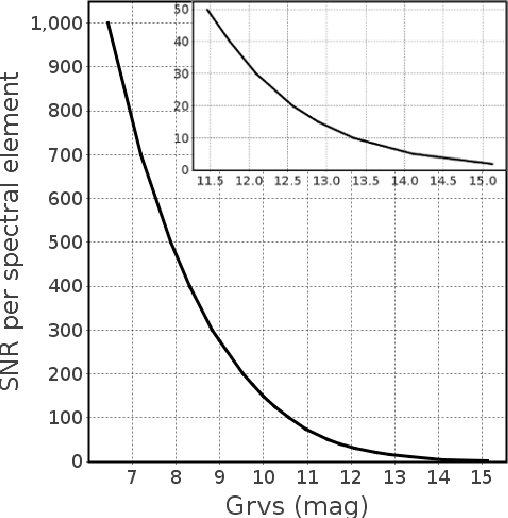
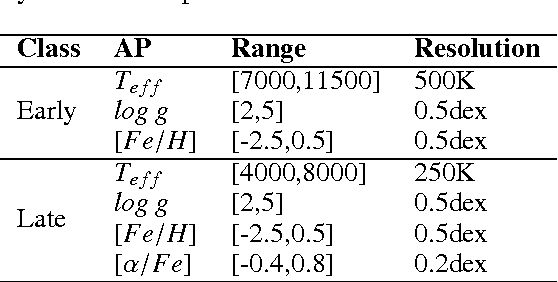
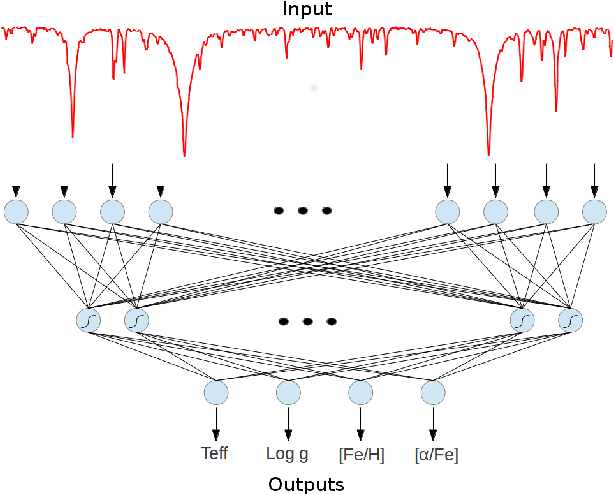
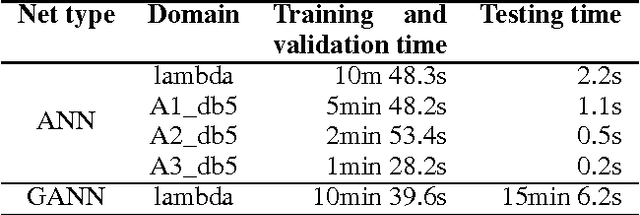
Aims. We present an innovative artificial neural network (ANN) architecture, called Generative ANN (GANN), that computes the forward model, that is it learns the function that relates the unknown outputs (stellar atmospheric parameters, in this case) to the given inputs (spectra). Such a model can be integrated in a Bayesian framework to estimate the posterior distribution of the outputs. Methods. The architecture of the GANN follows the same scheme as a normal ANN, but with the inputs and outputs inverted. We train the network with the set of atmospheric parameters (Teff, logg, [Fe/H] and [alpha/Fe]), obtaining the stellar spectra for such inputs. The residuals between the spectra in the grid and the estimated spectra are minimized using a validation dataset to keep solutions as general as possible. Results. The performance of both conventional ANNs and GANNs to estimate the stellar parameters as a function of the star brightness is presented and compared for different Galactic populations. GANNs provide significantly improved parameterizations for early and intermediate spectral types with rich and intermediate metallicities. The behaviour of both algorithms is very similar for our sample of late-type stars, obtaining residuals in the derivation of [Fe/H] and [alpha/Fe] below 0.1dex for stars with Gaia magnitude Grvs<12, which accounts for a number in the order of four million stars to be observed by the Radial Velocity Spectrograph of the Gaia satellite. Conclusions. Uncertainty estimation of computed astrophysical parameters is crucial for the validation of the parameterization itself and for the subsequent exploitation by the astronomical community. GANNs produce not only the parameters for a given spectrum, but a goodness-of-fit between the observed spectrum and the predicted one for a given set of parameters. Moreover, they allow us to obtain the full posterior distribution...