 Add to Chrome
 Add to Firefox
 Add to Edge
Graph neural networks uncover structure and functions underlying the activity of simulated neural assemblies
Feb 11, 2026
Graph neural networks trained to predict observable dynamics can be used to decompose the temporal activity of complex heterogeneous systems into simple, interpretable representations. Here we apply this framework to simulated neural assemblies with thousands of neurons and demonstrate that it can jointly reveal the connectivity matrix, the neuron types, the signaling functions, and in some cases hidden external stimuli. In contrast to existing machine learning approaches such as recurrent neural networks and transformers, which emphasize predictive accuracy but offer limited interpretability, our method provides both reliable forecasts of neural activity and interpretable decomposition of the mechanisms governing large neural assemblies.

Decomposing heterogeneous dynamical systems with graph neural networks
Jul 27, 2024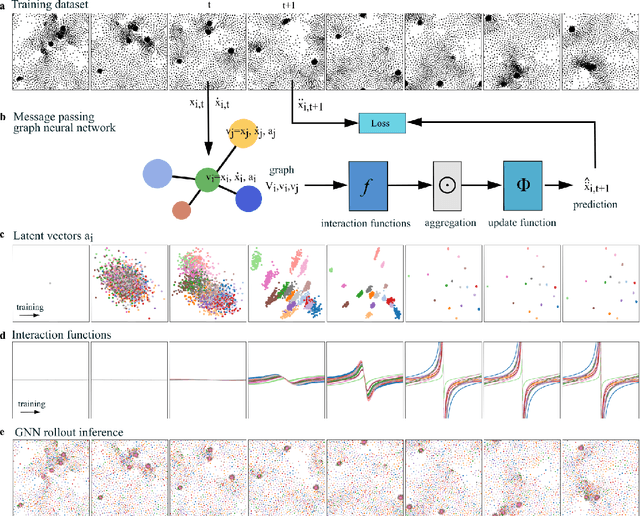

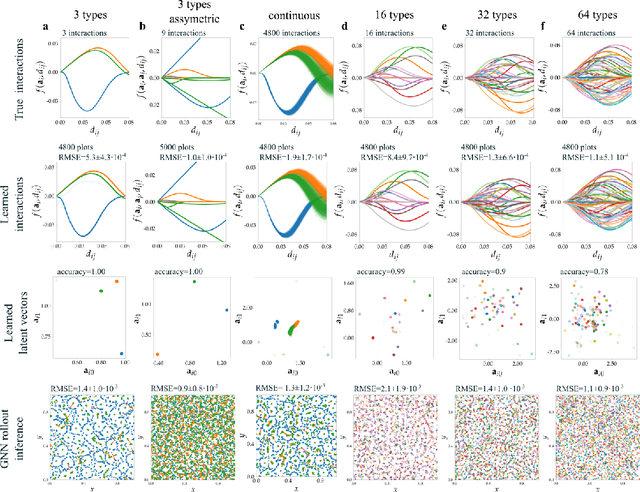
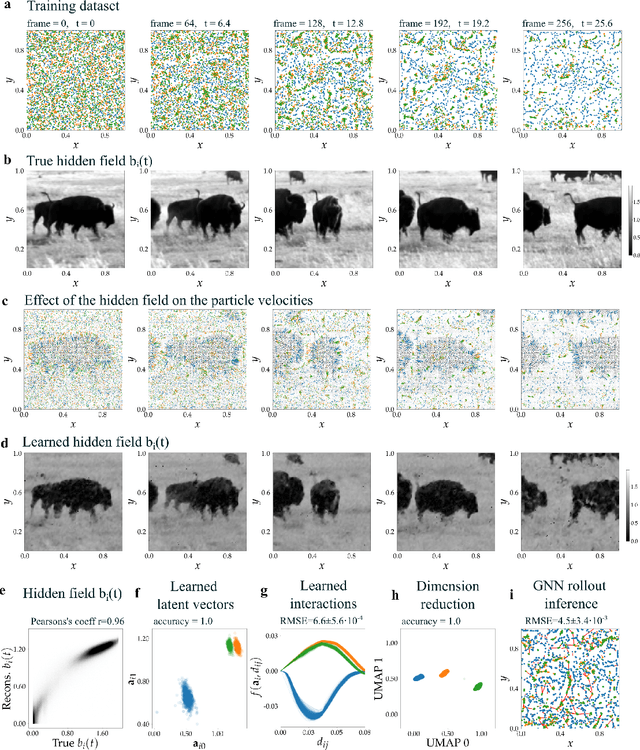
Natural physical, chemical, and biological dynamical systems are often complex, with heterogeneous components interacting in diverse ways. We show that graph neural networks can be designed to jointly learn the interaction rules and the structure of the heterogeneity from data alone. The learned latent structure and dynamics can be used to virtually decompose the complex system which is necessary to parameterize and infer the underlying governing equations. We tested the approach with simulation experiments of moving particles and vector fields that interact with each other. While our current aim is to better understand and validate the approach with simulated data, we anticipate it to become a generally applicable tool to uncover the governing rules underlying complex dynamics observed in nature.