 Add to Chrome
 Add to Firefox
 Add to Edge
Agentic AI and Retrieval-Augmented Models in Straight-Through Underwriting
Jul 08, 2026
Artificial intelligence (AI) is beginning to reshape actuarial practice, particularly in domains that require reasoning over unstructured documents, heterogeneous data sources, and regulated decision workflows. Actuaries now face a design space that ranges from traditional rule-based automation to large language models (LLMs), retrieval-augmented generation (RAG), and multi-agent ``agentic'' systems that plan, retrieve, call tools, and reflect. This paper examines how these emerging architectures can support actuarial priorities such as transparency, auditability, and human-in-the-loop governance, with a focus on straight-through decision processes. To make these ideas concrete, we develop and analyze an agentic AI framework for straight-through underwriting of small commercial Business Owner Policies (BOPs). We construct a synthetic but realistic experimental environment and compare three underwriting pipelines: (i) a single-LLM baseline, (ii) a naive RAG system, and (iii) a multi-agent ``Agentic RAG'' pipeline that combines targeted retrieval, third-party data checks, and explicit multi-step rule evaluation. The agentic system performs best overall, with the largest gains in multi-step and missing-information scenarios, where structured retrieval and reflection help the model avoid unsupported straight-through decisions.

mSHAP: SHAP Values for Two-Part Models
Jun 16, 2021
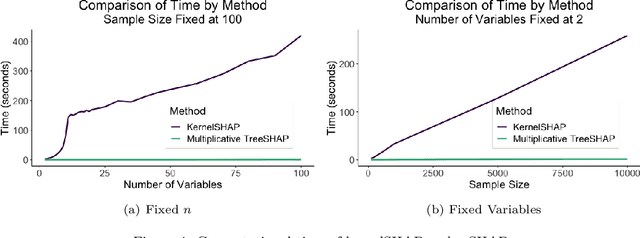
Two-part models are important to and used throughout insurance and actuarial science. Since insurance is required for registering a car, obtaining a mortgage, and participating in certain businesses, it is especially important that the models which price insurance policies are fair and non-discriminatory. Black box models can make it very difficult to know which covariates are influencing the results. SHAP values enable interpretation of various black box models, but little progress has been made in two-part models. In this paper, we propose mSHAP (or multiplicative SHAP), a method for computing SHAP values of two-part models using the SHAP values of the individual models. This method will allow for the predictions of two-part models to be explained at an individual observation level. After developing mSHAP, we perform an in-depth simulation study. Although the kernelSHAP algorithm is also capable of computing approximate SHAP values for a two-part model, a comparison with our method demonstrates that mSHAP is exponentially faster. Ultimately, we apply mSHAP to a two-part ratemaking model for personal auto property damage insurance coverage. Additionally, an R package (mshap) is available to easily implement the method in a wide variety of applications.
Synthesizing Property & Casualty Ratemaking Datasets using Generative Adversarial Networks
Aug 13, 2020Due to confidentiality issues, it can be difficult to access or share interesting datasets for methodological development in actuarial science, or other fields where personal data are important. We show how to design three different types of generative adversarial networks (GANs) that can build a synthetic insurance dataset from a confidential original dataset. The goal is to obtain synthetic data that no longer contains sensitive information but still has the same structure as the original dataset and retains the multivariate relationships. In order to adequately model the specific characteristics of insurance data, we use GAN architectures adapted for multi-categorical data: a Wassertein GAN with gradient penalty (MC-WGAN-GP), a conditional tabular GAN (CTGAN) and a Mixed Numerical and Categorical Differentially Private GAN (MNCDP-GAN). For transparency, the approaches are illustrated using a public dataset, the French motor third party liability data. We compare the three different GANs on various aspects: ability to reproduce the original data structure and predictive models, privacy, and ease of use. We find that the MC-WGAN-GP synthesizes the best data, the CTGAN is the easiest to use, and the MNCDP-GAN guarantees differential privacy.