 Add to Chrome
 Add to Firefox
 Add to Edge
FigSIM: A Dataset for Fine-grained Suicide Severity and Figurative Language in Suicide Memes
Jun 01, 2026
Suicide memes are memes used to express suicide-related thoughts or comment on suicide-related issues. Suicide memes are increasingly common on social media, yet remain poorly understood and potentially harmful. There is an urgent need to better understand their characteristics and to develop appropriate content moderation strategies that limits users' exposure to potentially harmful content. Currently, the absence of annotated datasets of suicide memes remains a key barrier to developing and evaluating automated moderation approaches. In this paper, we introduce FigSIM, the first dataset designed for fine-grained analysis of suicide memes. The dataset consists of 1049 memes, each annotated for (1) fine-grained suicide severity levels, (2) figurative phenomena (e.g., metaphors), and (3) suicide-related content (e.g., suicide method depiction). We benchmark 16 unimodal and multimodal models across three tasks: figurative language, suicide severity, and suicide-related content detection. Overall, FigSIM demonstrates that suicide memes pose unique challenges for both modeling and content moderation. Analysis revealed biases, such as underprediction of higher suicide severity levels, especially for figurative memes. The dataset (including splits used for analyses) is publicly available. Content Warning: This paper contains suicide-related content that may be triggering.

Utilizing Sequential Information of General Lab-test Results and Diagnoses History for Differential Diagnosis of Dementia
Feb 21, 2025
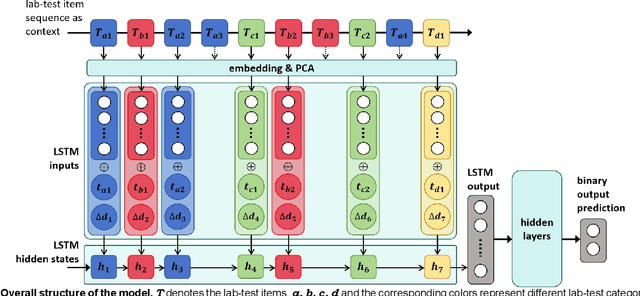
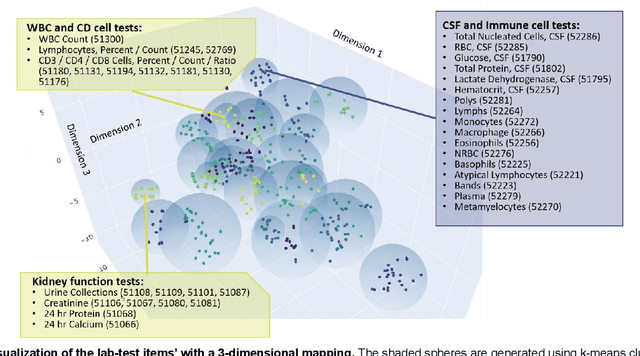
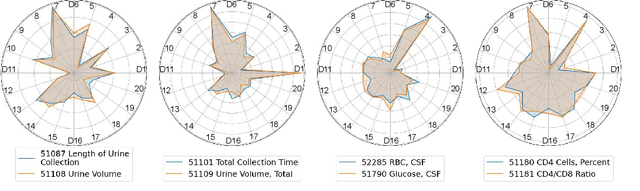
Early diagnosis of Alzheimer's Disease (AD) faces multiple data-related challenges, including high variability in patient data, limited access to specialized diagnostic tests, and overreliance on single-type indicators. These challenges are exacerbated by the progressive nature of AD, where subtle pathophysiological changes often precede clinical symptoms by decades. To address these limitations, this study proposes a novel approach that takes advantage of routinely collected general laboratory test histories for the early detection and differential diagnosis of AD. By modeling lab test sequences as "sentences", we apply word embedding techniques to capture latent relationships between tests and employ deep time series models, including long-short-term memory (LSTM) and Transformer networks, to model temporal patterns in patient records. Experimental results demonstrate that our approach improves diagnostic accuracy and enables scalable and costeffective AD screening in diverse clinical settings.
Query pipeline optimization for cancer patient question answering systems
Dec 19, 2024Retrieval-augmented generation (RAG) mitigates hallucination in Large Language Models (LLMs) by using query pipelines to retrieve relevant external information and grounding responses in retrieved knowledge. However, query pipeline optimization for cancer patient question-answering (CPQA) systems requires separately optimizing multiple components with domain-specific considerations. We propose a novel three-aspect optimization approach for the RAG query pipeline in CPQA systems, utilizing public biomedical databases like PubMed and PubMed Central. Our optimization includes: (1) document retrieval, utilizing a comparative analysis of NCBI resources and introducing Hybrid Semantic Real-time Document Retrieval (HSRDR); (2) passage retrieval, identifying optimal pairings of dense retrievers and rerankers; and (3) semantic representation, introducing Semantic Enhanced Overlap Segmentation (SEOS) for improved contextual understanding. On a custom-developed dataset tailored for cancer-related inquiries, our optimized RAG approach improved the answer accuracy of Claude-3-haiku by 5.24% over chain-of-thought prompting and about 3% over a naive RAG setup. This study highlights the importance of domain-specific query optimization in realizing the full potential of RAG and provides a robust framework for building more accurate and reliable CPQA systems, advancing the development of RAG-based biomedical systems.