 Add to Chrome
 Add to Firefox
 Add to Edge
CL API: Real-Time Closed-Loop Interactions with Biological Neural Networks
Feb 12, 2026
Biological neural networks (BNNs) are increasingly explored for their rich dynamics, parallelism, and adaptive behavior. Beyond understanding their function as a scientific endeavour, a key focus has been using these biological systems as a novel computing substrate. However, BNNs can only function as reliable information-processing systems if inputs are delivered in a temporally and structurally consistent manner. In practice, this requires stimulation with precisely controlled structure, microsecond-scale timing, multi-channel synchronization, and the ability to observe and respond to neural activity in real-time. Existing approaches to interacting with BNNs face a fundamental trade-off: they either depend on low-level hardware mechanisms, imposing prohibitive complexity for rapid iteration, or they sacrifice temporal and structural control, undermining consistency and reproducibility - particularly in closed-loop experiments. The Cortical Labs Application Programming Interface (CL API) enables real-time, sub-millisecond closed-loop interactions with BNNs. Taking a contract-based API design approach, the CL API provides users with precise stimulation semantics, transactional admission, deterministic ordering, and explicit synchronization guarantees. This contract is presented through a declarative Python interface, enabling non-expert programmers to express complex stimulation and closed-loop behavior without managing low-level scheduling or hardware details. Ultimately, the CL API provides an accessible and reproducible foundation for real-time experimentation with BNNs, supporting both fundamental biological research and emerging neurocomputing applications.

Active Inference and Intentional Behaviour
Dec 16, 2023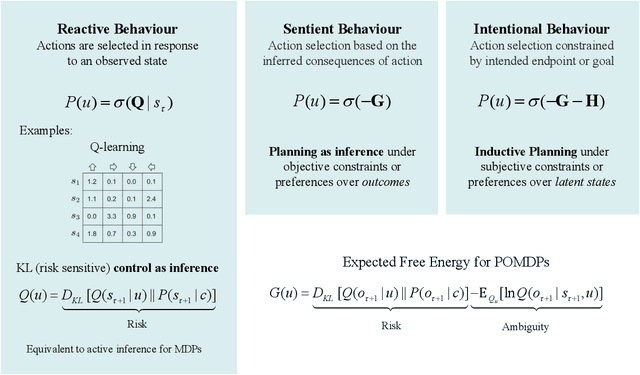
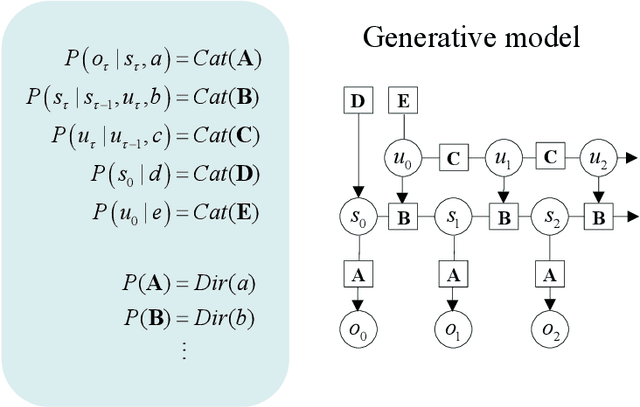
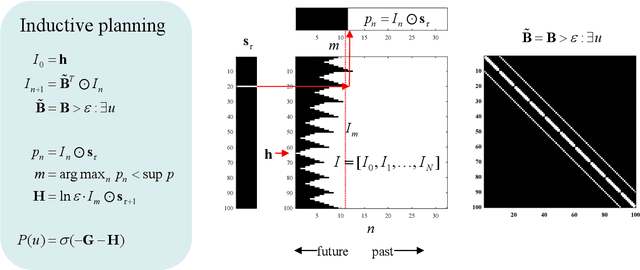
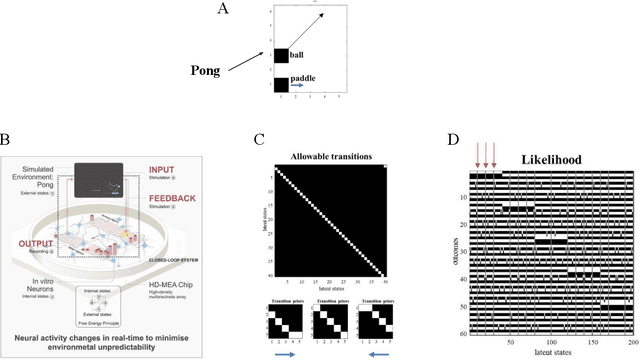
Recent advances in theoretical biology suggest that basal cognition and sentient behaviour are emergent properties of in vitro cell cultures and neuronal networks, respectively. Such neuronal networks spontaneously learn structured behaviours in the absence of reward or reinforcement. In this paper, we characterise this kind of self-organisation through the lens of the free energy principle, i.e., as self-evidencing. We do this by first discussing the definitions of reactive and sentient behaviour in the setting of active inference, which describes the behaviour of agents that model the consequences of their actions. We then introduce a formal account of intentional behaviour, that describes agents as driven by a preferred endpoint or goal in latent state-spaces. We then investigate these forms of (reactive, sentient, and intentional) behaviour using simulations. First, we simulate the aforementioned in vitro experiments, in which neuronal cultures spontaneously learn to play Pong, by implementing nested, free energy minimising processes. The simulations are then used to deconstruct the ensuing predictive behaviour, leading to the distinction between merely reactive, sentient, and intentional behaviour, with the latter formalised in terms of inductive planning. This distinction is further studied using simple machine learning benchmarks (navigation in a grid world and the Tower of Hanoi problem), that show how quickly and efficiently adaptive behaviour emerges under an inductive form of active inference.