 Add to Chrome
 Add to Firefox
 Add to Edge
Governance and Regulation of Artificial Intelligence in Developing Countries: A Case Study of Nigeria
Apr 07, 2026
This study examines the perception of legal professionals on the governance of AI in developing countries, using Nigeria as a case study. The study focused on ethical risks, regulatory gaps, and institutional readiness. The study adopted a qualitative case study design. Data were collected through 27 semi-structured interviews with legal practitioners in Nigeria. A focus group discussion was also held with seven additional legal practitioners across sectors such as finance, insurance, and corporate law. Thematic analysis was employed to identify key patterns in participant responses. Findings showed that there were concerns about data privacy risks and the lack of enforceable legal frameworks. Participants expressed limited confidence in institutional capacity and emphasized the need for locally adapted governance models rather than direct adoption of foreign frameworks. While some expressed optimism about AI's potential, this was conditional on the presence of strong legal oversight and public accountability. The study contributes to the growing discourse on AI governance in developing countries by focusing on the perspectives of legal professionals. It highlights the importance of regulatory approaches that are context-specific, inclusive, and capable of bridging the gap between global ethical principles and local realities. These insights offer practical guidance for policymakers, regulators, and scholars working to shape responsible AI governance in similar environments.

Genocide by Algorithm in Gaza: Artificial Intelligence, Countervailing Responsibility, and the Corruption of Public Discourse
Feb 09, 2026The accelerating militarization of artificial intelligence has transformed the ethics, politics, and governance of warfare. This article interrogates how AI-driven targeting systems function as epistemic infrastructures that classify, legitimize, and execute violence, using Israel's conduct in Gaza as a paradigmatic case. Through the lens of responsibility, the article examines three interrelated dimensions: (a) political responsibility, exploring how states exploit AI to accelerate warfare while evading accountability; (b) professional responsibility, addressing the complicity of technologists, engineers, and defense contractors in the weaponization of data; and (c) personal responsibility, probing the moral agency of individuals who participate in or resist algorithmic governance. This is complemented by an examination of the position and influence of those participating in public discourse, whose narratives often obscure or normalize AI-enabled violence. The Gaza case reveals AI not as a neutral instrument but as an active participant in the reproduction of colonial hierarchies and the normalization of atrocity. Ultimately, the paper calls for a reframing of technological agency and accountability in the age of automated warfare. It concludes that confronting algorithmic violence demands a democratization of AI ethics, one that resists technocratic fatalism and centers the lived realities of those most affected by high-tech militarism.
Unheard in the Digital Age: Rethinking AI Bias and Speech Diversity
Jan 26, 2026Speech remains one of the most visible yet overlooked vectors of inclusion and exclusion in contemporary society. While fluency is often equated with credibility and competence, individuals with atypical speech patterns are routinely marginalized. Given the current state of the debate, this article focuses on the structural biases that shape perceptions of atypical speech and are now being encoded into artificial intelligence. Automated speech recognition (ASR) systems and voice interfaces, trained predominantly on standardized speech, routinely fail to recognize or respond to diverse voices, compounding digital exclusion. As AI technologies increasingly mediate access to opportunity, the study calls for inclusive technological design, anti-bias training to minimize the impact of discriminatory algorithmic decisions, and enforceable policy reform that explicitly recognize speech diversity as a matter of equity, not merely accessibility. Drawing on interdisciplinary research, the article advocates for a cultural and institutional shift in how we value voice, urging co-created solutions that elevate the rights, representation, and realities of atypical speakers in the digital age. Ultimately, the article reframes speech inclusion as a matter of equity (not accommodation) and advocates for co-created AI systems that reflect the full spectrum of human voices.
The SMART+ Framework for AI Systems
Dec 09, 2025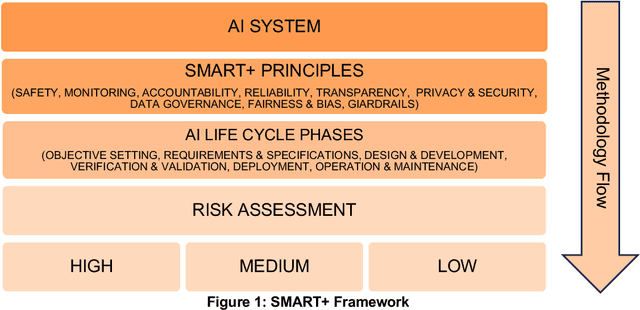
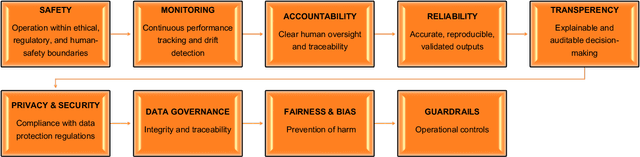
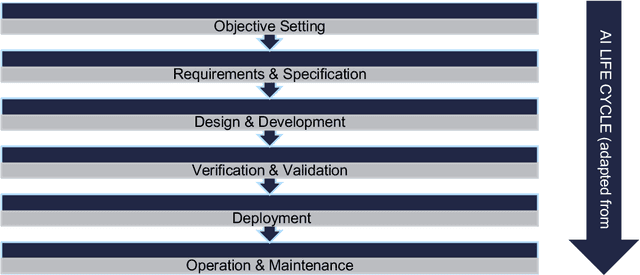
Artificial Intelligence (AI) systems are now an integral part of multiple industries. In clinical research, AI supports automated adverse event detection in clinical trials, patient eligibility screening for protocol enrollment, and data quality validation. Beyond healthcare, AI is transforming finance through real-time fraud detection, automated loan risk assessment, and algorithmic decision-making. Similarly, in manufacturing, AI enables predictive maintenance to reduce equipment downtime, enhances quality control through computer-vision inspection, and optimizes production workflows using real-time operational data. While these technologies enhance operational efficiency, they introduce new challenges regarding safety, accountability, and regulatory compliance. To address these concerns, we introduce the SMART+ Framework - a structured model built on the pillars of Safety, Monitoring, Accountability, Reliability, and Transparency, and further enhanced with Privacy & Security, Data Governance, Fairness & Bias, and Guardrails. SMART+ offers a practical, comprehensive approach to evaluating and governing AI systems across industries. This framework aligns with evolving mechanisms and regulatory guidance to integrate operational safeguards, oversight procedures, and strengthened privacy and governance controls. SMART+ demonstrates risk mitigation, trust-building, and compliance readiness. By enabling responsible AI adoption and ensuring auditability, SMART+ provides a robust foundation for effective AI governance in clinical research.
Levers of Power in the Field of AI
Nov 05, 2025This paper examines how decision makers in academia, government, business, and civil society navigate questions of power in implementations of artificial intelligence. The study explores how individuals experience and exercise levers of power, which are presented as social mechanisms that shape institutional responses to technological change. The study reports on the responses of personalized questionnaires designed to gather insight on a decision maker's institutional purview, based on an institutional governance framework developed from the work of Neo-institutionalists. Findings present the anonymized, real responses and circumstances of respondents in the form of twelve fictional personas of high-level decision makers from North America and Europe. These personas illustrate how personal agency, organizational logics, and institutional infrastructures may intersect in the governance of AI. The decision makers' responses to the questionnaires then inform a discussion of the field-level personal power of decision makers, methods of fostering institutional stability in times of change, and methods of influencing institutional change in the field of AI. The final section of the discussion presents a table of the dynamics of the levers of power in the field of AI for change makers and five testable hypotheses for institutional and social movement researchers. In summary, this study provides insight on the means for policymakers within institutions and their counterparts in civil society to personally engage with AI governance.