 Add to Chrome
 Add to Firefox
 Add to Edge
Blind-Spot Mass: A Good-Turing Framework for Quantifying Deployment Coverage Risk in Machine Learning Systems
Apr 06, 2026
Blind-spot mass is a Good-Turing framework for quantifying deployment coverage risk in machine learning. In modern ML systems, operational state distributions are often heavy-tailed, implying that a long tail of valid but rare states is structurally under-supported in finite training and evaluation data. This creates a form of 'coverage blindness': models can appear accurate on standard test sets yet remain unreliable across large regions of the deployment state space. We propose blind-spot mass B_n(tau), a deployment metric estimating the total probability mass assigned to states whose empirical support falls below a threshold tau. B_n(tau) is computed using Good-Turing unseen-species estimation and yields a principled estimate of how much of the operational distribution lies in reliability-critical, under-supported regimes. We further derive a coverage-imposed accuracy ceiling, decomposing overall performance into supported and blind components and separating capacity limits from data limits. We validate the framework in wearable human activity recognition (HAR) using wrist-worn inertial data. We then replicate the same analysis in the MIMIC-IV hospital database with 275 admissions, where the blind-spot mass curve converges to the same 95% at tau = 5 across clinical state abstractions. This replication across structurally independent domains - differing in modality, feature space, label space, and application - shows that blind-spot mass is a general ML methodology for quantifying combinatorial coverage risk, not an application-specific artifact. Blind-spot decomposition identifies which activities or clinical regimes dominate risk, providing actionable guidance for industrial practitioners on targeted data collection, normalization/renormalization, and physics- or domain-informed constraints for safer deployment.

The Stochastic Gap: A Markovian Framework for Pre-Deployment Reliability and Oversight-Cost Auditing in Agentic Artificial Intelligence
Mar 25, 2026Agentic artificial intelligence (AI) in organizations is a sequential decision problem constrained by reliability and oversight cost. When deterministic workflows are replaced by stochastic policies over actions and tool calls, the key question is not whether a next step appears plausible, but whether the resulting trajectory remains statistically supported, locally unambiguous, and economically governable. We develop a measure-theoretic Markov framework for this setting. The core quantities are state blind-spot mass B_n(tau), state-action blind mass B^SA_{pi,n}(tau), an entropy-based human-in-the-loop escalation gate, and an expected oversight-cost identity over the workflow visitation measure. We instantiate the framework on the Business Process Intelligence Challenge 2019 purchase-to-pay log (251,734 cases, 1,595,923 events, 42 distinct workflow actions) and construct a log-driven simulated agent from a chronological 80/20 split of the same process. The main empirical finding is that a large workflow can appear well supported at the state level while retaining substantial blind mass over next-step decisions: refining the operational state to include case context, economic magnitude, and actor class expands the state space from 42 to 668 and raises state-action blind mass from 0.0165 at tau=50 to 0.1253 at tau=1000. On the held-out split, m(s) = max_a pi-hat(a|s) tracks realized autonomous step accuracy within 3.4 percentage points on average. The same quantities that delimit statistically credible autonomy also determine expected oversight burden. The framework is demonstrated on a large-scale enterprise procurement workflow and is designed for direct application to engineering processes for which operational event logs are available.
A Systematic Study on Object Recognition Using Millimeter-wave Radar
May 03, 2023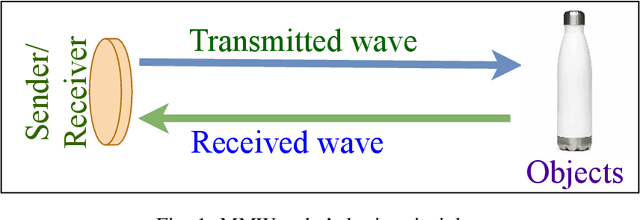
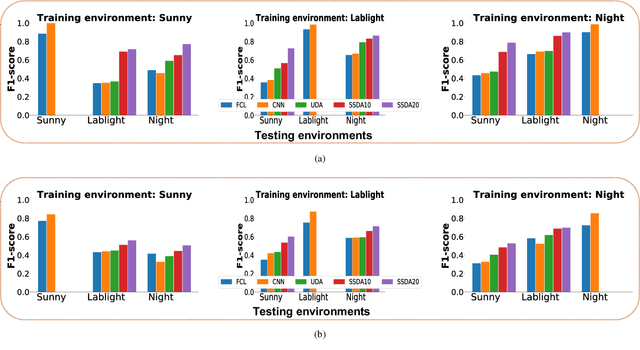

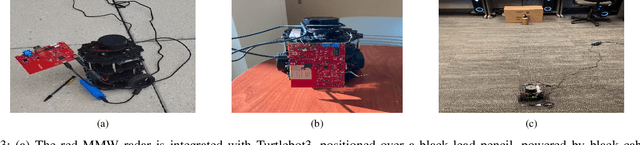
Due to its light and weather-independent sensing, millimeter-wave (MMW) radar is essential in smart environments. Intelligent vehicle systems and industry-grade MMW radars have integrated such capabilities. Industry-grade MMW radars are expensive and hard to get for community-purpose smart environment applications. However, commercially available MMW radars have hidden underpinning challenges that need to be investigated for tasks like recognizing objects and activities, real-time person tracking, object localization, etc. Image and video data are straightforward to gather, understand, and annotate for such jobs. Image and video data are light and weather-dependent, susceptible to the occlusion effect, and present privacy problems. To eliminate dependence and ensure privacy, commercial MMW radars should be tested. MMW radar's practicality and performance in varied operating settings must be addressed before promoting it. To address the problems, we collected a dataset using Texas Instruments' Automotive mmWave Radar (AWR2944) and reported the best experimental settings for object recognition performance using different deep learning algorithms. Our extensive data gathering technique allows us to systematically explore and identify object identification task problems under cross-ambience conditions. We investigated several solutions and published detailed experimental data.