 Add to Chrome
 Add to Firefox
 Add to Edge
Attention Without Grounding: Causal Evaluation of Visual Explanations in Medical VLMs
Jul 20, 2026
Attention and saliency heatmaps are widely used to explain medical Vision-Language Model (VLM) outputs on chest X-rays, yet whether they truly highlight the image evidence driving predictions has not been causally tested. We audit faithfulness via overlap with radiologist bounding boxes on PadChest (n=637), attribution mass within radiologist masks on CheXlocalize (n=643), and 16x16 patch-occlusion maps that record which regions, when hidden, change the answer. We study three MedGemma-4B variants, cross-family probes on LLaVA-RAD and Qwen3-VL-8B-Instruct, and the specialist CheXagent-2-3b, with two CXR-trained classifiers (DenseNet121, ResNet50) as positive controls. A heatmap is faithful only if the model uses the image and attention concentrates on regions whose occlusion alters the prediction. No evaluated VLM meets both criteria. MedGemma and Qwen3-VL use the image, but attention anti-correlates with patch-occlusion importance (rho < 0 with 95% bootstrap CIs below zero). LLaVA-RAD's attention correlates positively, but the model is almost text-only (99.1% text-only agreement, near-zero causal mass), so correlation ties two near-zero signals. Attention also misses annotated anatomy: overlap with true regions never beats shifted or random controls, and no method places more than 22% of its mass inside radiologist masks. The two CXR classifiers pass all metrics, indicating the failure is specific to VLM heatmaps, not the evaluation. These heatmaps are visually reassuring but not faithful; clinical explanations require controlled localization metrics and causal perturbation, not visual inspection alone.

Predictive Entropy Links Calibration and Paraphrase Sensitivity in Medical Vision-Language Models
Apr 10, 2026Medical Vision Language Models VLMs suffer from two failure modes that threaten safe deployment mis calibrated confidence and sensitivity to question rephrasing. We show they share a common cause, proximity to the decision boundary, by benchmarking five uncertainty quantification methods on MedGemma 4BIT across in distribution MIMIC CXR and outof distribution PadChest chest X ray datasets, with cross architecture validation on LLaVA RAD7B. For well calibrated single model methods, predictive entropy from one forward pass predicts which samples will flip under rephrasing AUROC 0.711 on MedGemma, 0.878 on LLaVARAD p 10 4, enabling a single entropy threshold to flag both unreliable and rephrase sensitive predictions. A five member LoRA ensemble fails under the MIMIC PadChest shift 42.9 ECE, 34.1 accuracy, though LLaVA RAD s ensemble does not collapse 69.1. MC Dropout achieves the best calibration ECE 4.3 and selective prediction coverage 21.5 at 5 risk, yet total entropy from a single forward pass outperforms the ensemble for both error detection AUROC 0.743 vs 0.657 and paraphrase screening. Simple methods win.
When Chain-of-Thought Backfires: Evaluating Prompt Sensitivity in Medical Language Models
Mar 26, 2026Large Language Models (LLMs) are increasingly deployed in medical settings, yet their sensitivity to prompt formatting remains poorly characterized. We evaluate MedGemma (4B and 27B parameters) on MedMCQA (4,183 questions) and PubMedQA (1,000 questions) across a broad suite of robustness tests. Our experiments reveal several concerning findings. Chain-of-Thought (CoT) prompting decreases accuracy by 5.7% compared to direct answering. Few-shot examples degrade performance by 11.9% while increasing position bias from 0.14 to 0.47. Shuffling answer options causes the model to change predictions 59.1% of the time, with accuracy dropping up to 27.4 percentage points. Front-truncating context to 50% causes accuracy to plummet below the no-context baseline, yet back-truncation preserves 97% of full-context accuracy. We further show that cloze scoring (selecting the highest log-probability option token) achieves 51.8% (4B) and 64.5% (27B), surpassing all prompting strategies and revealing that models "know" more than their generated text shows. Permutation voting recovers 4 percentage points over single-ordering inference. These results demonstrate that prompt engineering techniques validated on general-purpose models do not transfer to domain-specific medical LLMs, and that reliable alternatives exist.
Consistent but Dangerous: Per-Sample Safety Classification Reveals False Reliability in Medical Vision-Language Models
Mar 22, 2026Consistency under paraphrase, the property that semantically equivalent prompts yield identical predictions, is increasingly used as a proxy for reliability when deploying medical vision-language models (VLMs). We show this proxy is fundamentally flawed: a model can achieve perfect consistency by relying on text patterns rather than the input image. We introduce a four-quadrant per-sample safety taxonomy that jointly evaluates consistency (stable predictions across paraphrased prompts) and image reliance (predictions that change when the image is removed). Samples are classified as Ideal (consistent and image-reliant), Fragile (inconsistent but image-reliant), Dangerous (consistent but not image-reliant), or Worst (inconsistent and not image-reliant). Evaluating five medical VLM configurations across two chest X-ray datasets (MIMIC-CXR, PadChest), we find that LoRA fine-tuning dramatically reduces flip rates but shifts a majority of samples into the Dangerous quadrant: LLaVA-Rad Base achieves a 1.5% flip rate on PadChest while 98.5% of its samples are Dangerous. Critically, Dangerous samples exhibit high accuracy (up to 99.6%) and low entropy, making them invisible to standard confidence-based screening. We observe a negative correlation between flip rate and Dangerous fraction (r = -0.89, n=10) and recommend that deployment evaluations always pair consistency checks with a text-only baseline: a single additional forward pass that exposes the false reliability trap.
Multimodal Deep Learning for Early Prediction of Patient Deterioration in the ICU: Integrating Time-Series EHR Data with Clinical Notes
Mar 16, 2026Early identification of patients at risk for clinical deterioration in the intensive care unit (ICU) remains a critical challenge. Delayed recognition of impending adverse events, including mortality, vasopressor initiation, and mechanical ventilation, contributes to preventable morbidity and mortality. We present a multimodal deep learning approach that combines structured time-series data (vital signs and laboratory values) with unstructured clinical notes to predict patient deterioration within 24 hours. Using the MIMIC-IV database, we constructed a cohort of 74,822 ICU stays and generated 5.7 million hourly prediction samples. Our architecture employs a bidirectional LSTM encoder for temporal patterns in physiologic data and ClinicalBERT embeddings for clinical notes, fused through a cross-modal attention mechanism. We also present a systematic review of existing approaches to ICU deterioration prediction, identifying 31 studies published between 2015 and 2024. Most existing models rely solely on structured data and achieve area under the curve (AUC) values between 0.70 and 0.85. Studies incorporating clinical notes remain rare but show promise for capturing information not present in structured fields. Our multimodal model achieves a test AUROC of 0.7857 and AUPRC of 0.1908 on 823,641 held-out samples, with a validation-to-test gap of only 0.6 percentage points. Ablation analysis validates the multimodal approach: clinical notes improve AUROC by 2.5 percentage points and AUPRC by 39.2% relative to a structured-only baseline, while deep learning models consistently outperform classical baselines (XGBoost AUROC: 0.7486, logistic regression: 0.7171). This work contributes both a thorough review of the field and a reproducible multimodal framework for clinical deterioration prediction.
PSF-Med: Measuring and Explaining Paraphrase Sensitivity in Medical Vision Language Models
Feb 24, 2026Medical Vision Language Models (VLMs) can change their answers when clinicians rephrase the same question, which raises deployment risks. We introduce Paraphrase Sensitivity Failure (PSF)-Med, a benchmark of 19,748 chest Xray questions paired with about 92,000 meaningpreserving paraphrases across MIMIC-CXR and PadChest. Across six medical VLMs, we measure yes/no flips for the same image and find flip rates from 8% to 58%. However, low flip rate does not imply visual grounding: text-only baselines show that some models stay consistent even when the image is removed, suggesting they rely on language priors. To study mechanisms in one model, we apply GemmaScope 2 Sparse Autoencoders (SAEs) to MedGemma 4B and analyze FlipBank, a curated set of 158 flip cases. We identify a sparse feature at layer 17 that correlates with prompt framing and predicts decision margin shifts. In causal patching, removing this feature's contribution recovers 45% of the yesminus-no logit margin on average and fully reverses 15% of flips. Acting on this finding, we show that clamping the identified feature at inference reduces flip rates by 31% relative with only a 1.3 percentage-point accuracy cost, while also decreasing text-prior reliance. These results suggest that flip rate alone is not enough; robustness evaluations should test both paraphrase stability and image reliance.
Comparative Study of Generative Models for Early Detection of Failures in Medical Devices
May 07, 2025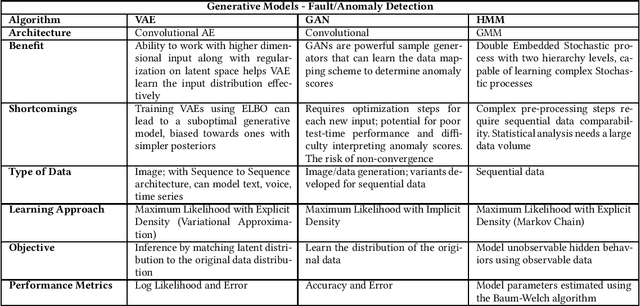

The medical device industry has significantly advanced by integrating sophisticated electronics like microchips and field-programmable gate arrays (FPGAs) to enhance the safety and usability of life-saving devices. These complex electro-mechanical systems, however, introduce challenging failure modes that are not easily detectable with conventional methods. Effective fault detection and mitigation become vital as reliance on such electronics grows. This paper explores three generative machine learning-based approaches for fault detection in medical devices, leveraging sensor data from surgical staplers,a class 2 medical device. Historically considered low-risk, these devices have recently been linked to an increasing number of injuries and fatalities. The study evaluates the performance and data requirements of these machine-learning approaches, highlighting their potential to enhance device safety.