 Add to Chrome
 Add to Firefox
 Add to Edge
Kimi K3: Open Frontier Intelligence
Jul 27, 2026
We introduce Kimi K3, a 2.8T parameter Mixture-of-Experts model with 104 billion activated parameters, native vision capabilities, and a 1-million-token context window. Kimi K3 is built on Kimi Delta Attention and Attention Residuals, which improve information flow across sequence length and model depth. Together with Stable LatentMoE, which effectively activates 16 of 896 routed experts per token, and refined training and data recipes, these advances yield an approximately 2.5x improvement in overall scaling efficiency over Kimi K2. Post-training highlights reinforcement learning across general, agentic, and coding domains and multiple reasoning-effort levels, enabling compositional generalization and robust long-horizon execution. At 2.8T scale, Kimi K3 is supported by infrastructure advances in multiple areas: algorithm-system co-design for KDA, perfectly balanced expert-parallel training with efficient memory management, million-token agentic RL with persistent rollout and sandbox states, and deployment innovations. Extensive evaluations show that Kimi K3 achieves frontier-level performance across long-horizon coding, agentic, knowledge, reasoning, and vision tasks. While its overall performance still trails the most powerful proprietary models, namely Claude Fable 5 and GPT-5.6 Sol, Kimi K3 consistently outperforms other open and proprietary models evaluated in our suite. We release the full Kimi K3 model weights to facilitate future research and accelerate the broader deployment and adoption of frontier intelligence.

TaDaa: real time Ticket Assignment Deep learning Auto Advisor for customer support, help desk, and issue ticketing systems
Jul 18, 2022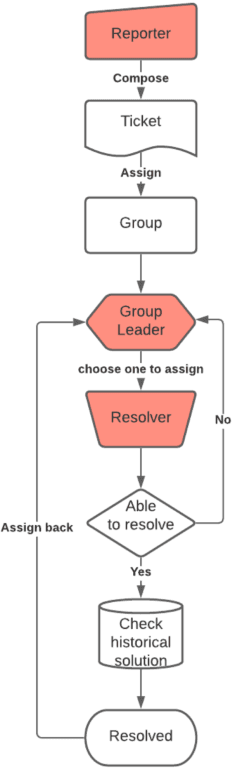
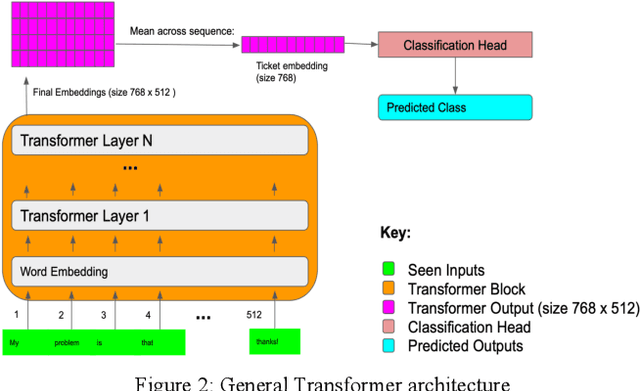
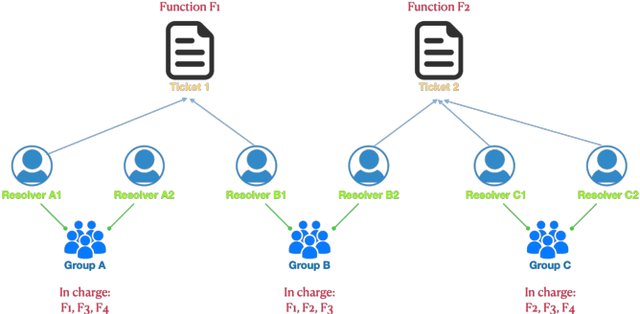
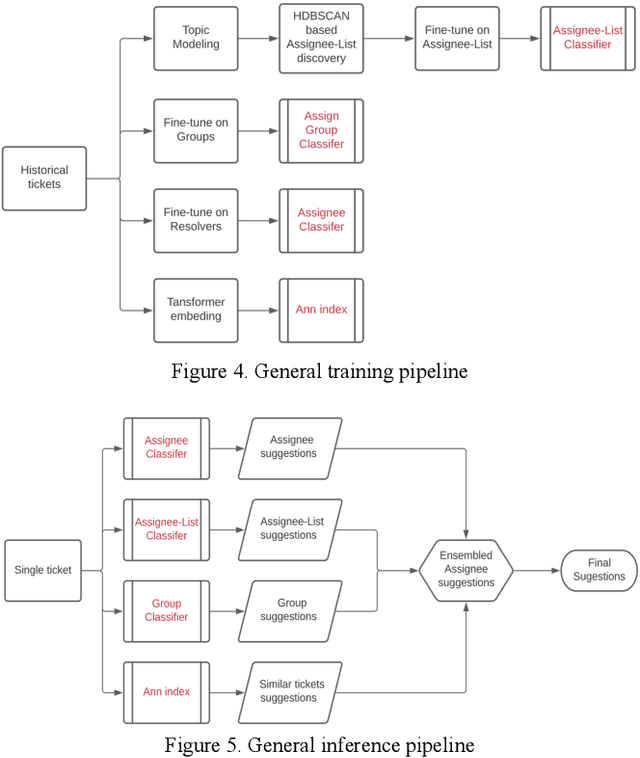
This paper proposes TaDaa: Ticket Assignment Deep learning Auto Advisor, which leverages the latest Transformers models and machine learning techniques quickly assign issues within an organization, like customer support, help desk and alike issue ticketing systems. The project provides functionality to 1) assign an issue to the correct group, 2) assign an issue to the best resolver, and 3) provide the most relevant previously solved tickets to resolvers. We leverage one ticketing system sample dataset, with over 3k+ groups and over 10k+ resolvers to obtain a 95.2% top 3 accuracy on group suggestions and a 79.0% top 5 accuracy on resolver suggestions. We hope this research will greatly improve average issue resolution time on customer support, help desk, and issue ticketing systems.
Answer Fast: Accelerating BERT on the Tensor Streaming Processor
Jun 22, 2022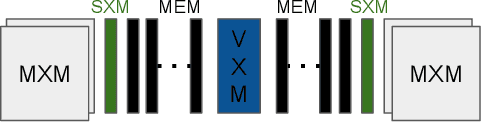
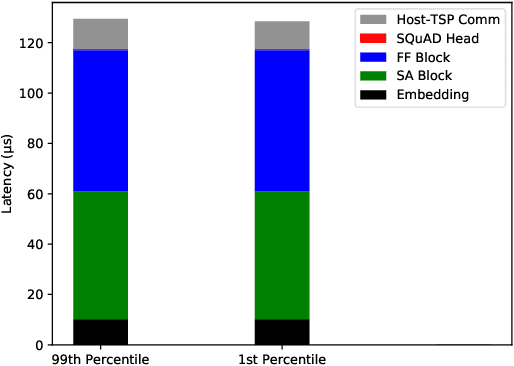
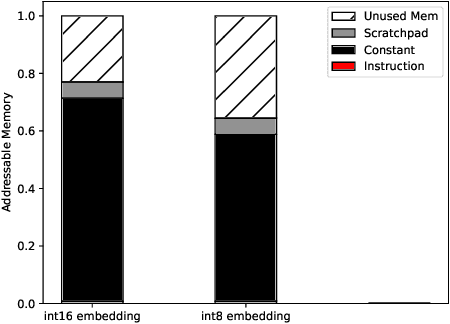
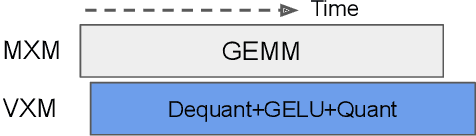
Transformers have become a predominant machine learning workload, they are not only the de-facto standard for natural language processing tasks, but they are also being deployed in other domains such as vision and speech recognition. Many of the transformer-based applications are real-time systems such as machine translation and web search. These real time systems often come with strict end-to-end inference latency requirements. Unfortunately, while the majority of the transformer computation comes from matrix multiplications, transformers also include several non-linear components that tend to become the bottleneck during an inference. In this work, we accelerate the inference of BERT models on the tensor streaming processor. By carefully fusing all the nonlinear components with the matrix multiplication components, we are able to efficiently utilize the on-chip matrix multiplication units resulting in a deterministic tail latency of 130 $\mu$s for a batch-1 inference through BERT-base, which is 6X faster than the current state-of-the-art.