 Add to Chrome
 Add to Firefox
 Add to Edge
Evaluating the Presence of Sex Bias in Clinical Reasoning by Large Language Models
Feb 04, 2026
Large language models (LLMs) are increasingly embedded in healthcare workflows for documentation, education, and clinical decision support. However, these systems are trained on large text corpora that encode existing biases, including sex disparities in diagnosis and treatment, raising concerns that such patterns may be reproduced or amplified. We systematically examined whether contemporary LLMs exhibit sex-specific biases in clinical reasoning and how model configuration influences these behaviours. We conducted three experiments using 50 clinician-authored vignettes spanning 44 specialties in which sex was non-informative to the initial diagnostic pathway. Four general-purpose LLMs (ChatGPT (gpt-4o-mini), Claude 3.7 Sonnet, Gemini 2.0 Flash and DeepSeekchat). All models demonstrated significant sex-assignment skew, with predicted sex differing by model. At temperature 0.5, ChatGPT assigned female sex in 70% of cases (95% CI 0.66-0.75), DeepSeek in 61% (0.57-0.65) and Claude in 59% (0.55-0.63), whereas Gemini showed a male skew, assigning a female sex in 36% of cases (0.32-0.41). Contemporary LLMs exhibit stable, model-specific sex biases in clinical reasoning. Permitting abstention reduces explicit labelling but does not eliminate downstream diagnostic differences. Safe clinical integration requires conservative and documented configuration, specialty-level clinical data auditing, and continued human oversight when deploying general-purpose models in healthcare settings.

The OxMat dataset: a multimodal resource for the development of AI-driven technologies in maternal and newborn child health
Apr 11, 2024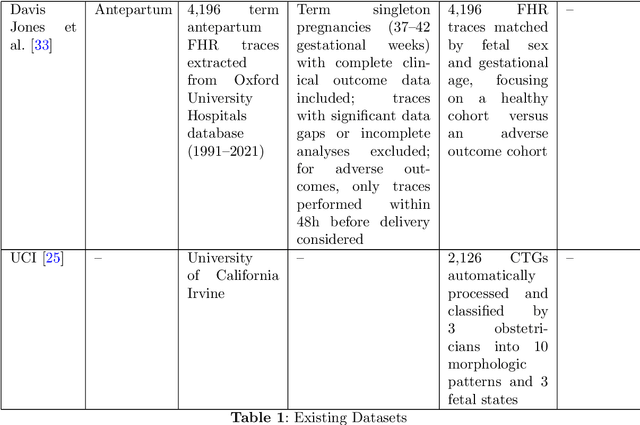
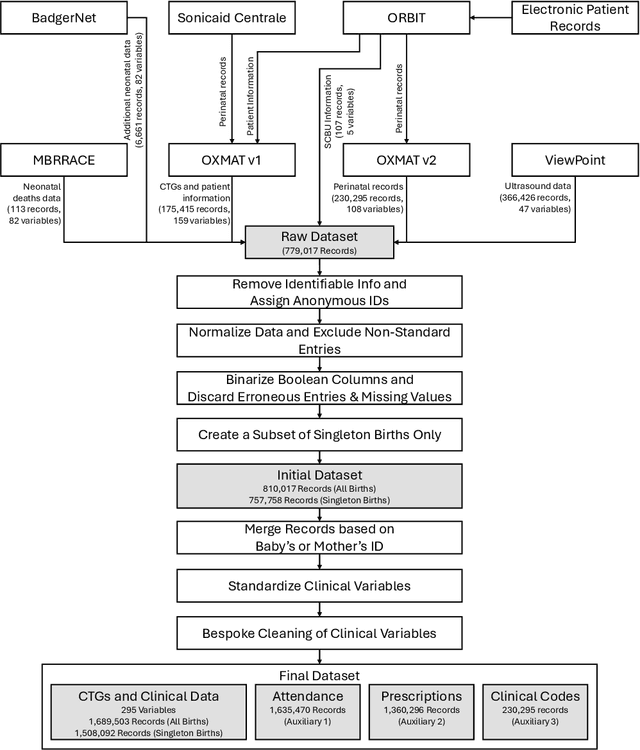
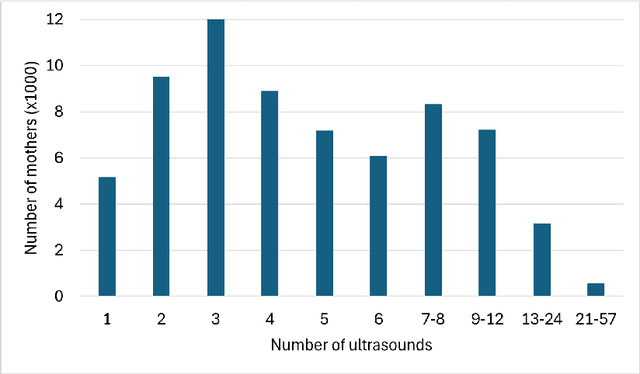
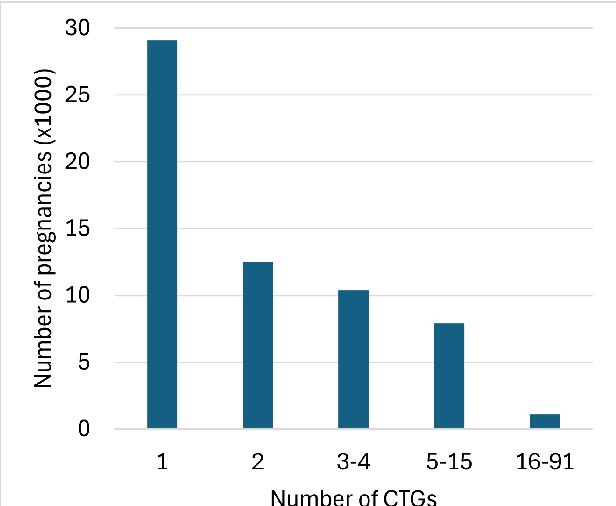
The rapid advancement of Artificial Intelligence (AI) in healthcare presents a unique opportunity for advancements in obstetric care, particularly through the analysis of cardiotocography (CTG) for fetal monitoring. However, the effectiveness of such technologies depends upon the availability of large, high-quality datasets that are suitable for machine learning. This paper introduces the Oxford Maternity (OxMat) dataset, the world's largest curated dataset of CTGs, featuring raw time series CTG data and extensive clinical data for both mothers and babies, which is ideally placed for machine learning. The OxMat dataset addresses the critical gap in women's health data by providing over 177,211 unique CTG recordings from 51,036 pregnancies, carefully curated and reviewed since 1991. The dataset also comprises over 200 antepartum, intrapartum and postpartum clinical variables, ensuring near-complete data for crucial outcomes such as stillbirth and acidaemia. While this dataset also covers the intrapartum stage, around 94% of the constituent CTGS are antepartum. This allows for a unique focus on the underserved antepartum period, in which early detection of at-risk fetuses can significantly improve health outcomes. Our comprehensive review of existing datasets reveals the limitations of current datasets: primarily, their lack of sufficient volume, detailed clinical data and antepartum data. The OxMat dataset lays a foundation for future AI-driven prenatal care, offering a robust resource for developing and testing algorithms aimed at improving maternal and fetal health outcomes.