 Add to Chrome
 Add to Firefox
 Add to Edge
Multi-Level Evidence Aggregation for Robust Facial Phenotype Retrieval in Rare Genetic Disorder Prioritization
Aug 11, 2026
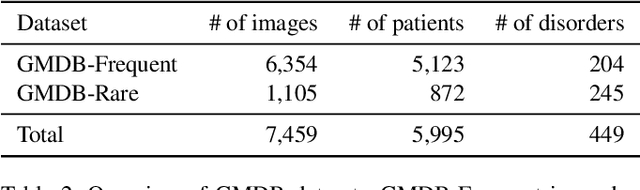
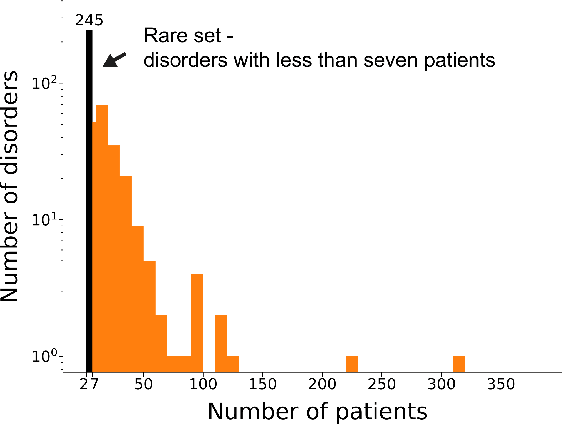
AI-assisted facial phenotyping supports rare genetic disorder prioritization by retrieving visually similar diagnosed cases from facial image reference databases such as the GestaltMatcher Database (GMDB). Existing GestaltMatcher-based retrieval frameworks compare each test image with individual gallery images in a facial phenotype embedding space. However, this pointwise formulation does not fully exploit available evidence, because patients may have multiple images and disorders may be represented by multiple diagnosed gallery patients. We propose an inference-time multi-level evidence aggregation framework that improves facial phenotype retrieval without modifying the underlying GestaltMatcher-Arc encoder. The framework combines embedding-level patient aggregation of multiple images from the same individual, patient-weighted disorder centroids, and hybrid individual-centroid scoring to integrate test-patient observations, disorder-level gallery evidence, and local nearest-neighbor evidence. We evaluated the approach on GMDB v1.1.4 across disorders represented during training (GMDB-Freq), unseen disorders (GMDB-Rare), and multi-image patient subsets, using a unified gallery containing both GMDB-Freq and GMDB-Rare disorders. Multi-level evidence aggregation improved mean per-disorder top-$N$ retrieval accuracy across all evaluation subsets. Top-1 accuracy increased from 38.52% to 48.82% on GMDB-Freq and from 19.38% to 23.79% on GMDB-Rare. On multi-image subsets, top-1 accuracy increased from 46.12% to 60.94% on GMDB-Multi-Freq and from 18.54% to 26.71% on GMDB-Multi-Rare. These findings show that inference-time aggregation can improve next-generation facial phenotype retrieval without retraining the encoder, supporting a shift from isolated single-image matching toward multi-level aggregation of patient and disorder evidence for rare-disorder prioritization.

Improving Deep Facial Phenotyping for Ultra-rare Disorder Verification Using Model Ensembles
Nov 12, 2022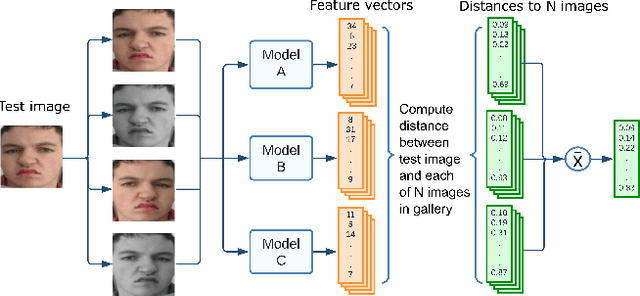
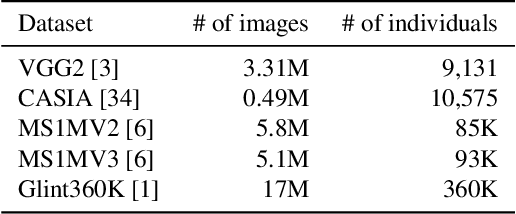
Rare genetic disorders affect more than 6% of the global population. Reaching a diagnosis is challenging because rare disorders are very diverse. Many disorders have recognizable facial features that are hints for clinicians to diagnose patients. Previous work, such as GestaltMatcher, utilized representation vectors produced by a DCNN similar to AlexNet to match patients in high-dimensional feature space to support "unseen" ultra-rare disorders. However, the architecture and dataset used for transfer learning in GestaltMatcher have become outdated. Moreover, a way to train the model for generating better representation vectors for unseen ultra-rare disorders has not yet been studied. Because of the overall scarcity of patients with ultra-rare disorders, it is infeasible to directly train a model on them. Therefore, we first analyzed the influence of replacing GestaltMatcher DCNN with a state-of-the-art face recognition approach, iResNet with ArcFace. Additionally, we experimented with different face recognition datasets for transfer learning. Furthermore, we proposed test-time augmentation, and model ensembles that mix general face verification models and models specific for verifying disorders to improve the disorder verification accuracy of unseen ultra-rare disorders. Our proposed ensemble model achieves state-of-the-art performance on both seen and unseen disorders.