 Add to Chrome
 Add to Firefox
 Add to Edge
NeoRacer: An Open, Standardized 1:12 Scale Autonomous Race Car for Benchmarking and Education
Jul 29, 2026
Many scientific fields rely on standard benchmarks and shared platforms to improve review and reproducibility, but autonomous systems research still lacks widely accepted open hardware. Where standardization has emerged, progress has accelerated. This is especially evident in autonomous racing, where teams often build custom systems or buy niche, expensive vehicles, making control and robotics research and education hard to compare and reproduce. High costs also limit access outside well-funded labs, while affordable educational robots are often underpowered. To address this gap, we present NeoRacer, an open-source 1:12 scale autonomous racing platform. It is built around an NVIDIA Jetson Orin Nano (67 TOPS), a 270° LiDAR, a 120 fps global-shutter camera, and a 9-axis IMU. NeoRacer ships pre-assembled for USD 2,699, offering over 3x the compute of comparable platforms at less than half the cost of the nearest pre-assembled alternative. Co-developed by the Neobotics Foundation and Seeed Studio, and manufactured by Seeed Studio, NeoRacer combines open hardware and software design with scalable, repeatable production. The modular, extensible platform provides a standardized benchmarking environment for autonomous racing algorithms across institutions. We describe the hardware/software architecture, design decisions from two pilot deployments (MIT IAP, 15 students; BU CPS Lab, 10 students), and key cost-performance tradeoffs. Hardware is licensed under CERN-OHL-S v2 and software under GPLv3, with all design files, firmware, and ROS2 packages publicly accessible.

Population Descent: A Natural-Selection Based Hyper-Parameter Tuning Framework
Oct 23, 2023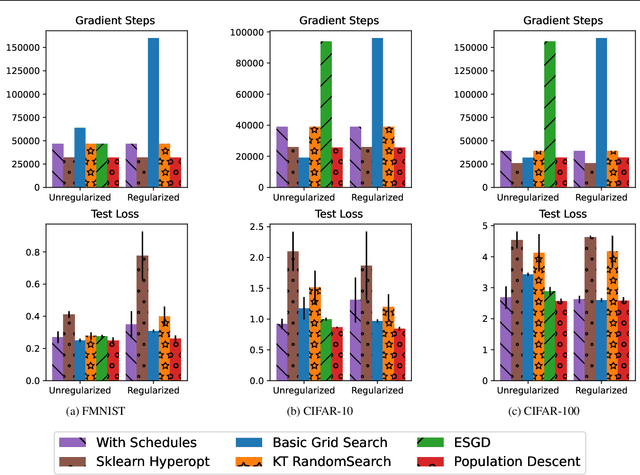
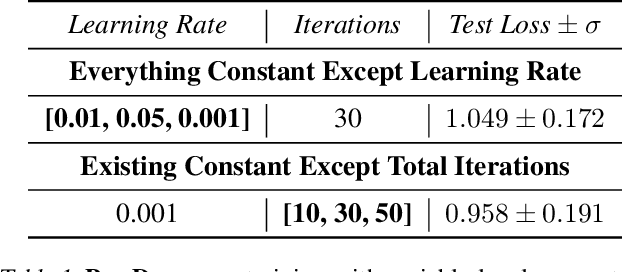
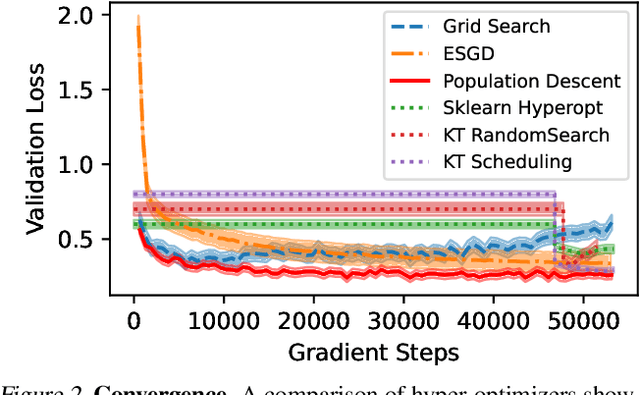
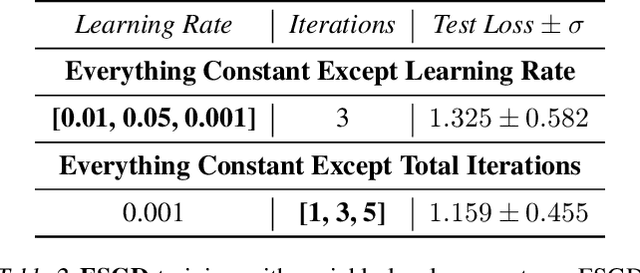
First-order gradient descent has been the base of the most successful optimization algorithms ever implemented. On supervised learning problems with very high dimensionality, such as neural network optimization, it is almost always the algorithm of choice, mainly due to its memory and computational efficiency. However, it is a classical result in optimization that gradient descent converges to local minima on non-convex functions. Even more importantly, in certain high-dimensional cases, escaping the plateaus of large saddle points becomes intractable. On the other hand, black-box optimization methods are not sensitive to the local structure of a loss function's landscape but suffer the curse of dimensionality. Instead, memetic algorithms aim to combine the benefits of both. Inspired by this, we present Population Descent, a memetic algorithm focused on hyperparameter optimization. We show that an adaptive m-elitist selection approach combined with a normalized-fitness-based randomization scheme outperforms more complex state-of-the-art algorithms by up to 13% on common benchmark tasks.
The SwaNNFlight System: On-the-Fly Sim-to-Real Adaptation via Anchored Learning
Jan 17, 2023Reinforcement Learning (RL) agents trained in simulated environments and then deployed in the real world are often sensitive to the differences in dynamics presented, commonly termed the sim-to-real gap. With the goal of minimizing this gap on resource-constrained embedded systems, we train and live-adapt agents on quadrotors built from off-the-shelf hardware. In achieving this we developed three novel contributions. (i) SwaNNFlight, an open-source firmware enabling wireless data capture and transfer of agents' observations. Fine-tuning agents with new data, and receiving and swapping onboard NN controllers -- all while in flight. We also design SwaNNFlight System (SwaNNFS) allowing new research in training and live-adapting learning agents on similar systems. (ii) Multiplicative value composition, a technique for preserving the importance of each policy optimization criterion, improving training performance and variability in learnt behavior. And (iii) anchor critics to help stabilize the fine-tuning of agents during sim-to-real transfer, online learning from real data while retaining behavior optimized in simulation. We train consistently flight-worthy control policies in simulation and deploy them on real quadrotors. We then achieve live controller adaptation via over-the-air updates of the onboard control policy from a ground station. Our results indicate that live adaptation unlocks a near-50\% reduction in power consumption, attributed to the sim-to-real gap. Finally, we tackle the issues of catastrophic forgetting and controller instability, showing the effectiveness of our novel methods. Project Website: https://github.com/BU-Cyber-Physical-Systems-Lab/SwaNNFS