 Add to Chrome
 Add to Firefox
 Add to Edge
Forward-Only Convolutional Neural Networks with Learnable Channel-Class Assignment
Jun 07, 2026
The Forward-Forward (FF) algorithm offers a biologically inspired alternative to backpropagation by replacing gradient-based credit assignment with local, forward-only objectives. While recent extensions have adapted FF to convolutional neural networks (CNNs), existing formulations rely on static channel-class partitions and struggle to perform effectively in complex tasks. In this work, we introduce a learnable channel-class assignment mechanism that enables adaptive, data-driven specialization of convolutional channels, supported by entropy and orthogonality regularization to promote learning performance. We further propose a loss-aware layer contribution strategy that adaptively weights intermediate-layer predictions based on their validation performance, enhancing the effectiveness of forward-only inference. Integrated into residual CNNs, the proposed method achieves consistently superior performance across CIFAR-10, CIFAR-100, and Tiny-ImageNet compared to existing similar forward-only methods. Notably, it establishes new state-of-the-art performance among FF-based models, substantially narrowing the gap with backpropagation. These findings demonstrate that introducing learnable channel specialization and layer contribution weighting significantly enhances the representational capacity of forward-only learning in deep CNNs.

A Lightweight and Secure Deep Learning Model for Privacy-Preserving Federated Learning in Intelligent Enterprises
Mar 03, 2025
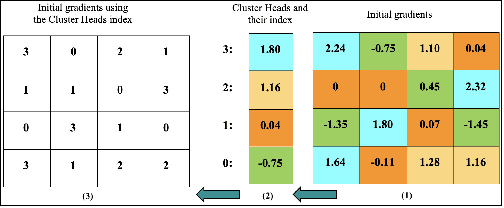
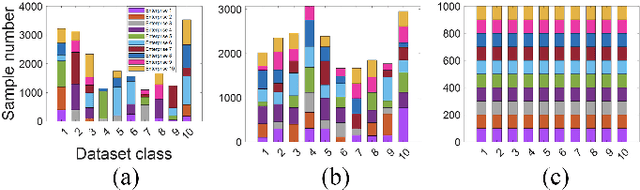

The ever growing Internet of Things (IoT) connections drive a new type of organization, the Intelligent Enterprise. In intelligent enterprises, machine learning based models are adopted to extract insights from data. Due to the efficiency and privacy challenges of these traditional models, a new federated learning (FL) paradigm has emerged. In FL, multiple enterprises can jointly train a model to update a final model. However, firstly, FL trained models usually perform worse than centralized models, especially when enterprises training data is non-IID (Independent and Identically Distributed). Second, due to the centrality of FL and the untrustworthiness of local enterprises, traditional FL solutions are vulnerable to poisoning and inference attacks and violate privacy. Thirdly, the continuous transfer of parameters between enterprises and servers increases communication costs. To this end, the FedAnil+ model is proposed, a novel, lightweight, and secure Federated Deep Learning Model that includes three main phases. In the first phase, the goal is to solve the data type distribution skew challenge. Addressing privacy concerns against poisoning and inference attacks is covered in the second phase. Finally, to alleviate the communication overhead, a novel compression approach is proposed that significantly reduces the size of the updates. The experiment results validate that FedAnil+ is secure against inference and poisoning attacks with better accuracy. In addition, it shows improvements over existing approaches in terms of model accuracy (13%, 16%, and 26%), communication cost (17%, 21%, and 25%), and computation cost (7%, 9%, and 11%).
Backpropagation-free Spiking Neural Networks with the Forward-Forward Algorithm
Feb 19, 2025Spiking Neural Networks (SNNs) offer a biologically inspired computational paradigm that emulates neuronal activity through discrete spike-based processing. Despite their advantages, training SNNs with traditional backpropagation (BP) remains challenging due to computational inefficiencies and a lack of biological plausibility. This study explores the Forward-Forward (FF) algorithm as an alternative learning framework for SNNs. Unlike backpropagation, which relies on forward and backward passes, the FF algorithm employs two forward passes, enabling localized learning, enhanced computational efficiency, and improved compatibility with neuromorphic hardware. We introduce an FF-based SNN training framework and evaluate its performance across both non-spiking (MNIST, Fashion-MNIST, CIFAR-10) and spiking (Neuro-MNIST, SHD) datasets. Experimental results demonstrate that our model surpasses existing FF-based SNNs by over 5% on MNIST and Fashion-MNIST while achieving accuracy comparable to state-of-the-art backpropagation-trained SNNs. On more complex tasks such as CIFAR-10 and SHD, our approach outperforms other SNN models by up to 6% and remains competitive with leading backpropagation-trained SNNs. These findings highlight the FF algorithm's potential to advance SNN training methodologies and neuromorphic computing by addressing key limitations of backpropagation.