 Add to Chrome
 Add to Firefox
 Add to Edge
Healthy Harvests: A Comparative Look at Guava Disease Classification Using InceptionV3
Feb 11, 2026
Guava fruits often suffer from many diseases. This can harm fruit quality and fruit crop yield. Early identification is important for minimizing damage and ensuring fruit health. This study focuses on 3 different categories for classifying diseases. These are Anthracnose, Fruit flies, and Healthy fruit. The data set used in this study is collected from Mendeley Data. This dataset contains 473 original images of Guava. These images vary in size and format. The original dataset was resized to 256x256 pixels with RGB color mode for better consistency. After this, the Data augmentation process is applied to improve the dataset by generating variations of the original images. The augmented dataset consists of 3784 images using advanced preprocessing techniques. Two deep learning models were implemented to classify the images. The InceptionV3 model is well known for its advanced framework. These apply multiple convolutional filters for obtaining different features effectively. On the other hand, the ResNet50 model helps to train deeper networks by using residual learning. The InceptionV3 model achieved the impressive accuracy of 98.15%, and ResNet50got 94.46% accuracy. Data mixing methods such as CutMix and MixUp were applied to enhance the model's robustness. The confusion matrix was used to evaluate the overall model performance of both InceptionV3 and Resnet50. Additionally, SHAP analysis is used to improve interpretability, which helps to find the significant parts of the image for the model prediction. This study purposes to highlight how advanced models enhan

Smart Diagnosis and Early Intervention in PCOS: A Deep Learning Approach to Women's Reproductive Health
Feb 04, 2026Polycystic Ovary Syndrome (PCOS) is a widespread disorder in women of reproductive age, characterized by a hormonal imbalance, irregular periods, and multiple ovarian cysts. Infertility, metabolic syndrome, and cardiovascular risks are long-term complications that make early detection essential. In this paper, we design a powerful framework based on transfer learning utilizing DenseNet201 and ResNet50 for classifying ovarian ultrasound images. The model was trained on an online dataset containing 3856 ultrasound images of cyst-infected and non-infected patients. Each ultrasound frame was resized to 224x224 pixels and encoded with precise pathological indicators. The MixUp and CutMix augmentation strategies were used to improve generalization, yielding a peak validation accuracy of 99.80% by Densenet201 and a validation loss of 0.617 with alpha values of 0.25 and 0.4, respectively. We evaluated the model's interpretability using leading Explainable AI (XAI) approaches such as SHAP, Grad-CAM, and LIME, reasoning with and presenting explicit visual reasons for the model's behaviors, therefore increasing the model's transparency. This study proposes an automated system for medical picture diagnosis that may be used effectively and confidently in clinical practice.
Toward Reliable and Explainable Nail Disease Classification: Leveraging Adversarial Training and Grad-CAM Visualization
Feb 04, 2026Human nail diseases are gradually observed over all age groups, especially among older individuals, often going ignored until they become severe. Early detection and accurate diagnosis of such conditions are important because they sometimes reveal our body's health problems. But it is challenging due to the inferred visual differences between disease types. This paper presents a machine learning-based model for automated classification of nail diseases based on a publicly available dataset, which contains 3,835 images scaling six categories. In 224x224 pixels, all images were resized to ensure consistency. To evaluate performance, four well-known CNN models-InceptionV3, DenseNet201, EfficientNetV2, and ResNet50 were trained and analyzed. Among these, InceptionV3 outperformed the others with an accuracy of 95.57%, while DenseNet201 came next with 94.79%. To make the model stronger and less likely to make mistakes on tricky or noisy images, we used adversarial training. To help understand how the model makes decisions, we used SHAP to highlight important features in the predictions. This system could be a helpful support for doctors, making nail disease diagnosis more accurate and faster.
LeafLife: An Explainable Deep Learning Framework with Robustness for Grape Leaf Disease Recognition
Jan 06, 2026Plant disease diagnosis is essential to farmers' management choices because plant diseases frequently lower crop yield and product quality. For harvests to flourish and agricultural productivity to boost, grape leaf disease detection is important. The plant disease dataset contains grape leaf diseases total of 9,032 images of four classes, among them three classes are leaf diseases, and the other one is healthy leaves. After rigorous pre-processing dataset was split (70% training, 20% validation, 10% testing), and two pre-trained models were deployed: InceptionV3 and Xception. Xception shows a promising result of 96.23% accuracy, which is remarkable than InceptionV3. Adversarial Training is used for robustness, along with more transparency. Grad-CAM is integrated to confirm the leaf disease. Finally deployed a web application using Streamlit with a heatmap visualization and prediction with confidence level for robust grape leaf disease classification.
Enhancing Tea Leaf Disease Recognition with Attention Mechanisms and Grad-CAM Visualization
Dec 19, 2025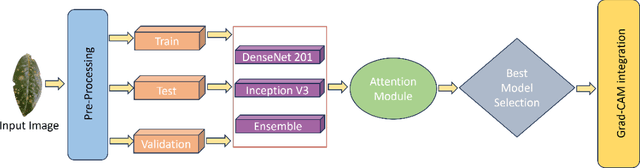
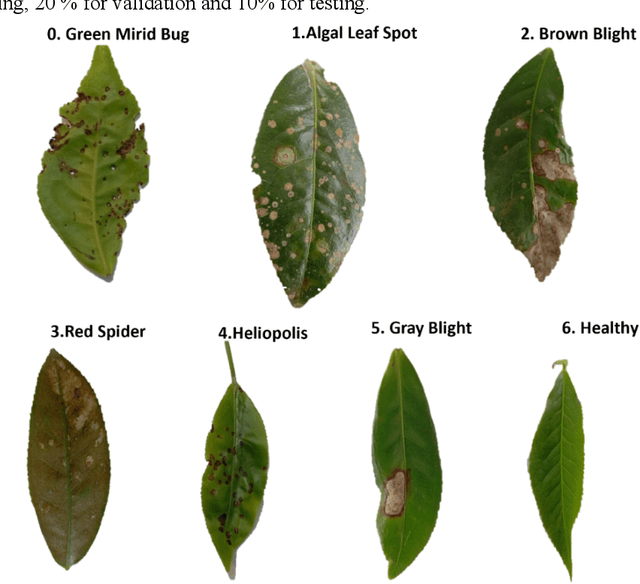
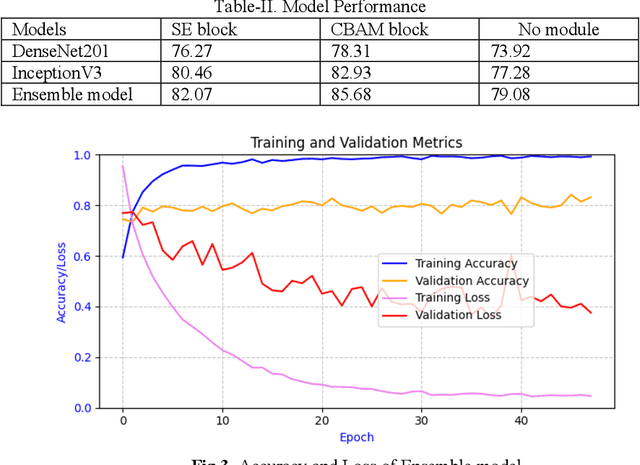
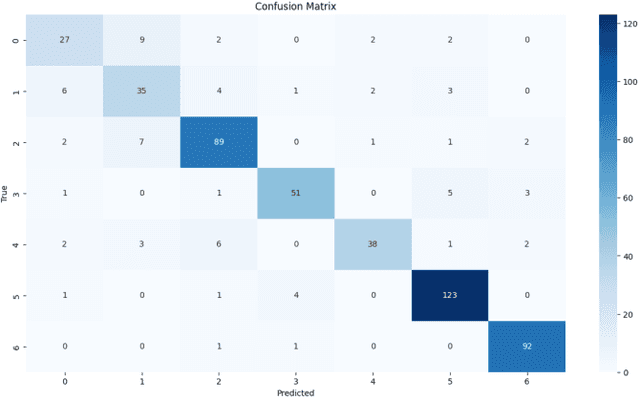
Tea is among the most widely consumed drinks globally. Tea production is a key industry for many countries. One of the main challenges in tea harvesting is tea leaf diseases. If the spread of tea leaf diseases is not stopped in time, it can lead to massive economic losses for farmers. Therefore, it is crucial to identify tea leaf diseases as soon as possible. Manually identifying tea leaf disease is an ineffective and time-consuming method, without any guarantee of success. Automating this process will improve both the efficiency and the success rate of identifying tea leaf diseases. The purpose of this study is to create an automated system that can classify different kinds of tea leaf diseases, allowing farmers to take action to minimize the damage. A novel dataset was developed specifically for this study. The dataset contains 5278 images across seven classes. The dataset was pre-processed prior to training the model. We deployed three pretrained models: DenseNet, Inception, and EfficientNet. EfficientNet was used only in the ensemble model. We utilized two different attention modules to improve model performance. The ensemble model achieved the highest accuracy of 85.68%. Explainable AI was introduced for better model interpretability.