 Add to Chrome
 Add to Firefox
 Add to Edge
Domain Adaptation Under Wireless Network Constraints: When Does It Become Green?
Jun 22, 2026
The deployment of data-driven models in 6G wireless networks is increasingly challenged by frequent distribution shifts that degrade performance over time. Unsupervised Domain Adaptation (UDA) offers an alternative approach by adapting the trained model to a shifted domain without requiring labels. However, UDA pipelines are often more complex than single-task training due to additional modules and optimization procedures, raising a practical question: do the benefits of adaptation come at a higher energy cost, and how does this trade-off compare to retraining when labeling effort is also considered? In this work, we investigate the energy consumption of UDA and compare it to single task. We further propose a way to determine the minimum number of target domains for which UDA becomes more energy-efficient than retraining, taking into account the labeling cost. Our results aim to clarify when UDA should be preferred over classical train-from-scratch approaches from an energy and labeling-aware perspective.

Zoetrope Genetic Programming for Regression
Feb 26, 2021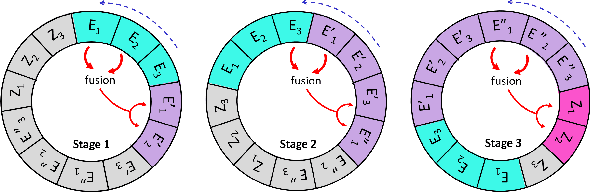
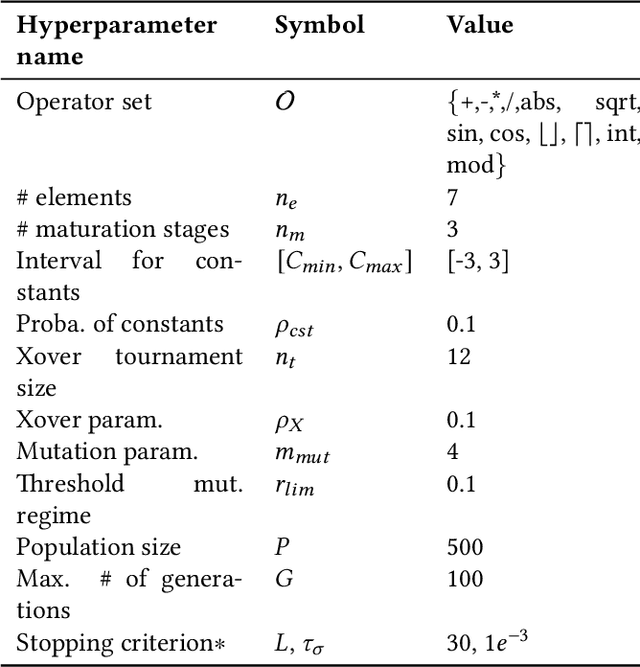
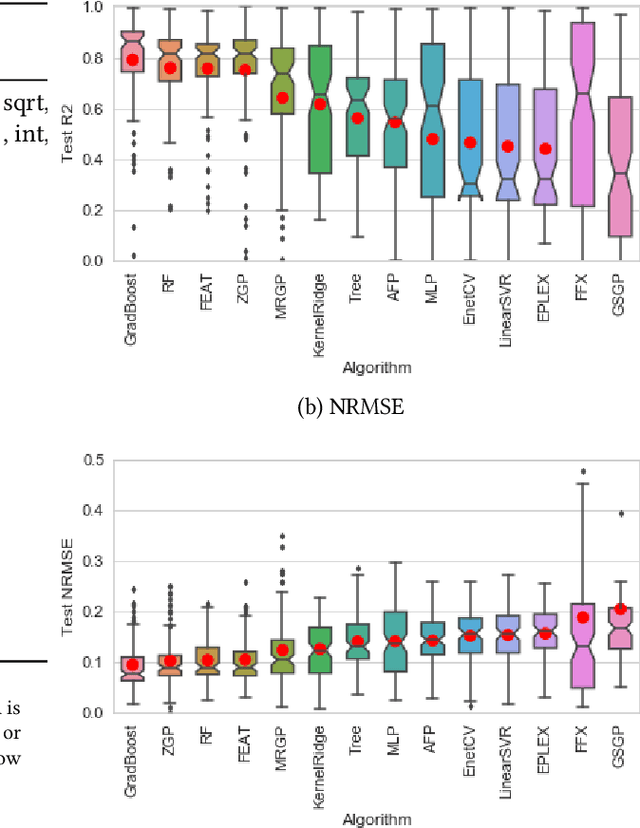
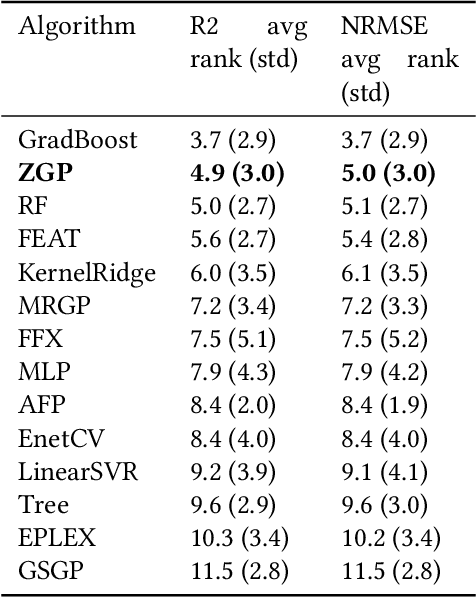
The Zoetrope Genetic Programming (ZGP) algorithm is based on an original representation for mathematical expressions, targeting evolutionary symbolic regression.The zoetropic representation uses repeated fusion operations between partial expressions, starting from the terminal set. Repeated fusions within an individual gradually generate more complex expressions, ending up in what can be viewed as new features. These features are then linearly combined to best fit the training data. ZGP individuals then undergo specific crossover and mutation operators, and selection takes place between parents and offspring. ZGP is validated using a large number of public domain regression datasets, and compared to other symbolic regression algorithms, as well as to traditional machine learning algorithms. ZGP reaches state-of-the-art performance with respect to both types of algorithms, and demonstrates a low computational time compared to other symbolic regression approaches.