 Add to Chrome
 Add to Firefox
 Add to Edge
LoopLens: Supporting Search as Creation in Loop-Based Music Composition
Mar 09, 2026
Creativity support tools (CSTs) typically frame search as information retrieval, yet in practices like electronic dance music production, search serves as a creative medium for collage-style composition. To address this gap, we present LoopLens, a research probe for loop-based music composition that visualizes audio search results to support creative foraging and assembling. We evaluated LoopLens in a within-subject user study with 16 participants of diverse musical domain expertise, performing both open-ended (divergent) and goal-directed (convergent) tasks. Our results reveal a clear behavioral split: participants with domain expertise leveraged multimodal cues to quickly exploit a narrow set of loops, while those without domain knowledge relied primarily on audio impressions, engaging in broad exploration often constrained by limited musical vocabulary for query formulation. This behavioral dichotomy provides a new lens for understanding the balance between exploration and exploitation in creative search and offers clear design implications for supporting vocabulary-independent discovery in future CSTs.

MR4MR: Mixed Reality for Melody Reincarnation
Sep 15, 2022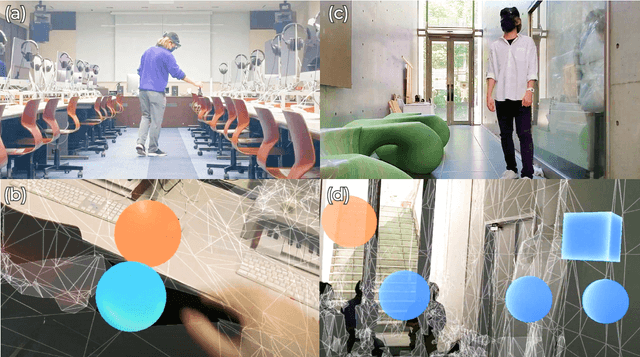
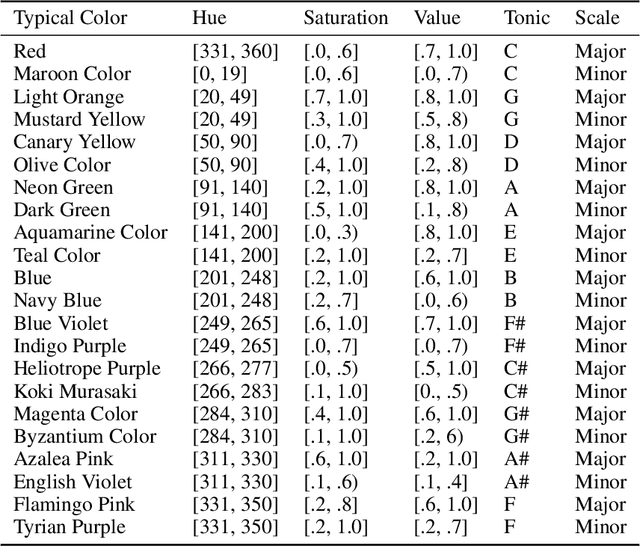
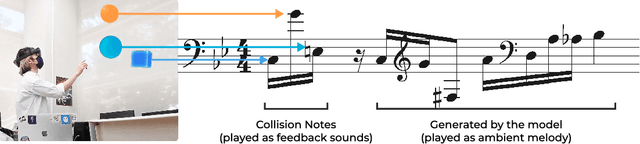
There is a long history of an effort made to explore musical elements with the entities and spaces around us, such as musique concr\`ete and ambient music. In the context of computer music and digital art, interactive experiences that concentrate on the surrounding objects and physical spaces have also been designed. In recent years, with the development and popularization of devices, an increasing number of works have been designed in Extended Reality to create such musical experiences. In this paper, we describe MR4MR, a sound installation work that allows users to experience melodies produced from interactions with their surrounding space in the context of Mixed Reality (MR). Using HoloLens, an MR head-mounted display, users can bump virtual objects that emit sound against real objects in their surroundings. Then, by continuously creating a melody following the sound made by the object and re-generating randomly and gradually changing melody using music generation machine learning models, users can feel their ambient melody "reincarnating".