 Add to Chrome
 Add to Firefox
 Add to Edge
Scaling In, Not Up? Testing Thick Citation Context Analysis with GPT-5 and Fragile Prompts
Feb 25, 2026
This paper tests whether large language models (LLMs) can support interpretative citation context analysis (CCA) by scaling in thick, text-grounded readings of a single hard case rather than scaling up typological labels. It foregrounds prompt-sensitivity analysis as a methodological issue by varying prompt scaffolding and framing in a balanced 2x3 design. Using footnote 6 in Chubin and Moitra (1975) and Gilbert's (1977) reconstruction as a probe, I implement a two-stage GPT-5 pipeline: a citation-text-only surface classification and expectation pass, followed by cross-document interpretative reconstruction using the citing and cited full texts. Across 90 reconstructions, the model produces 450 distinct hypotheses. Close reading and inductive coding identify 21 recurring interpretative moves, and linear probability models estimate how prompt choices shift their frequencies and lexical repertoire. GPT-5's surface pass is highly stable, consistently classifying the citation as "supplementary". In reconstruction, the model generates a structured space of plausible alternatives, but scaffolding and examples redistribute attention and vocabulary, sometimes toward strained readings. Relative to Gilbert, GPT-5 detects the same textual hinges yet more often resolves them as lineage and positioning than as admonishment. The study outlines opportunities and risks of using LLMs as guided co-analysts for inspectable, contestable interpretative CCA, and it shows that prompt scaffolding and framing systematically tilt which plausible readings and vocabularies the model foregrounds.

Large Language Models for History, Philosophy, and Sociology of Science: Interpretive Uses, Methodological Challenges, and Critical Perspectives
Jun 13, 2025This paper explores the use of large language models (LLMs) as research tools in the history, philosophy, and sociology of science (HPSS). LLMs are remarkably effective at processing unstructured text and inferring meaning from context, offering new affordances that challenge long-standing divides between computational and interpretive methods. This raises both opportunities and challenges for HPSS, which emphasizes interpretive methodologies and understands meaning as context-dependent, ambiguous, and historically situated. We argue that HPSS is uniquely positioned not only to benefit from LLMs' capabilities but also to interrogate their epistemic assumptions and infrastructural implications. To this end, we first offer a concise primer on LLM architectures and training paradigms tailored to non-technical readers. We frame LLMs not as neutral tools but as epistemic infrastructures that encode assumptions about meaning, context, and similarity, conditioned by their training data, architecture, and patterns of use. We then examine how computational techniques enhanced by LLMs, such as structuring data, detecting patterns, and modeling dynamic processes, can be applied to support interpretive research in HPSS. Our analysis compares full-context and generative models, outlines strategies for domain and task adaptation (e.g., continued pretraining, fine-tuning, and retrieval-augmented generation), and evaluates their respective strengths and limitations for interpretive inquiry in HPSS. We conclude with four lessons for integrating LLMs into HPSS: (1) model selection involves interpretive trade-offs; (2) LLM literacy is foundational; (3) HPSS must define its own benchmarks and corpora; and (4) LLMs should enhance, not replace, interpretive methods.
Astro-HEP-BERT: A bidirectional language model for studying the meanings of concepts in astrophysics and high energy physics
Nov 22, 2024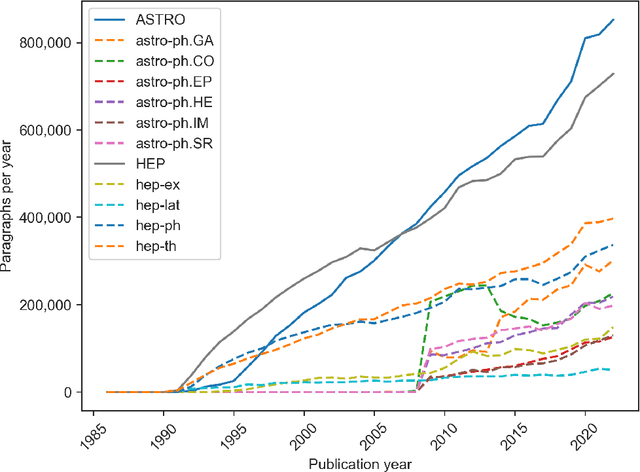
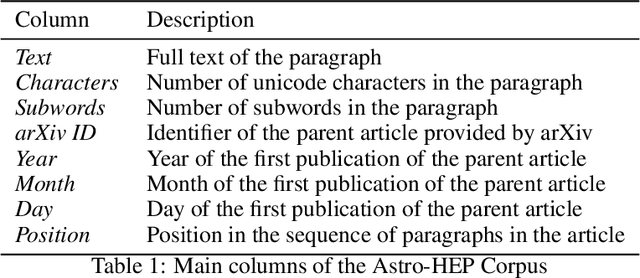
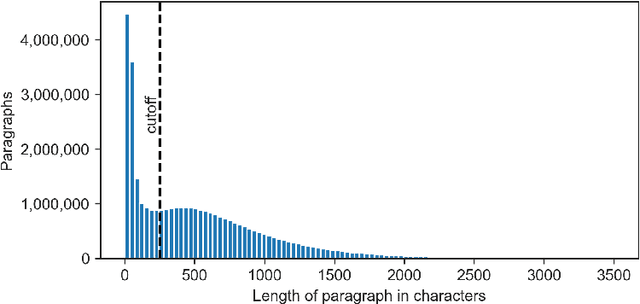
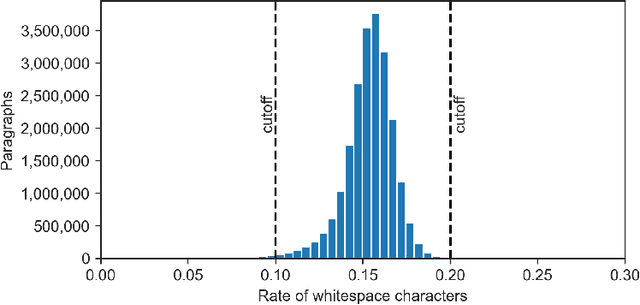
I present Astro-HEP-BERT, a transformer-based language model specifically designed for generating contextualized word embeddings (CWEs) to study the meanings of concepts in astrophysics and high-energy physics. Built on a general pretrained BERT model, Astro-HEP-BERT underwent further training over three epochs using the Astro-HEP Corpus, a dataset I curated from 21.84 million paragraphs extracted from more than 600,000 scholarly articles on arXiv, all belonging to at least one of these two scientific domains. The project demonstrates both the effectiveness and feasibility of adapting a bidirectional transformer for applications in the history, philosophy, and sociology of science (HPSS). The entire training process was conducted using freely available code, pretrained weights, and text inputs, completed on a single MacBook Pro Laptop (M2/96GB). Preliminary evaluations indicate that Astro-HEP-BERT's CWEs perform comparably to domain-adapted BERT models trained from scratch on larger datasets for domain-specific word sense disambiguation and induction and related semantic change analyses. This suggests that retraining general language models for specific scientific domains can be a cost-effective and efficient strategy for HPSS researchers, enabling high performance without the need for extensive training from scratch.
Meaning at the Planck scale? Contextualized word embeddings for doing history, philosophy, and sociology of science
Nov 21, 2024This paper explores the potential of contextualized word embeddings (CWEs) as a new tool in the history, philosophy, and sociology of science (HPSS) for studying contextual and evolving meanings of scientific concepts. Using the term "Planck" as a test case, I evaluate five BERT-based models with varying degrees of domain-specific pretraining, including my custom model Astro-HEP-BERT, trained on the Astro-HEP Corpus, a dataset containing 21.84 million paragraphs from 600,000 articles in astrophysics and high-energy physics. For this analysis, I compiled two labeled datasets: (1) the Astro-HEP-Planck Corpus, consisting of 2,900 labeled occurrences of "Planck" sampled from 1,500 paragraphs in the Astro-HEP Corpus, and (2) a physics-related Wikipedia dataset comprising 1,186 labeled occurrences of "Planck" across 885 paragraphs. Results demonstrate that the domain-adapted models outperform the general-purpose ones in disambiguating the target term, predicting its known meanings, and generating high-quality sense clusters, as measured by a novel purity indicator I developed. Additionally, this approach reveals semantic shifts in the target term over three decades in the unlabeled Astro-HEP Corpus, highlighting the emergence of the Planck space mission as a dominant sense. The study underscores the importance of domain-specific pretraining for analyzing scientific language and demonstrates the cost-effectiveness of adapting pretrained models for HPSS research. By offering a scalable and transferable method for modeling the meanings of scientific concepts, CWEs open up new avenues for investigating the socio-historical dynamics of scientific discourses.