 Add to Chrome
 Add to Firefox
 Add to Edge
Exact Synthetic Populations for Scalable Societal and Market Modeling
Dec 08, 2025
We introduce a constraint-programming framework for generating synthetic populations that reproduce target statistics with high precision while enforcing full individual consistency. Unlike data-driven approaches that infer distributions from samples, our method directly encodes aggregated statistics and structural relations, enabling exact control of demographic profiles without requiring any microdata. We validate the approach on official demographic sources and study the impact of distributional deviations on downstream analyses. This work is conducted within the Pollitics project developed by Emotia, where synthetic populations can be queried through large language models to model societal behaviors, explore market and policy scenarios, and provide reproducible decision-grade insights without personal data.

Towards Sustainable Artificial Intelligence: An Overview of Environmental Protection Uses and Issues
Dec 22, 2022Artificial Intelligence (AI) is used to create more sustainable production methods and model climate change, making it a valuable tool in the fight against environmental degradation. This paper describes the paradox of an energy-consuming technology serving the ecological challenges of tomorrow. The study provides an overview of the sectors that use AI-based solutions for environmental protection. It draws on numerous examples from AI for Green players to present use cases and concrete examples. In the second part of the study, the negative impacts of AI on the environment and the emerging technological solutions to support Green AI are examined. It is also shown that the research on less energy-consuming AI is motivated more by cost and energy autonomy constraints than by environmental considerations. This leads to a rebound effect that favors an increase in the complexity of models. Finally, the need to integrate environmental indicators into algorithms is discussed. The environmental dimension is part of the broader ethical problem of AI, and addressing it is crucial for ensuring the sustainability of AI in the long term.
Decision support system for distributed manufacturing based on input-output analysis and economic complexity
Dec 23, 2021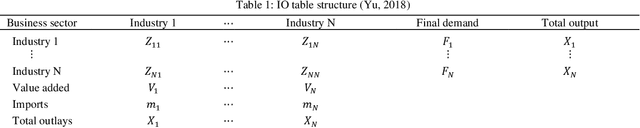

The disruption of supplies during the Covid-19 crisis has led to shortages but has also shown the adaptability of some companies, which have succeeded in adapting their production chains quickly to produce goods experiencing shortages: hydroalcoholic gel, masks, and medical gowns. These productive jumps from product A to product B are feasible because of the know-how proximity between the two classes of products. The proximities were computed from the analysis of co-exports and resulted in the construction of the product space. Based on the product space, as well as the customer-supplier relationships resulting from the input-output matrices, we propose a recommender system for companies. The goal is to promote distributed manufacturing by recommending a list of local suppliers to each company. As there is not always a local supplier for a desired product class, we consider the proximity between products to identify, in the absence of a supplier, a substitute supplier able to adapt its production tools to provide the required product. Our experiments are based on French data, from which we build a graph of synergies illustrating the potential productive links between companies. Finally, we show that our approach offers new perspectives to determine the level of territories' industrial resilience considering potential productive jumps.