 Add to Chrome
 Add to Firefox
 Add to Edge
Echo-POSED: Geometric Self-Distillation for Echocardiography Guidance
May 30, 2026
We introduce Echo-POSED, a self-supervised framework for real-time transthoracic echocardiography (TTE) guidance that recommends probe adjustments directly from 2D ultrasound images, without the need for expert-labelled views or tracked probe trajectories. Instead, it trains on 2D views sliced from routinely acquired 3D echocardiography volumes, enforcing equivariance to probe motions while remaining invariant to cardiac phase, yielding a pose representation on $\mathrm{SO}(3)\times\mathrm{SO}(3)$. Across a held-out split and public external 3D--TTE datasets (including vendor shift), Echo-POSED maintains geometric consistency under virtual perturbations and enables intra- and inter-patient guidance simulations, achieving a combined mean angular error of 8.2 degrees between the guided and target views in intra-patient simulations with cardiac motion.

Associations between echocardiographic traits and AI-ECG predictions of heart failure
May 23, 2026Artificial intelligence-enabled electrocardiography (AI-ECG) can detect heart failure (HF), including disease not captured by left ventricular ejection fraction (LVEF), but the cardiac phenotypes underlying model predictions remain unclear. We therefore investigated whether AI-ECG-predicted HF risk aligns with established echocardiographic measures of myocardial dysfunction, remodelling, and filling pressures. We retrospectively analysed ECG and echocardiography data from 8147 patients who underwent both examinations within three days at Akershus University Hospital between 1 January 2023 and 1 June 2025. A previously validated AI-ECG model for HF detection was applied to all ECGs. Spearman's rank correlation $ρ$ quantified associations between echocardiographic parameters and AI-ECG risk. Subgroup analyses were performed by sex and left ventricular ejection fraction (LVEF). External validation included 36,286 ECG-echocardiography pairs from Columbia University Irving Medical Center. Global longitudinal strain (GLS) showed the strongest correlation ($ρ$=0.57), followed by mitral annular plane systolic excursion (MAPSE) ($ρ$=-0.49) and LVEF ($ρ$=-0.45). In patients with LVEF>50%, correlations remained substantial for GLS, MAPSE, and diastolic-related parameters. Volumetric left ventricular indices correlated less strongly in women, whereas diastolic indices showed stronger correlations in women than in men. Physiological validation showed that AI-ECG HF risk predictions align primarily with measures of systolic function, particularly global longitudinal strain, while also capturing diastolic-related abnormalities in patients with preserved LVEF. This approach may improve clinical interpretability and identify opportunities for model refinement.
Biomarker-Based Pretraining for Chagas Disease Screening in Electrocardiograms
Apr 10, 2026Chagas disease screening via ECGs is limited by scarce and noisy labels in existing datasets. We propose a biomarker-based pretraining approach, where an ECG feature extractor is first trained to predict percentile-binned blood biomarkers from the MIMIC-IV-ECG dataset. The pretrained model is then fine-tuned on Brazilian datasets for Chagas detection. Our 5-model ensemble, developed by the Ahus AIM team, achieved a challenge score of 0.269 on the hidden test set, ranking 5th in Detection of Chagas Disease from the ECG: The George B. Moody PhysioNet Challenge 2025. Source code and the model are shared on GitHub: github.com/Ahus-AIM/physionet-challenge-2025
ENSAM: an efficient foundation model for interactive segmentation of 3D medical images
Sep 19, 2025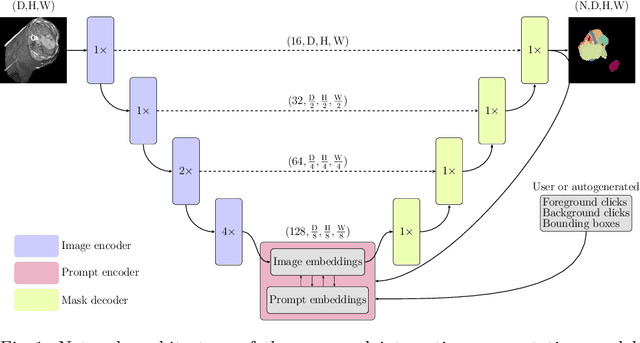
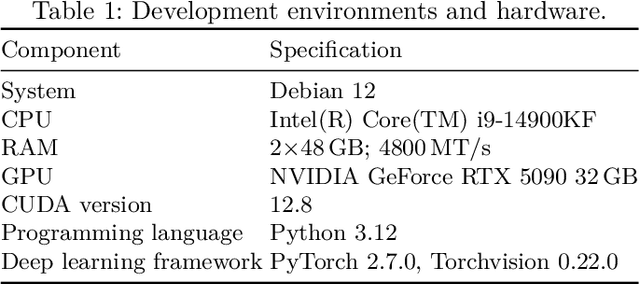
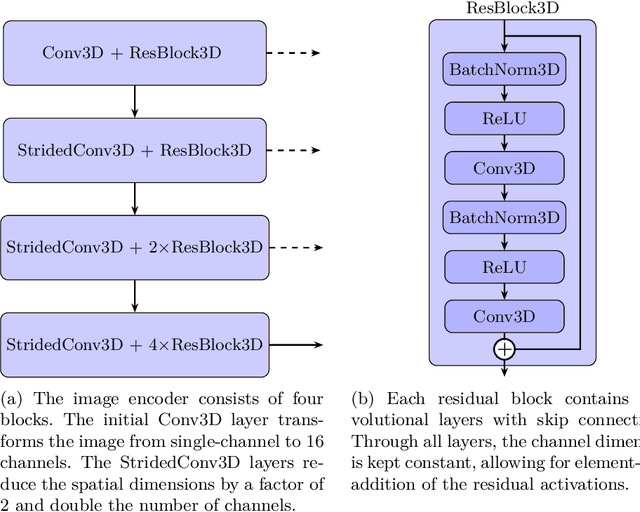
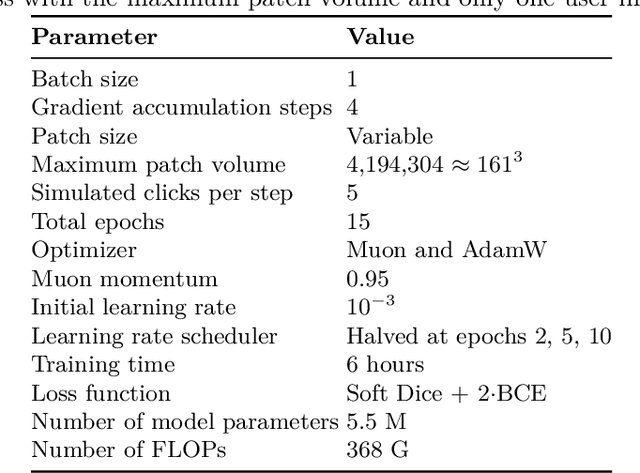
We present ENSAM (Equivariant, Normalized, Segment Anything Model), a lightweight and promptable model for universal 3D medical image segmentation. ENSAM combines a SegResNet-based encoder with a prompt encoder and mask decoder in a U-Net-style architecture, using latent cross-attention, relative positional encoding, normalized attention, and the Muon optimizer for training. ENSAM is designed to achieve good performance under limited data and computational budgets, and is trained from scratch on under 5,000 volumes from multiple modalities (CT, MRI, PET, ultrasound, microscopy) on a single 32 GB GPU in 6 hours. As part of the CVPR 2025 Foundation Models for Interactive 3D Biomedical Image Segmentation Challenge, ENSAM was evaluated on hidden test set with multimodal 3D medical images, obtaining a DSC AUC of 2.404, NSD AUC of 2.266, final DSC of 0.627, and final NSD of 0.597, outperforming two previously published baseline models (VISTA3D, SAM-Med3D) and matching the third (SegVol), surpassing its performance in final DSC but trailing behind in the other three metrics. In the coreset track of the challenge, ENSAM ranks 5th of 10 overall and best among the approaches not utilizing pretrained weights. Ablation studies confirm that our use of relative positional encodings and the Muon optimizer each substantially speed up convergence and improve segmentation quality.