 Add to Chrome
 Add to Firefox
 Add to Edge
Building2Building: A Large Scale Benchmark for Generalizable Real-World Reinforcement Learning
Jul 17, 2026
Reinforcement learning (RL) has achieved strong results in control, yet learned policies remain brittle to changes in dynamics, action spaces, observation spaces, or goals, a critical limitation for real-world deployment. Existing benchmarks offer limited diversity and complexity, making it difficult to rigorously study transfer, multi-task learning, and meta-learning in RL. We introduce Building2Building (B2B), a large-scale suite of realistic Heating, Ventilation, and Air Conditioning (HVAC) control environments built on EnergyPlus, a state-of-the-art building simulator. B2B is fully compatible with the Gymnasium interface and features a parametric building generator, enabling the systematic generation of diverse building configurations with heterogeneous observation and action spaces. Based on this suite, we define benchmark tasks targeting key open challenges in RL, including goal adaptation, dynamics adaptation, action-space shifts, and cross-domain transfer. By providing a large-scale, diverse, and physically grounded testbed with standardized evaluation protocols, B2B enables systematic investigation of generalization and transfer in continuous control. Beyond advancing research on generalization in RL, this new benchmark also carries significant societal implications by enabling improved HVAC control at scale, one of the most energy-intensive systems in buildings.

A priori guarantees of finite-time convergence for Deep Neural Networks
Sep 16, 2020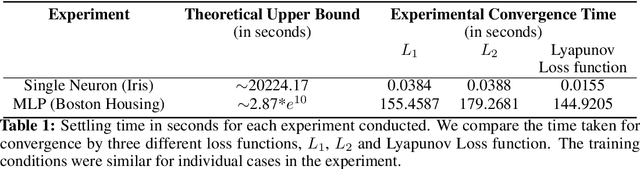
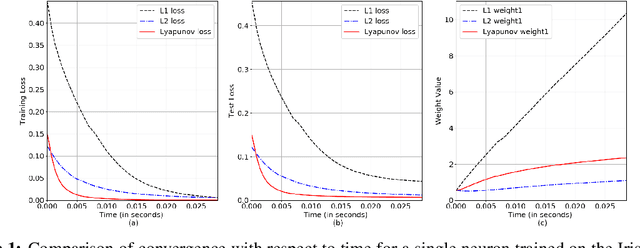
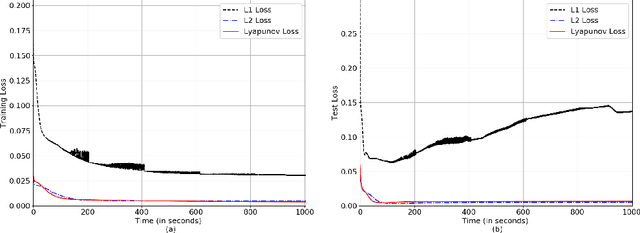
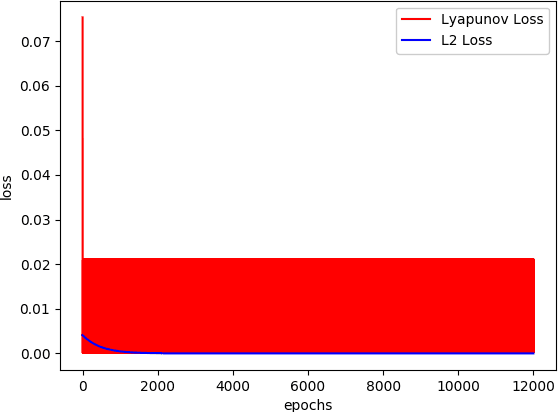
In this paper, we perform Lyapunov based analysis of the loss function to derive an a priori upper bound on the settling time of deep neural networks. While previous studies have attempted to understand deep learning using control theory framework, there is limited work on a priori finite time convergence analysis. Drawing from the advances in analysis of finite-time control of non-linear systems, we provide a priori guarantees of finite-time convergence in a deterministic control theoretic setting. We formulate the supervised learning framework as a control problem where weights of the network are control inputs and learning translates into a tracking problem. An analytical formula for finite-time upper bound on settling time is computed a priori under the assumptions of boundedness of input. Finally, we prove the robustness and sensitivity of the loss function against input perturbations.