 Add to Chrome
 Add to Firefox
 Add to Edge
Integrated packing, placement, scheduling, and routing of personalized production: a pharmaceutical Industry 4.0 use-case with a planar transport system
Apr 22, 2026
The recent emergence of planar transport systems necessitates re-evaluation of Flexible Manufacturing Systems (FMS) to address the simultaneous scheduling of internal logistics and production operations. By operating on a tile-based planar grid, these systems allow independent movers full two-dimensional freedom, mitigating inefficiencies inherent to traditional sequential lines. This paper applies a planar FMS framework to a real-world use case in the pharmaceutical industry: the automated production of personalized drugs. Implementing this system requires solving optimization problems at both tactical and operational levels. The tactical level involves decisions regarding production line layout and the positioning of drug dispensers. A Mixed-Integer Quadratic Programming model is utilized for the packing problem to exploit drug co-occurrence patterns found in historical patient data. Subsequently, we solve the placement problem - a bi-level problem combining an assignment problem with Shortest Hamiltonian paths with neighborhoods - to arrange dispensers in a layout minimizing expected travel distances. The operational level is encountered daily, scheduling individual movers to process new orders as quickly as possible. This scheduling problem is formulated using Constraint Programming, modeling movers as reservoir resources to ensure order completeness, complemented by a routing phase using an iterative conflict-resolution mechanism and DAG-based reasoning to convert schedules into conflict-free paths. Evaluation using real-world prescription data for 40 drugs shows the framework scales efficiently across several layout topologies for up to 500 orders, with schedules that are highly effective and computationally tractable for daily operations.

Reduction of Nonlinear Distortion in Condenser Microphones Using a Simple Post-Processing Technique
Jul 24, 2024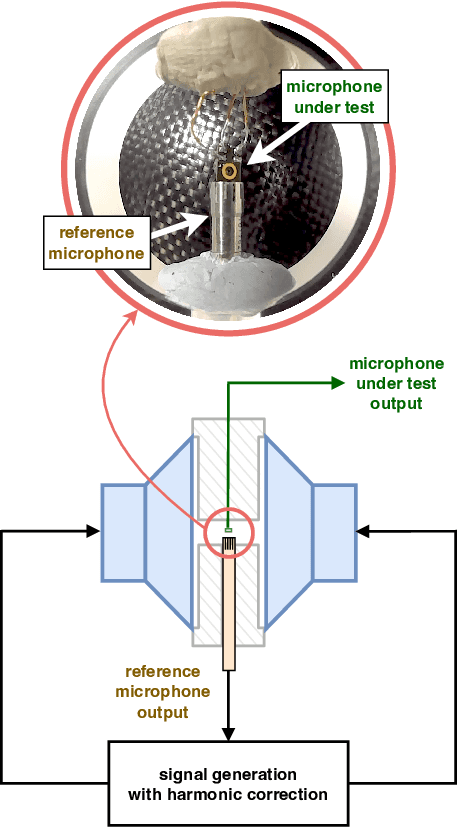
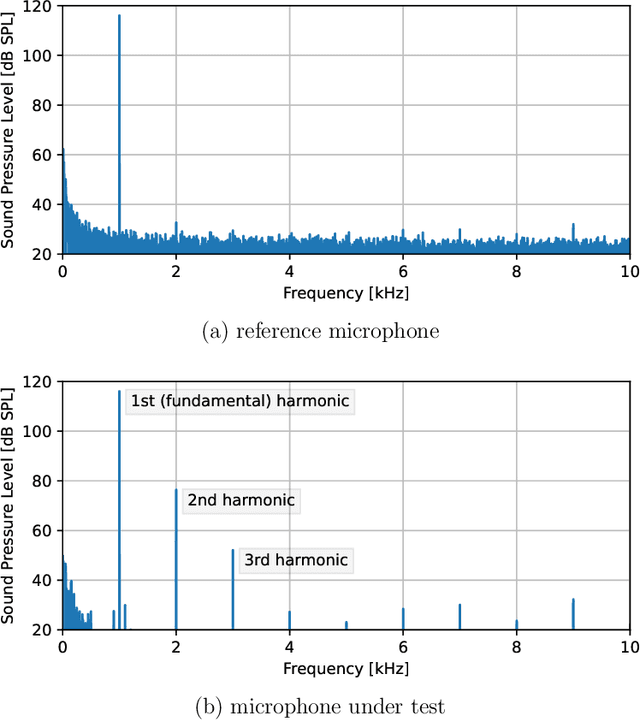
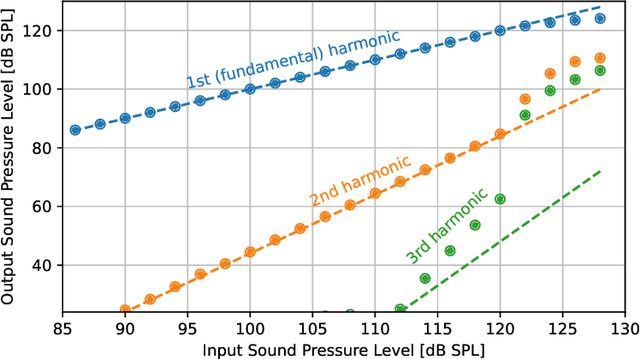
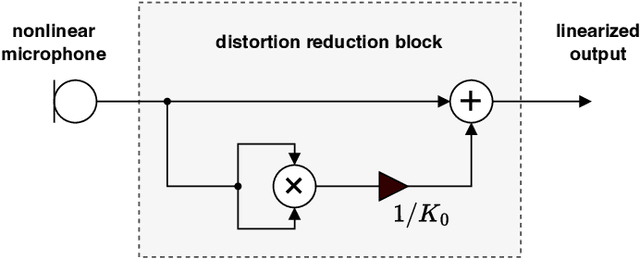
In this paper, we introduce a novel approach for effectively reducing nonlinear distortion in single back-plate condenser microphones, i.e., most MEMS microphones, studio recording condenser microphones, and laboratory measurement microphones. This simple post-processing technique can be easily integrated on an external hardware such as an analog circuit, microcontroller, audio codec, DSP unit, or within the ASIC chip in a case of MEMS microphones. It significantly reduces microphone distortion across its frequency and dynamic range. It relies on a single parameter, which can be derived from either the microphone's physical parameters or a straightforward measurement presented in this paper. An optimal estimate of this parameter achieves the best distortion reduction, whereas overestimating it never increases distortion beyond the original level. The technique was tested on a MEMS microphone. Our findings indicate that for harmonic excitation the proposed technique reduces the second harmonic by approximately 40 dB, leading to a significant reduction in the Total Harmonic Distortion (THD). The efficiency of the distortion reduction technique for more complex signals is demonstrated through two-tone and multitone experiments, where second-order intermodulation products are reduced by at least 20 dB.