 Add to Chrome
 Add to Firefox
 Add to Edge
Integrating Virtual Reality and Large Language Models for Team-Based Non-Technical Skills Training and Evaluation in the Operating Room
Jan 19, 2026
Although effective teamwork and communication are critical to surgical safety, structured training for non-technical skills (NTS) remains limited compared with technical simulation. The ACS/APDS Phase III Team-Based Skills Curriculum calls for scalable tools that both teach and objectively assess these competencies during laparoscopic emergencies. We introduce the Virtual Operating Room Team Experience (VORTeX), a multi-user virtual reality (VR) platform that integrates immersive team simulation with large language model (LLM) analytics to train and evaluate communication, decision-making, teamwork, and leadership. Team dialogue is analyzed using structured prompts derived from the Non-Technical Skills for Surgeons (NOTSS) framework, enabling automated classification of behaviors and generation of directed interaction graphs that quantify communication structure and hierarchy. Two laparoscopic emergency scenarios, pneumothorax and intra-abdominal bleeding, were implemented to elicit realistic stress and collaboration. Twelve surgical professionals completed pilot sessions at the 2024 SAGES conference, rating VORTeX as intuitive, immersive, and valuable for developing teamwork and communication. The LLM consistently produced interpretable communication networks reflecting expected operative hierarchies, with surgeons as central integrators, nurses as initiators, and anesthesiologists as balanced intermediaries. By integrating immersive VR with LLM-driven behavioral analytics, VORTeX provides a scalable, privacy-compliant framework for objective assessment and automated, data-informed debriefing across distributed training environments.

Safety filtering of robotic manipulation under environment uncertainty: a computational approach
Sep 16, 2025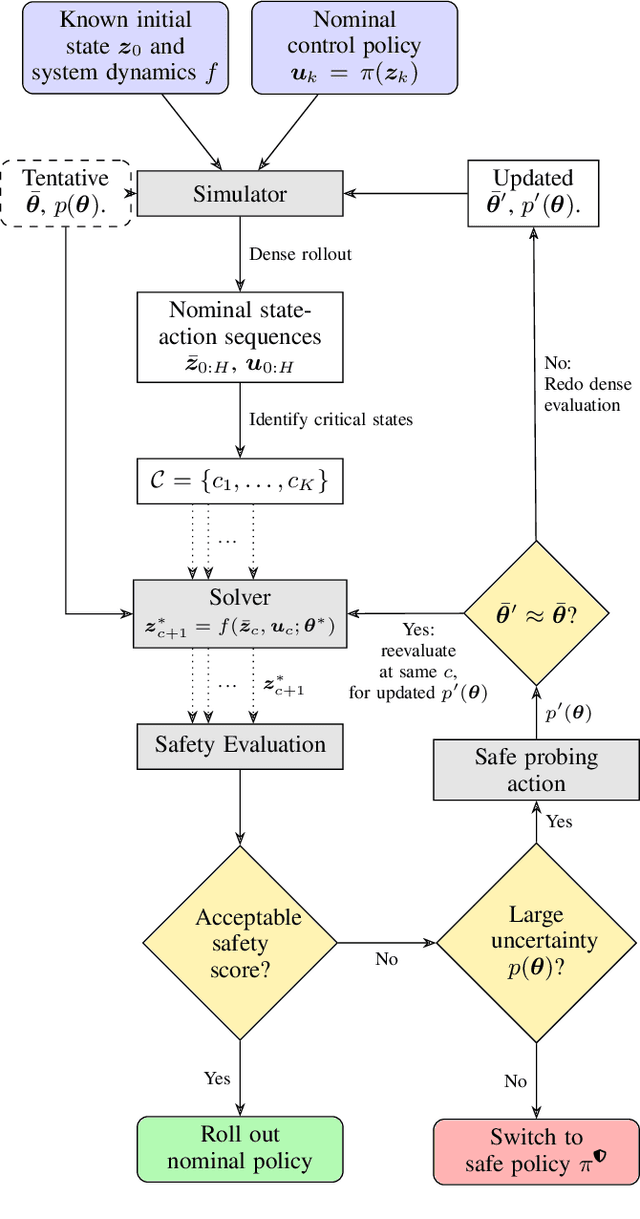
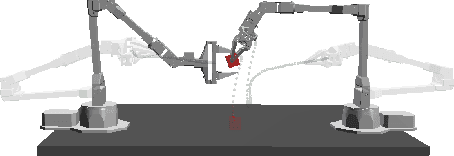
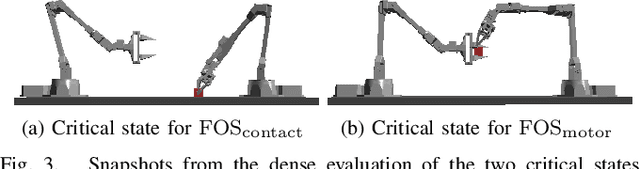
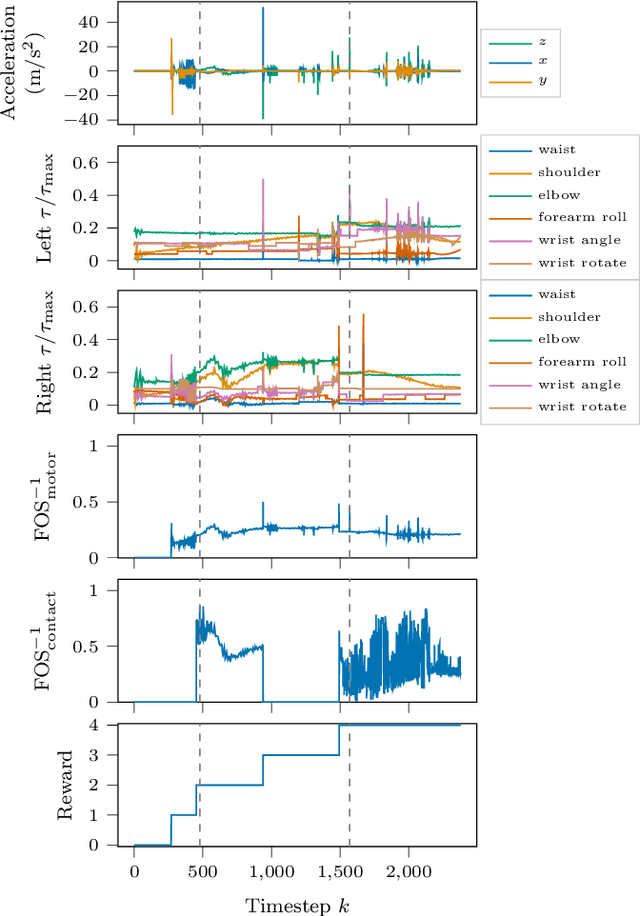
Robotic manipulation in dynamic and unstructured environments requires safety mechanisms that exploit what is known and what is uncertain about the world. Existing safety filters often assume full observability, limiting their applicability in real-world tasks. We propose a physics-based safety filtering scheme that leverages high-fidelity simulation to assess control policies under uncertainty in world parameters. The method combines dense rollout with nominal parameters and parallelizable sparse re-evaluation at critical state-transitions, quantified through generalized factors of safety for stable grasping and actuator limits, and targeted uncertainty reduction through probing actions. We demonstrate the approach in a simulated bimanual manipulation task with uncertain object mass and friction, showing that unsafe trajectories can be identified and filtered efficiently. Our results highlight physics-based sparse safety evaluation as a scalable strategy for safe robotic manipulation under uncertainty.