 Add to Chrome
 Add to Firefox
 Add to Edge
Time Series Analysis in Machine Learning
Jun 10, 2026
Time series analysis is a fundamental component of machine learning, especially in astrophysics and cosmology where temporal data abound. This chapter provides a pedagogical review of time series analysis techniques from a machine learning perspective. We cover the basic concepts of time series (stationarity, autocorrelation, seasonality), classical statistical models (autoregressive, moving average, ARIMA, exponential smoothing, state-space models), and modern machine learning approaches. In particular, we discuss how traditional statistical methods lay the groundwork, and then explore machine learning methods for time series, including feature-based regression, tree-based ensemble methods, hidden Markov models, Gaussian processes, and deep learning models (recurrent neural networks, convolutional networks, transformers). Throughout, we illustrate with examples drawn from multiple domains (e.g. astronomy, weather forecasting, finance) to emphasize common principles. The goal is to equip readers with both the theoretical understanding and practical context to apply machine learning techniques for time series analysis in their research.

A method for Cloud Mapping in the Field of View of the Infra-Red Camera during the EUSO-SPB1 flight
Sep 12, 2019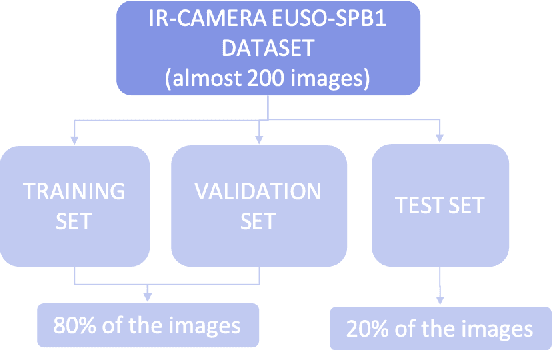
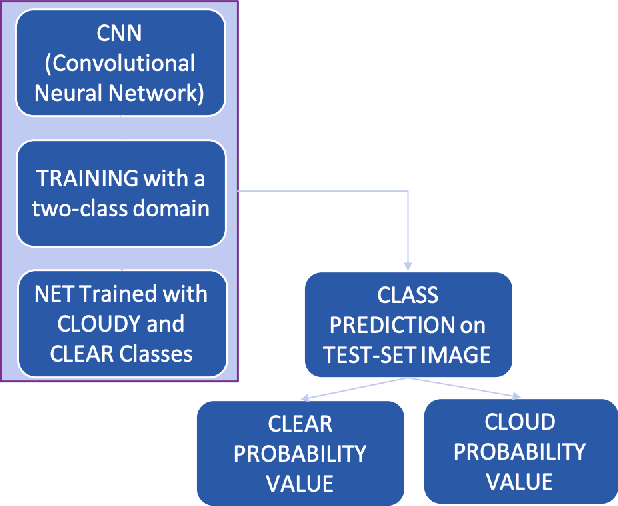
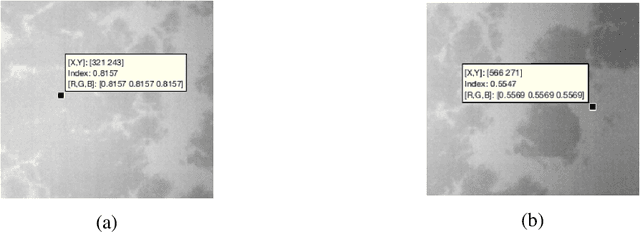
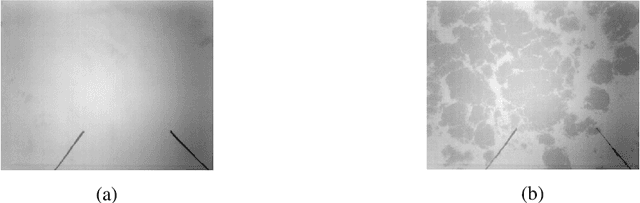
EUSO-SPB1 was released on April 24th, 2017, from the NASA balloon launch site in Wanaka (New Zealand) and landed on the South Pacific Ocean on May 7th. The data collected by the instruments onboard the balloon were analyzed to search UV pulse signatures of UHECR (Ultra High Energy Cosmic Rays) air showers. Indirect measurements of UHECRs can be affected by cloud presence during nighttime, therefore it is crucial to know the meteorological conditions during the observation period of the detector. During the flight, the onboard EUSO-SPB1 UCIRC camera (University of Chicago Infra-Red Camera), acquired images in the field of view of the UV telescope. The available nighttime and daytime images include information on meteorological conditions of the atmosphere observed in two infra-red bands. The presence of clouds has been investigated employing a method developed to provide a dense cloudiness map for each available infra-red image. The final masks are intended to give pixel cloudiness information at the IR-camera pixel resolution that is nearly 4-times higher than the one of the UV-camera. In this work, cloudiness maps are obtained by using an expert system based on the analysis of different low-level image features. Furthermore, an image enhancement step was needed to be applied as a preprocessing step to deal with uncalibrated data.
* 7 pages, 8 figures, 36th International Cosmic Ray Conference -ICRC2019