 Add to Chrome
 Add to Firefox
 Add to Edge
Do Sheaf Neural Networks Use Holonomy? A Measure--Intervene--Control Study
Jul 21, 2026
Geometric architectures are often justified by internal mechanisms such as rotations, yet task performance alone cannot show whether those mechanisms drive predictions. Using sheaf neural networks (SNNs) as a testbed, we introduce the first basis-independent measurement of trained triangle-loop products, separating rotation, stalk-space area, and orientation. In a custom high-homophily GraphUniverse regime, Neural Sheaf Propagation (NSP) increases the triangle-weighted mean two-dimensional SO(2) loop rotation from 0.010 to 0.388 radians for triangle counting, while the community-detection comparison ends at 0.029 radians. Across the training-set-size experiment, replacing all learned SO(2) transports with identities sharply increases test error, establishing post-training sensitivity to the complete learned connection. However, a graph-summary ridge predictor is more accurate, diagonal maps also improve, and fixed-degree graphs develop increasing rotation without outperforming the training-mean predictor. This measure-intervene-control study separates geometric change, connection sensitivity, and evidence for triangle-specific computation.

Is One Token All It Takes? Graph Pooling Tokens for LLM-based GraphQA
Apr 01, 2026The integration of Graph Neural Networks (GNNs) with Large Language Models (LLMs) has emerged as a promising paradigm for Graph Question Answering (GraphQA). However, effective methods for encoding complex structural information into the LLM's latent space remain an open challenge. Current state-of-the-art architectures, such as G-Retriever, typically rely on standard GNNs and aggressive mean pooling to compress entire graph substructures into a single token, creating a severe information bottleneck. This work mitigates this bottleneck by investigating two orthogonal strategies: (1) increasing the bandwidth of the graph-to-LLM interface via multi-token pooling, and (2) enhancing the semantic quality of the graph encoder via global attention mechanisms. We evaluate a suite of hierarchical pruning and clustering-based pooling operators including Top-k, SAGPool, DiffPool, MinCutPool, and Virtual Node Pooling (VNPool) to project graph data into multiple learnable tokens. Empirically, we demonstrate that while pooling introduces significant instability during soft prompt tuning, the application of Low-Rank Adaptation (LoRA) effectively stabilizes specific hierarchical projections (notably VNPool and pruning methods), though dense clustering operators remain challenging. This stabilization allows compressed representations to rival full-graph baselines (achieving ~73% Hit@1 on WebQSP). Conceptually, we demonstrate that a Graph Transformer with VNPool implementation functions structurally as a single-layer Perceiver IO encoder. Finally, we adapt the FandE (Features and Edges) Score to the generative GraphQA domain. Our analysis reveals that the GraphQA benchmark suffers from representational saturation, where target answers are often highly correlated with isolated node features. The implementation is available at https://github.com/Agrover112/G-Retriever/tree/all_good/
Goodness of Pronunciation Pipelines for OOV Problem
Sep 14, 2022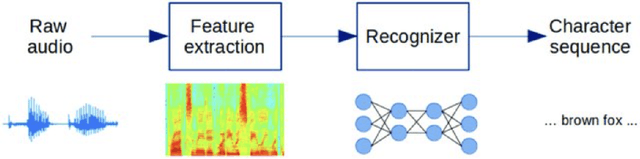
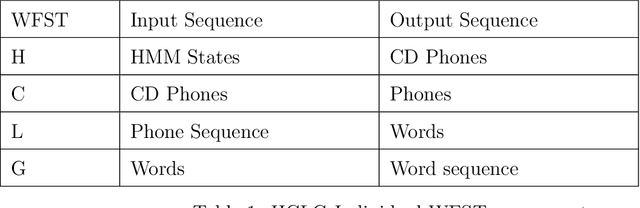
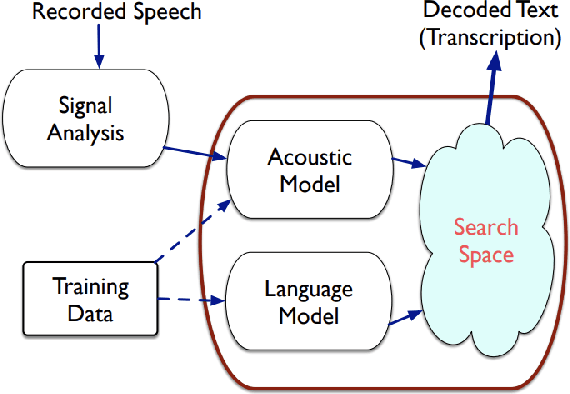
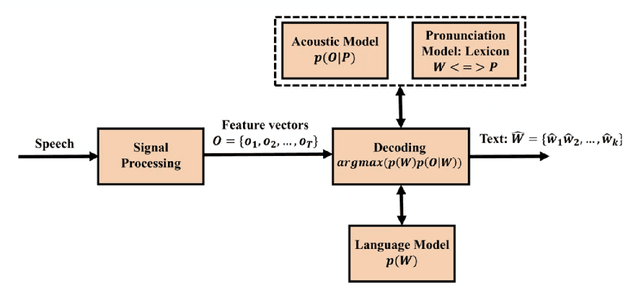
In the following report we propose pipelines for Goodness of Pronunciation (GoP) computation solving OOV problem at testing time using Vocab/Lexicon expansion techniques. The pipeline uses different components of ASR system to quantify accent and automatically evaluate them as scores. We use the posteriors of an ASR model trained on native English speech, along with the phone level boundaries to obtain phone level pronunciation scores. We used this as a baseline pipeline and implemented methods to remove UNK and SPN phonemes in the GoP output by building three pipelines. The Online, Offline and Hybrid pipeline which returns the scores but also can prevent unknown words in the final output. The Online method is based per utterance, Offline method pre-incorporates a set of OOV words for a given data set and the Hybrid method combines the above two ideas to expand the lexicon as well work per utterance. We further provide utilities such as the Phoneme to posterior mappings, GoP scores of each utterance as a vector, and Word boundaries used in the GoP pipeline for use in future research.
Flipping the switch on local exploration: Genetic Algorithms with Reversals
Feb 02, 2022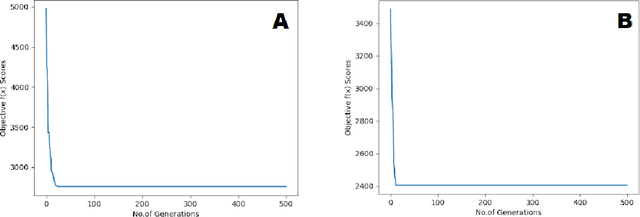
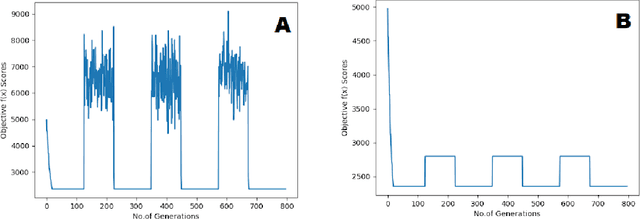
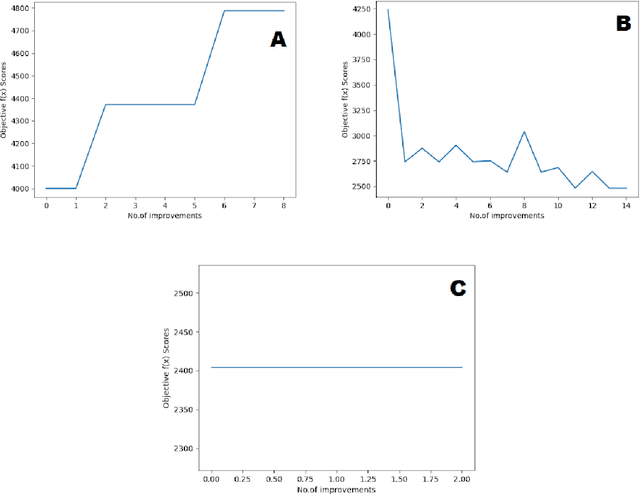
One important feature of complex systems are problem domains that have many local minima and substructure. Biological systems manage these local minima by switching between different subsystems depending on their environmental or developmental context. Genetic Algorithms (GA) can mimic this switching property as well as provide a means to overcome problem domain complexity. However, standard GA requires additional operators that will allow for large-scale exploration in a stochastic manner. Gradient-free heuristic search techniques are suitable for providing an optimal solution in the discrete domain to such single objective optimization tasks, particularly compared to gradient based methods which are noticeably slower. To do this, the authors turn to an optimization problem from the flight scheduling domain. The authors compare the performance of such common gradient-free heuristic search algorithms and propose variants of GAs which perform well over our problem and across all benchmarks. The Iterated Chaining (IC) method is also introduced, building upon traditional chaining techniques by triggering multiple local searches instead of the singular action of a mutation operator. The authors will show that the use of multiple local searches can improve performance on local stochastic searches, providing ample opportunity for application to a host of other problem domains.