 Add to Chrome
 Add to Firefox
 Add to Edge
On Coresets For Regularized Regression
Jun 30, 2020
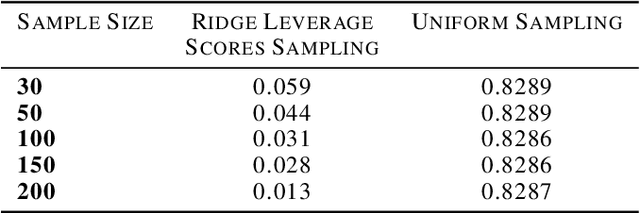
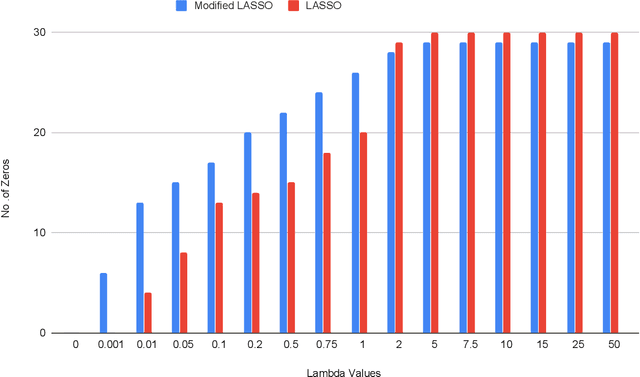
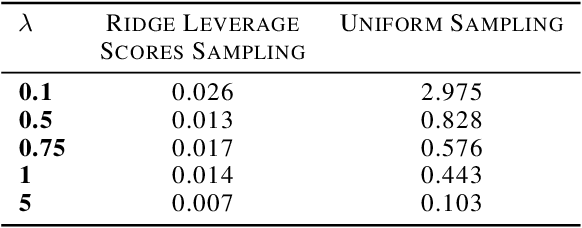
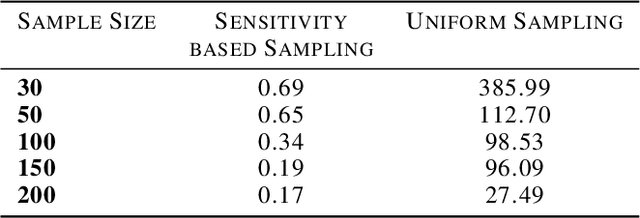
We study the effect of norm based regularization on the size of coresets for regression problems. Specifically, given a matrix $ \mathbf{A} \in {\mathbb{R}}^{n \times d}$ with $n\gg d$ and a vector $\mathbf{b} \in \mathbb{R} ^ n $ and $\lambda > 0$, we analyze the size of coresets for regularized versions of regression of the form $\|\mathbf{Ax}-\mathbf{b}\|_p^r + \lambda\|{\mathbf{x}}\|_q^s$ . Prior work has shown that for ridge regression (where $p,q,r,s=2$) we can obtain a coreset that is smaller than the coreset for the unregularized counterpart i.e. least squares regression (Avron et al). We show that when $r \neq s$, no coreset for regularized regression can have size smaller than the optimal coreset of the unregularized version. The well known lasso problem falls under this category and hence does not allow a coreset smaller than the one for least squares regression. We propose a modified version of the lasso problem and obtain for it a coreset of size smaller than the least square regression. We empirically show that the modified version of lasso also induces sparsity in solution, similar to the original lasso. We also obtain smaller coresets for $\ell_p$ regression with $\ell_p$ regularization. We extend our methods to multi response regularized regression. Finally, we empirically demonstrate the coreset performance for the modified lasso and the $\ell_1$ regression with $\ell_1$ regularization.

Streaming Coresets for Symmetric Tensor Factorization
Jun 01, 2020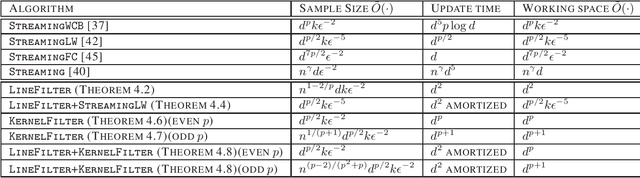
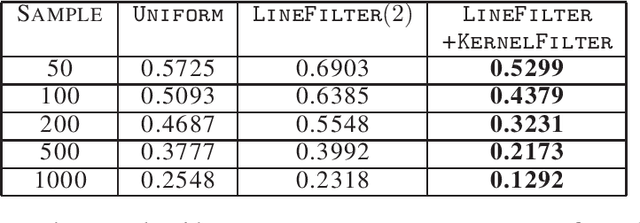
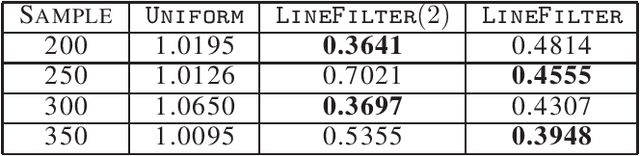
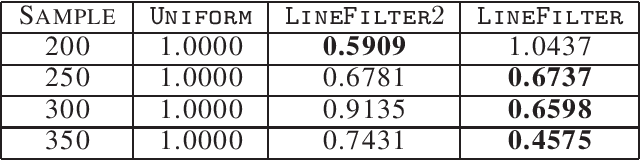
Factorizing tensors has recently become an important optimization module in a number of machine learning pipelines, especially in latent variable models. We show how to do this efficiently in the streaming setting. Given a set of $n$ vectors, each in $\mathbb{R}^d$, we present algorithms to select a sublinear number of these vectors as coreset, while guaranteeing that the CP decomposition of the $p$-moment tensor of the coreset approximates the corresponding decomposition of the $p$-moment tensor computed from the full data. We introduce two novel algorithmic techniques: online filtering and kernelization. Using these two, we present four algorithms that achieve different tradeoffs of coreset size, update time and working space, beating or matching various state of the art algorithms. In case of matrices (2-ordered tensor) our online row sampling algorithm guarantees $(1 \pm \epsilon)$ relative error spectral approximation. We show applications of our algorithms in learning single topic modeling.
Discovering Topical Interactions in Text-based Cascades using Hidden Markov Hawkes Processes
Sep 12, 2018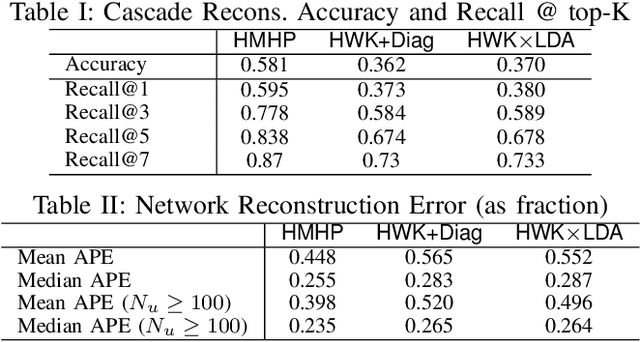
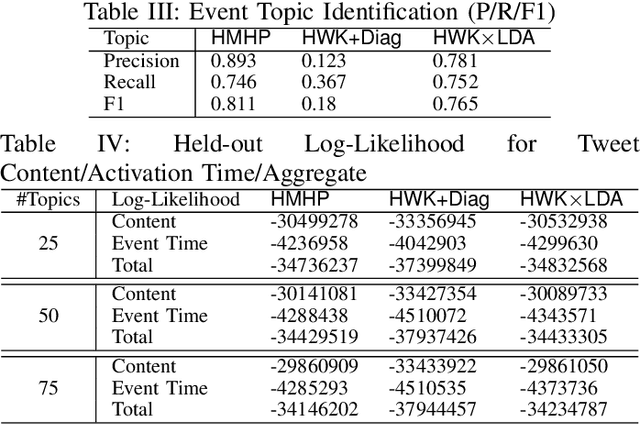
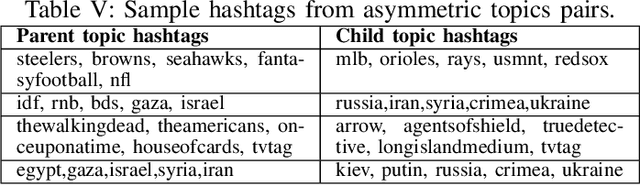
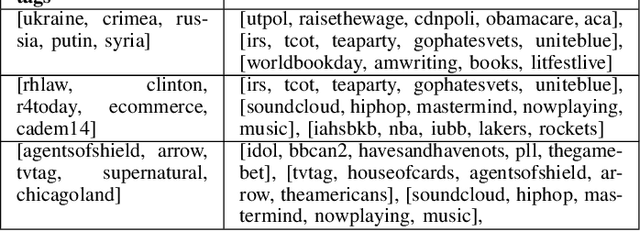
Social media conversations unfold based on complex interactions between users, topics and time. While recent models have been proposed to capture network strengths between users, users' topical preferences and temporal patterns between posting and response times, interaction patterns between topics has not been studied. We propose the Hidden Markov Hawkes Process (HMHP) that incorporates topical Markov Chains within Hawkes processes to jointly model topical interactions along with user-user and user-topic patterns. We propose a Gibbs sampling algorithm for HMHP that jointly infers the network strengths, diffusion paths, the topics of the posts as well as the topic-topic interactions. We show using experiments on real and semi-synthetic data that HMHP is able to generalize better and recover the network strengths, topics and diffusion paths more accurately than state-of-the-art baselines. More interestingly, HMHP finds insightful interactions between topics in real tweets which no existing model is able to do.
Improved Linear Embeddings via Lagrange Duality
Dec 14, 2017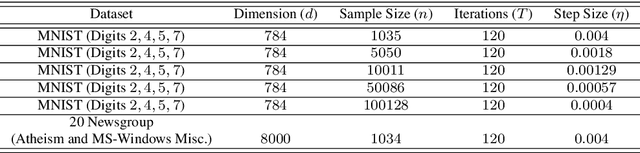
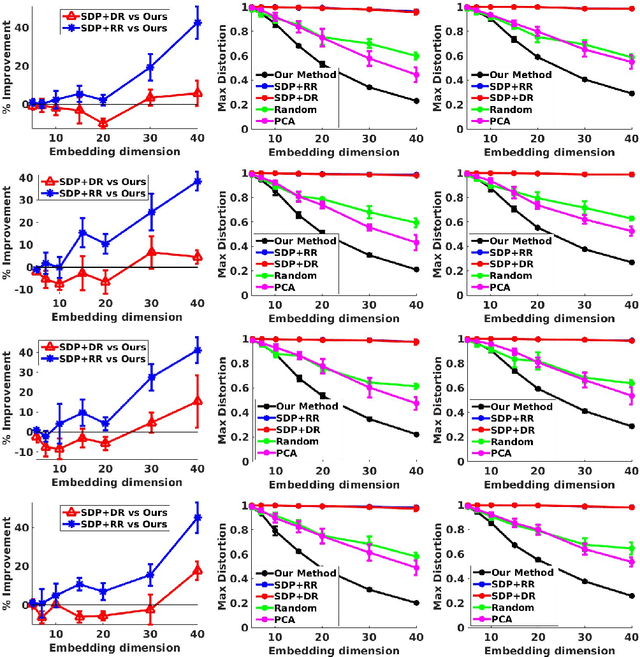
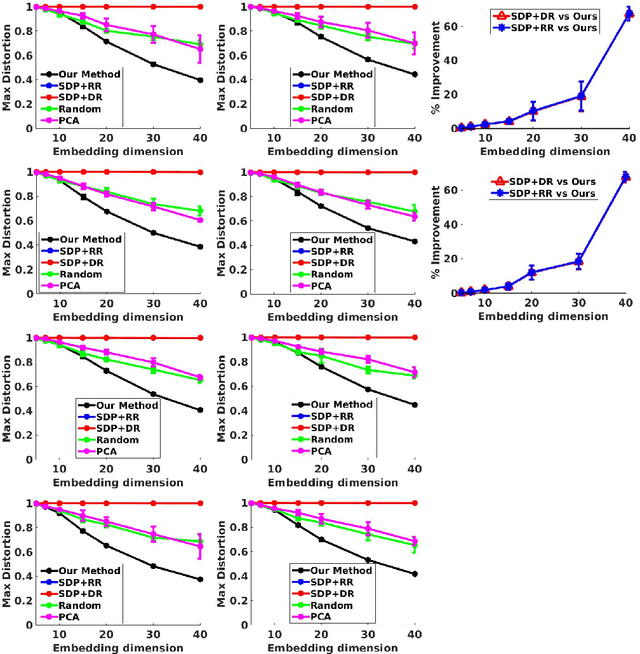
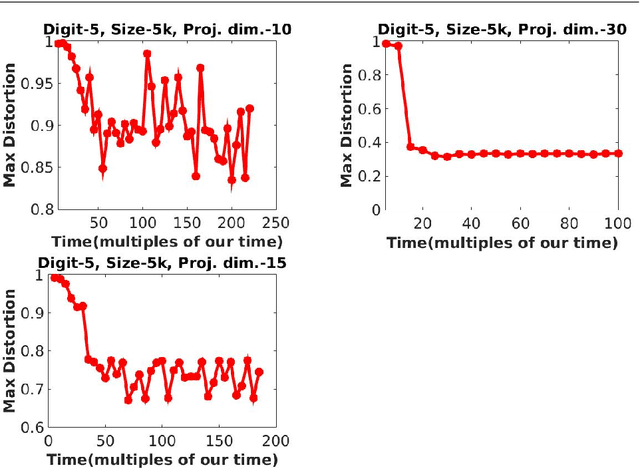
Near isometric orthogonal embeddings to lower dimensions are a fundamental tool in data science and machine learning. In this paper, we present the construction of such embeddings that minimizes the maximum distortion for a given set of points. We formulate the problem as a non convex constrained optimization problem. We first construct a primal relaxation and then use the theory of Lagrange duality to create dual relaxation. We also suggest a polynomial time algorithm based on the theory of convex optimization to solve the dual relaxation provably. We provide a theoretical upper bound on the approximation guarantees for our algorithm, which depends only on the spectral properties of the dataset. We experimentally demonstrate the superiority of our algorithm compared to baselines in terms of the scalability and the ability to achieve lower distortion.
An Improved Algorithm for Eye Corner Detection
Nov 08, 2016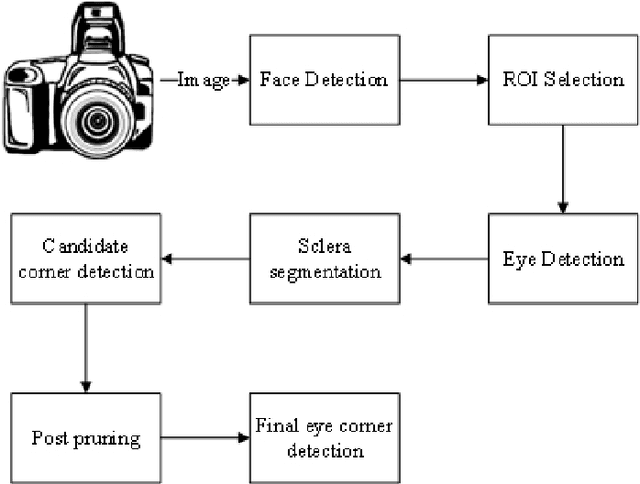
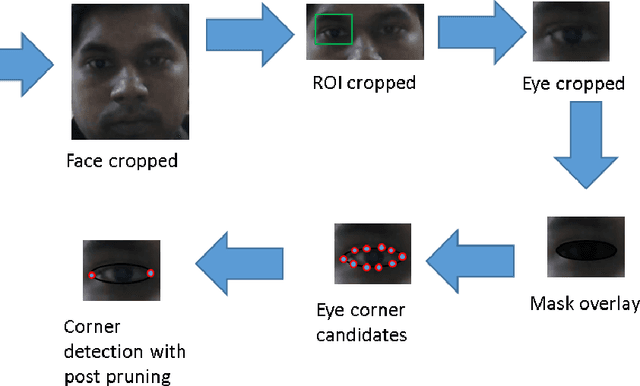
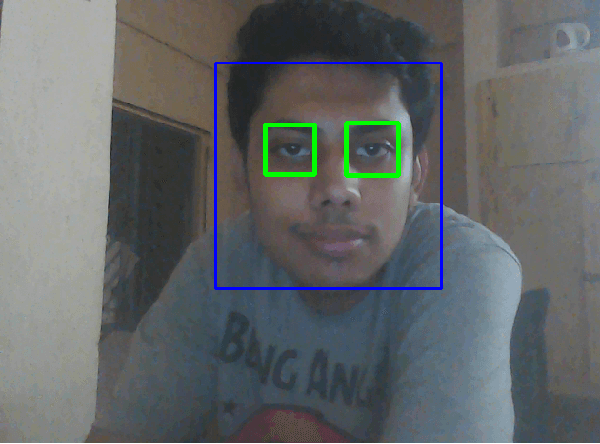
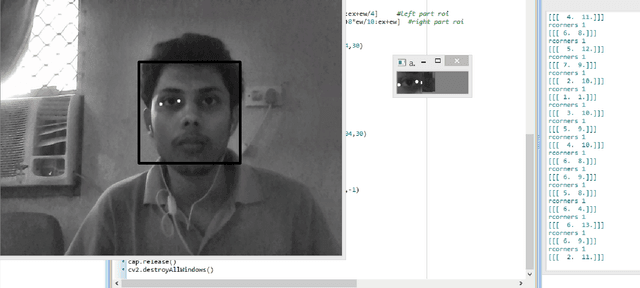
In this paper, a modified algorithm for the detection of nasal and temporal eye corners is presented. The algorithm is a modification of the Santos and Proenka Method. In the first step, we detect the face and the eyes using classifiers based on Haar-like features. We then segment out the sclera, from the detected eye region. From the segmented sclera, we segment out an approximate eyelid contour. Eye corner candidates are obtained using Harris and Stephens corner detector. We introduce a post-pruning of the Eye corner candidates to locate the eye corners, finally. The algorithm has been tested on Yale, JAFFE databases as well as our created database.
Evaluation of Denoising Techniques for EOG signals based on SNR Estimation
Oct 27, 2016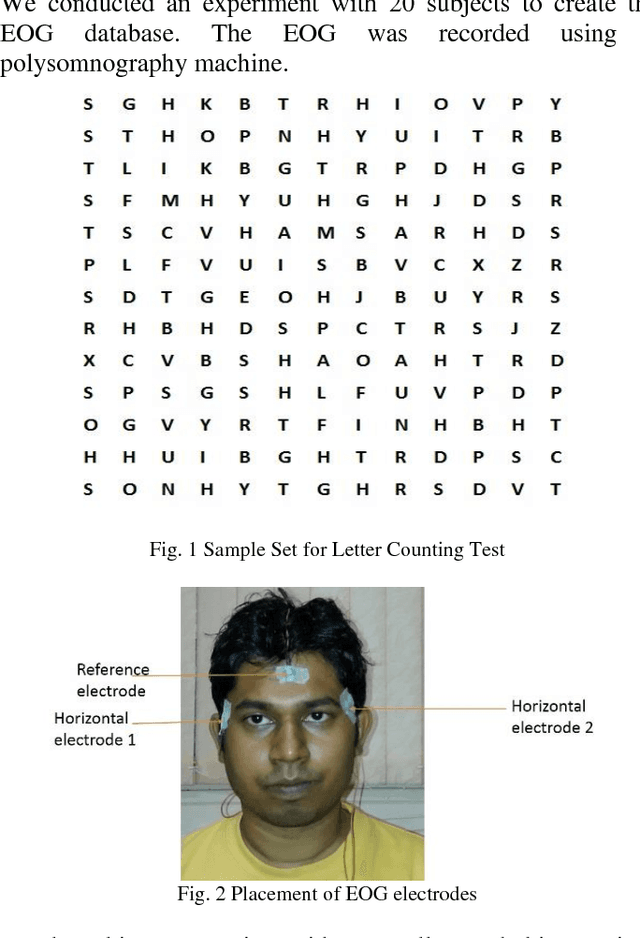
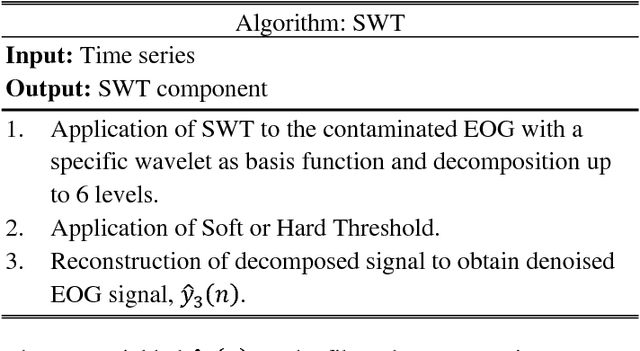
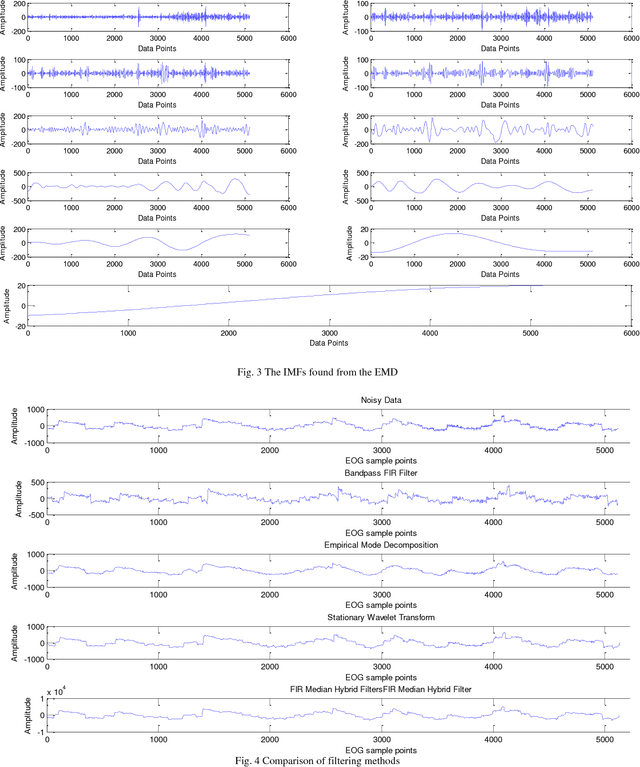
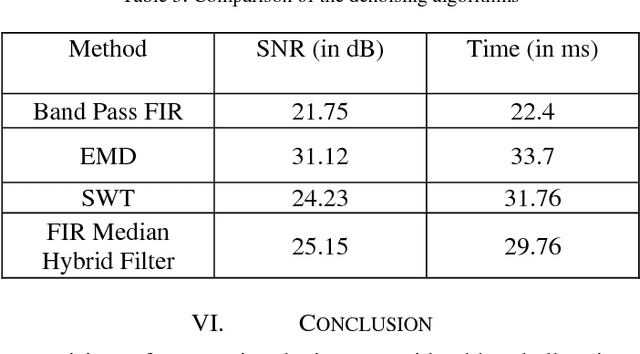
This paper evaluates four algorithms for denoising raw Electrooculography (EOG) data based on the Signal to Noise Ratio (SNR). The SNR is computed using the eigenvalue method. The filtering algorithms are a) Finite Impulse Response (FIR) bandpass filters, b) Stationary Wavelet Transform, c) Empirical Mode Decomposition (EMD) d) FIR Median Hybrid Filters. An EOG dataset has been prepared where the subject is asked to perform letter cancelation test on 20 subjects.
SPECFACE - A Dataset of Human Faces Wearing Spectacles
Aug 11, 2016
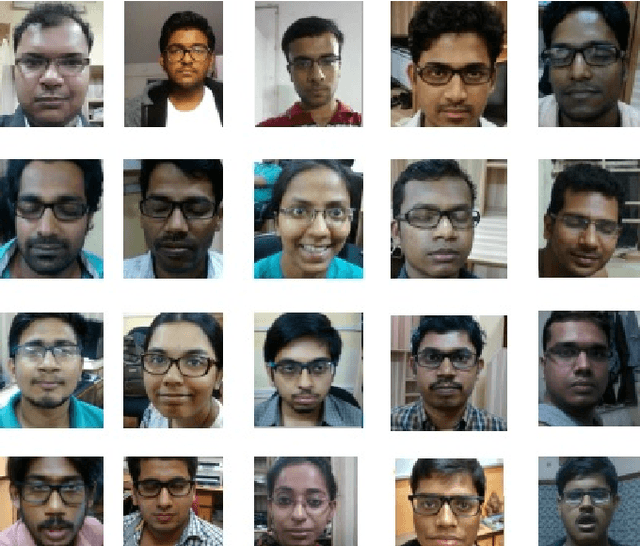

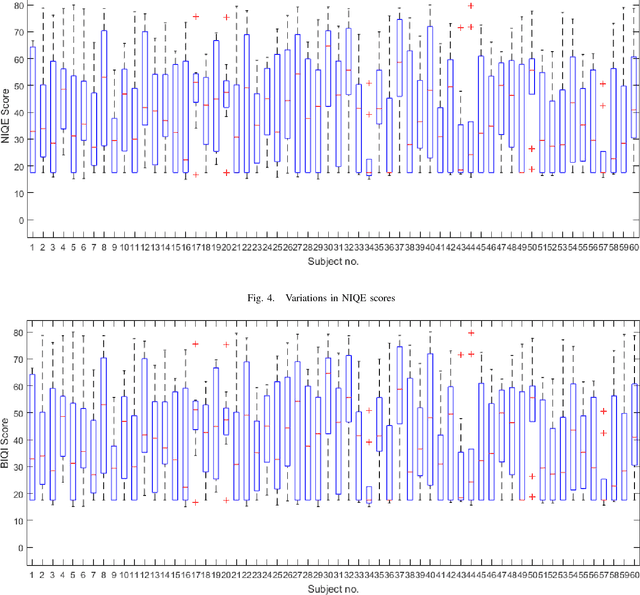
This paper presents a database of human faces for persons wearing spectacles. The database consists of images of faces having significant variations with respect to illumination, head pose, skin color, facial expressions and sizes, and nature of spectacles. The database contains data of 60 subjects. This database is expected to be a precious resource for the development and evaluation of algorithms for face detection, eye detection, head tracking, eye gaze tracking, etc., for subjects wearing spectacles. As such, this can be a valuable contribution to the computer vision community.
* 5 pages, 9 figures, 1 Table. arXiv admin note: text overlap with arXiv:1505.04055
Fast Computation of PERCLOS and Saccadic Ratio
May 29, 2015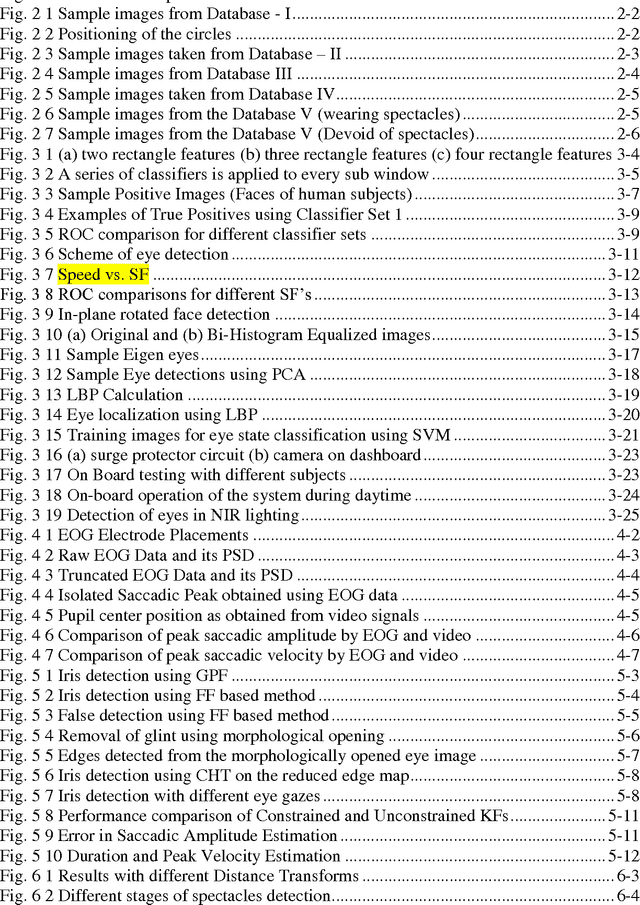
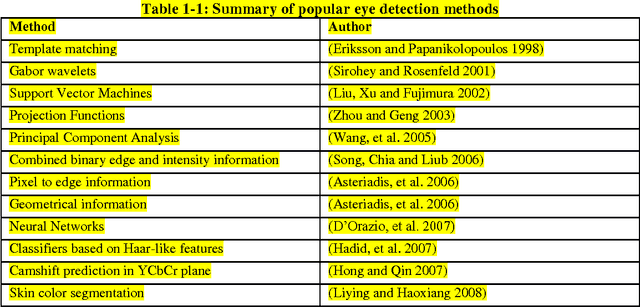
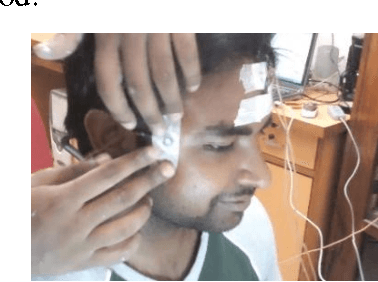
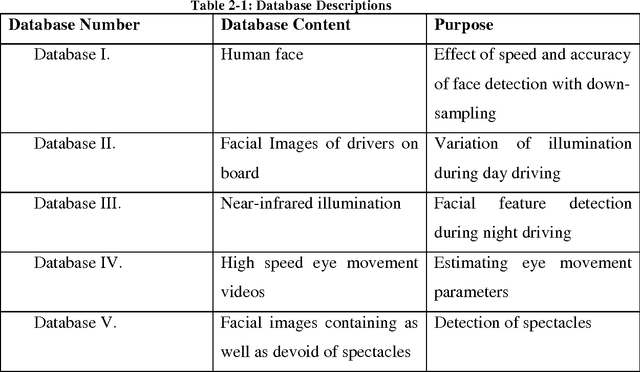
This thesis describes the development of fast algorithms for the computation of PERcentage CLOSure of eyes (PERCLOS) and Saccadic Ratio (SR). PERCLOS and SR are two ocular parameters reported to be measures of alertness levels in human beings. PERCLOS is the percentage of time in which at least 80% of the eyelid remains closed over the pupil. Saccades are fast and simultaneous movement of both the eyes in the same direction. SR is the ratio of peak saccadic velocity to the saccadic duration. This thesis addresses the issues of image based estimation of PERCLOS and SR, prevailing in the literature such as illumination variation, poor illumination conditions, head rotations etc. In this work, algorithms for real-time PERCLOS computation has been developed and implemented on an embedded platform. The platform has been used as a case study for assessment of loss of attention in automotive drivers. The SR estimation has been carried out offline as real-time implementation requires high frame rates of processing which is difficult to achieve due to hardware limitations. The accuracy in estimation of the loss of attention using PERCLOS and SR has been validated using brain signals, which are reported to be an authentic cue for estimating the state of alertness in human beings. The major contributions of this thesis include database creation, design and implementation of fast algorithms for estimating PERCLOS and SR on embedded computing platforms.
A Video Database of Human Faces under Near Infra-Red Illumination for Human Computer Interaction Aplications
May 15, 2015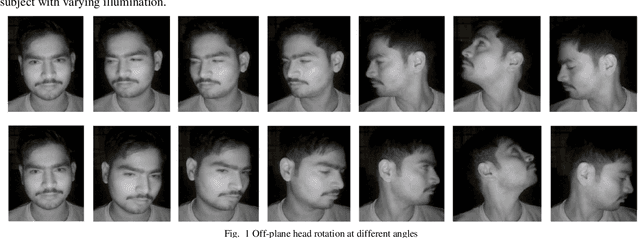
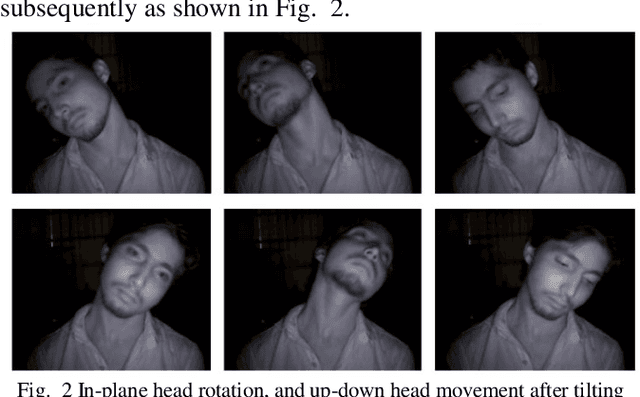
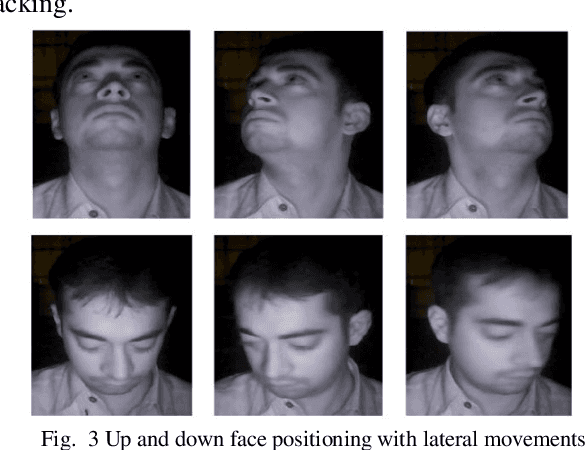
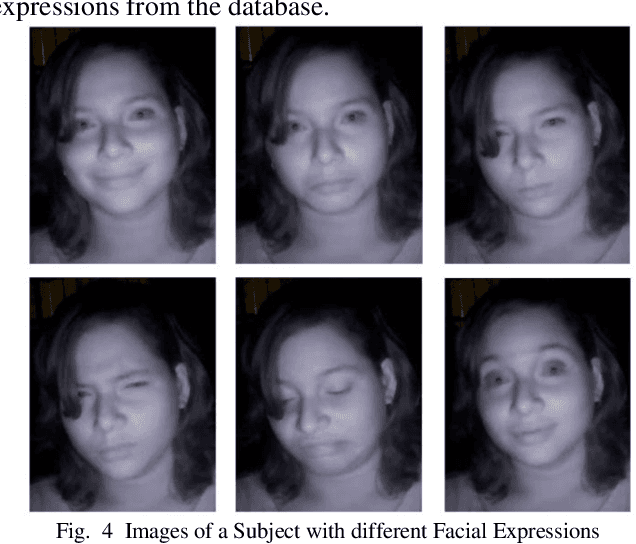
Human Computer Interaction (HCI) is an evolving area of research for coherent communication between computers and human beings. Some of the important applications of HCI as reported in literature are face detection, face pose estimation, face tracking and eye gaze estimation. Development of algorithms for these applications is an active field of research. However, availability of standard database to validate such algorithms is insufficient. This paper discusses the creation of such a database created under Near Infra-Red (NIR) illumination. NIR illumination has gained its popularity for night mode applications since prolonged exposure to Infra-Red (IR) lighting may lead to many health issues. The database contains NIR videos of 60 subjects in different head orientations and with different facial expressions, facial occlusions and illumination variation. This new database can be a very valuable resource for development and evaluation of algorithms on face detection, eye detection, head tracking, eye gaze tracking etc. in NIR lighting.
A Vision Based System for Monitoring the Loss of Attention in Automotive Drivers
May 13, 2015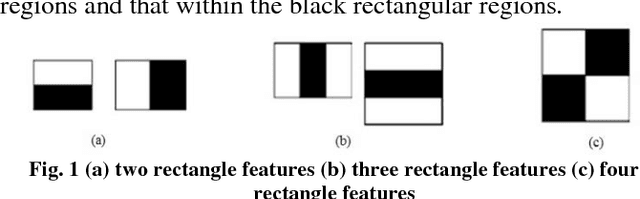
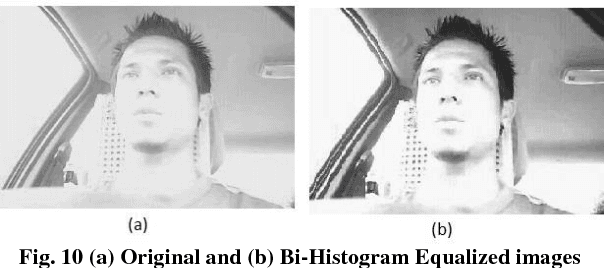
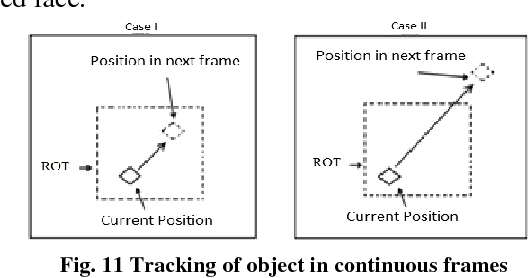
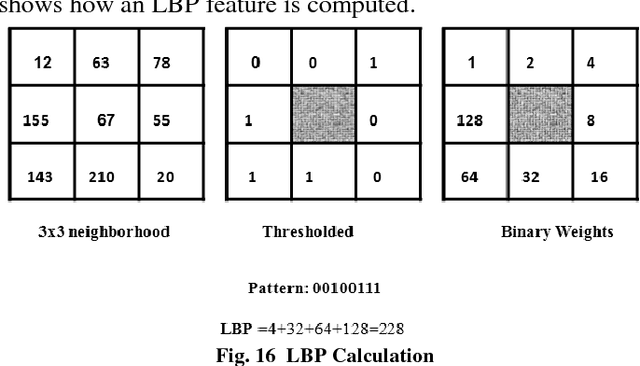
On board monitoring of the alertness level of an automotive driver has been a challenging research in transportation safety and management. In this paper, we propose a robust real time embedded platform to monitor the loss of attention of the driver during day as well as night driving conditions. The PERcentage of eye CLOSure (PERCLOS) has been used as the indicator of the alertness level. In this approach, the face is detected using Haar like features and tracked using a Kalman Filter. The Eyes are detected using Principal Component Analysis (PCA) during day time and the block Local Binary Pattern (LBP) features during night. Finally the eye state is classified as open or closed using Support Vector Machines(SVM). In plane and off plane rotations of the drivers face have been compensated using Affine and Perspective Transformation respectively. Compensation in illumination variation is carried out using Bi Histogram Equalization (BHE). The algorithm has been cross validated using brain signals and finally been implemented on a Single Board Computer (SBC) having Intel Atom processor, 1 GB RAM, 1.66 GHz clock, x86 architecture, Windows Embedded XP operating system. The system is found to be robust under actual driving conditions.
* 14 pages, 24 figures Journal article