 Add to Chrome
 Add to Firefox
 Add to Edge
Active Convolved Illumination with Deep Transfer Learning for Complex Beam Transmission through Atmospheric Turbulence
Dec 22, 2025
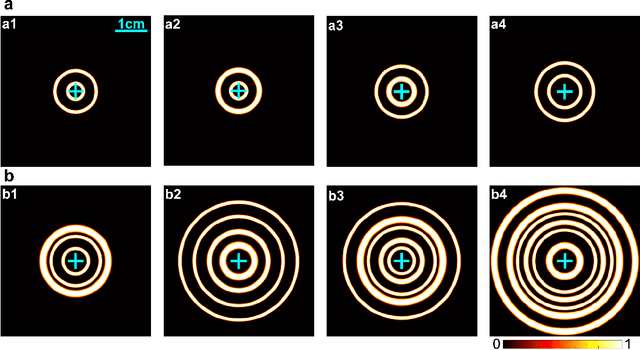
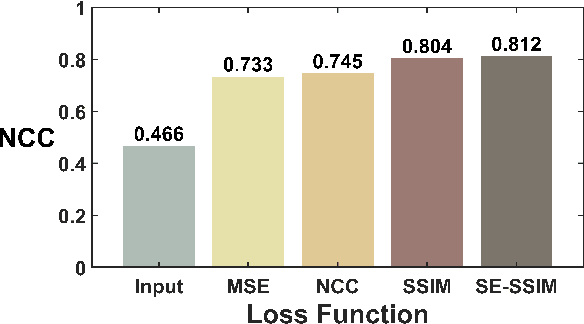
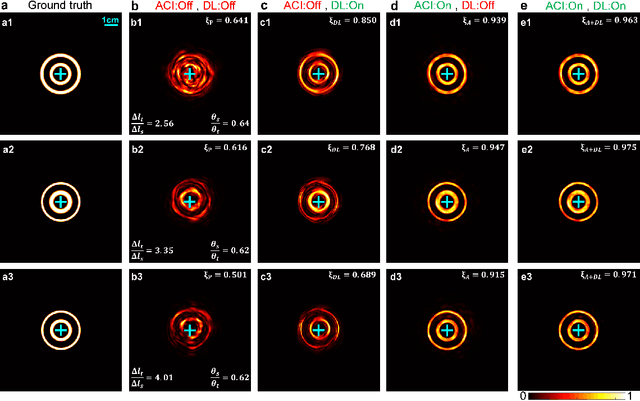
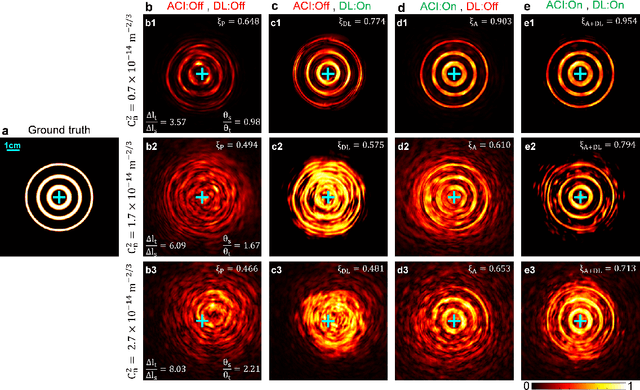
Atmospheric turbulence imposes a fundamental limitation across a broad range of applications, including optical imaging, remote sensing, and free-space optical communication. Recent advances in adaptive optics, wavefront shaping, and machine learning, driven by synergistic progress in fundamental theories, optoelectronic hardware, and computational algorithms, have demonstrated substantial potential in mitigating turbulence-induced distortions. Recently, active convolved illumination (ACI) was proposed as a versatile and physics-driven technique for transmitting structured light beams with minimal distortion through highly challenging turbulent regimes. While distinct in its formulation, ACI shares conceptual similarities with other physics-driven distortion correction approaches and stands to benefit from complementary integration with data-driven deep learning (DL) models. Inspired by recent work coupling deep learning with traditional turbulence mitigation strategies, the present work investigates the feasibility of integrating ACI with neural network-based methods. We outline a conceptual framework for coupling ACI with data-driven models and identify conditions under which learned representations can meaningfully support ACI's correlation-injection mechanism. As a representative example, we employ a convolutional neural network (CNN) together with a transfer-learning approach to examine how a learned model may operate in tandem with ACI. This exploratory study demonstrates feasible implementation pathways and establishes an early foundation for assessing the potential of future ACI-DL hybrid architectures, representing a step toward evaluating broader synergistic interactions between ACI and modern DL models.

Experimental realization of the active convolved illumination imaging technique for enhanced signal-to-noise ratio
Dec 31, 2021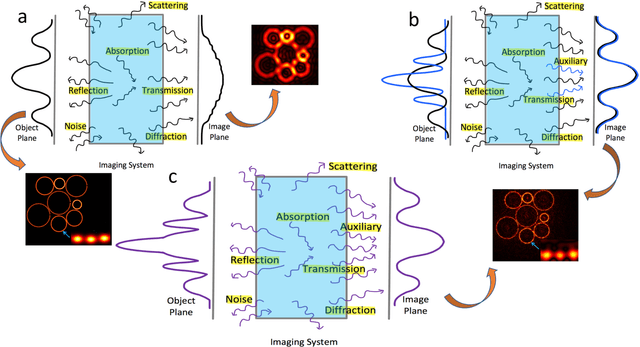
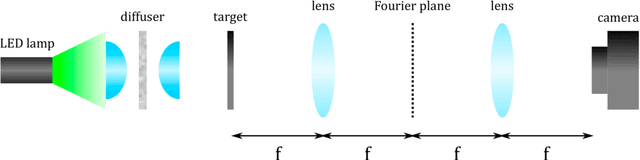
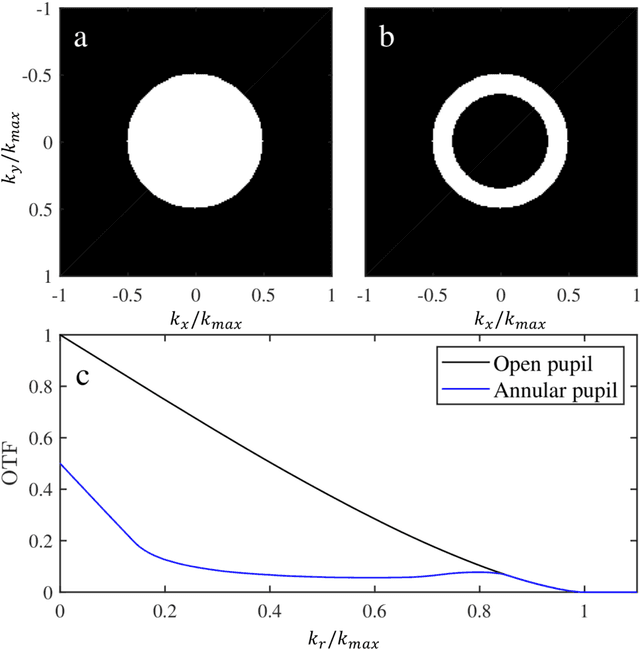
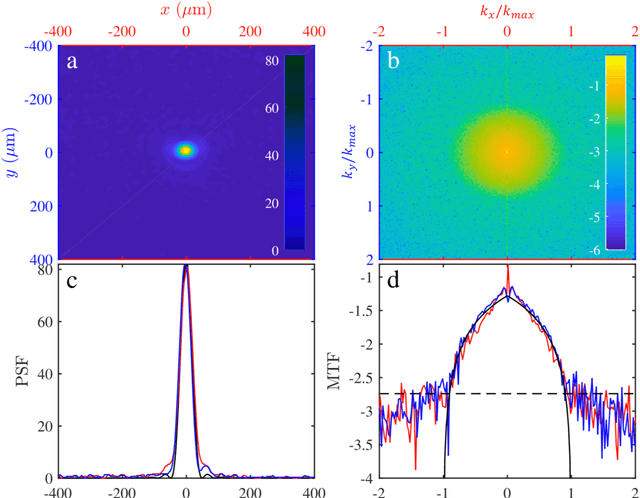
Imaging is indispensable for nearly every field of science, engineering, technology, and medicine. However, measurement noise and stochastic distortions pose fundamental limits to accessible spatiotemporal information despite impressive tools such as SIM, PALM/STORM, and STED microscopy. How to combat this challenge ideally has been an open question for decades. Inspired by a "virtual gain" technique to compensate losses in metamaterials, "active convolved illumination" has been recently proposed to significantly improve the signal-to-noise ratio, hence data acquisition. In this technique, the light pattern of the object is superimposed with a correlated auxiliary pattern, the function of which is to reverse the adverse effect of noise and random distortion based on their spectral characteristics. Despite enormous implications in statistics, an experimental realization of this novel technique has been lacking to date. Here, we present the first experimental demonstration. We find that the active convolved illumination does not only boost the resolution limit and image contrast, but also the resistance to pixel saturation. The results confirm the previous theories and opens up new horizons in a wide range of disciplines from atmospheric sciences, seismology, biology, statistical learning, and information processing to quantum noise beyond the fundamental boundaries.