 Add to Chrome
 Add to Firefox
 Add to Edge
Do Visual Features Improve Other-Initiated Repair Detection? A Dyadic Multimodal Approach
Jul 26, 2026
Other-initiated Self-repair, or in short Other-initiated Repair (OIR), is an essential mechanism in conversational interaction, whereby a recipient signals a problem in speaking, hearing, or understanding, prompting the previous speaker to resolve it. In the case of conversational agents, it is essential to accurately identify these repair initiation strategies to address communication breakdowns efficiently. While conversational analysis studies have shown that OIR initiation is accompanied by both verbal and non-verbal signals such as gaze shifts, facial expressions, body postures, and hand gestures, existing computational approaches rely mainly on text and audio. This paper introduces a novel multimodal model for OIR detection and classification, incorporating a set of visual features drawn from conversation analysis. We evaluate our approach on two corpora with distinct languages and interaction settings. Results demonstrate that visual information consistently improves performance over text and audio baselines, and provide insights into cross-modal feature contributions across two corpora.

Machine Learning-Based Completions Sequencing for Well Performance Optimization
Feb 23, 2024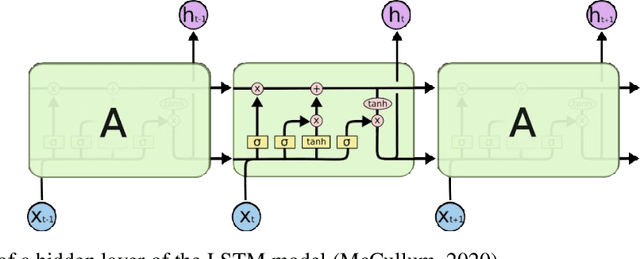
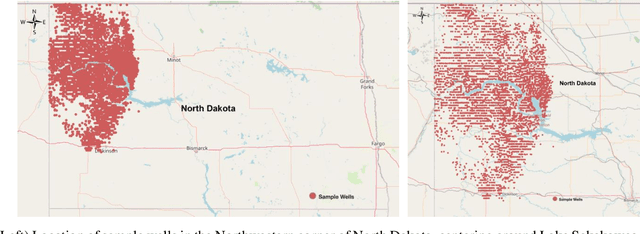
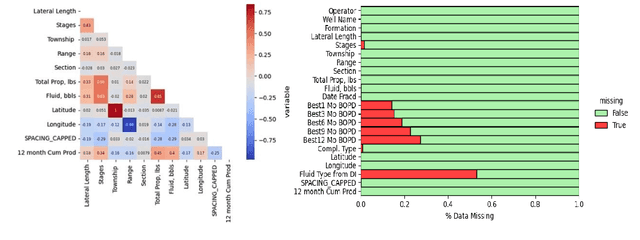
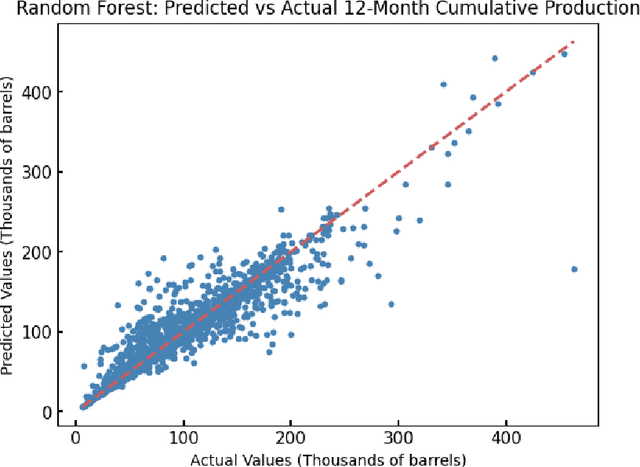
Establishing accurate field development parameters to optimize long-term oil production takes time and effort due to the complexity of oil well development, and the uncertainty in estimating long-term well production. Traditionally, oil and gas companies use simulation software that are inherently computationally expensive to forecast production. Thus, machine learning approaches are recently utilized in literature as an efficient alternative to optimize well developments by enhancing completion conditions. The primary goal of this project is to develop effective machine-learning models that can integrate the effects of multidimensional predictive variables (i.e., completion conditions) to predict 12-Month Cumulative Production accurately. Three predictive regression machine learning models are implemented for predicting 12-month cumulative oil production: Random Forest, Gradient Boosting, and Long Short-Term Memory Models. All three models yielded cumulative production predictions with root mean squared error (RMSE ) values ranging from 7.35 to 20.01 thousand barrels of oil. Although we hypothesized that all models would yield accurate predictions, the results indicated a crucial need for further refinement to create reliable and rational predictive tools in the subsurface. While this study did not produce optimal models for completion sequencing to maximize long-term production, we established that machine learning models alone are not self-sufficient for problems of this nature. Hence, there is potential for significant improvement, including comprehensive feature engineering, and a recommendation of exploring the use of hybrid or surrogate models (i.e., coupling physics reduced models and machine learning models), to ascertain significant contribution to the progress of completion sequencing workflows.