 Add to Chrome
 Add to Firefox
 Add to Edge
Transformers Can Learn Rules They've Never Seen: Proof of Computation Beyond Interpolation
Mar 17, 2026
A central question in the LLM debate is whether transformers can infer rules absent from training, or whether apparent generalisation reduces to similarity-based interpolation over observed examples. We test a strong interpolation-only hypothesis in two controlled settings: one where interpolation is ruled out by construction and proof, and one where success requires emitting intermediate symbolic derivations rather than only final answers. In Experiment 1, we use a cellular automaton with a pure XOR transition rule and remove specific local input patterns from training; since XOR is linearly inseparable, each held-out pattern's nearest neighbours have the opposite label, so similarity-based predictors fail on the held-out region. Yet a two-layer transformer recovers the rule (best 100%; 47/60 converged runs), and circuit extraction identifies XOR computation. Performance depends on multi-step constraint propagation: without unrolling, accuracy matches output bias (63.1%), while soft unrolling reaches 96.7%. In Experiment 2, we study symbolic operator chains over integers with one operator pair held out; the model must emit intermediate steps and a final answer in a proof-like format. Across all 49 holdout pairs, the transformer exceeds every interpolation baseline (mean 41.8%, up to 78.6%; mean KRR 4.3%; KNN and MLP score 0% on every pair), while removing intermediate-step supervision degrades performance. Together with a construction showing that a standard transformer block can implement exact local Boolean rules, these results provide an existence proof that transformers can learn rule structure not directly observed in training and express it explicitly, ruling out the strongest architectural form of interpolation-only accounts: that transformers cannot in principle discover and communicate unseen rules, while leaving open when such behaviour arises in large-scale language training.

Rendering Transparency to Ranking in Educational Assessment via Bayesian Comparative Judgement
Mar 17, 2025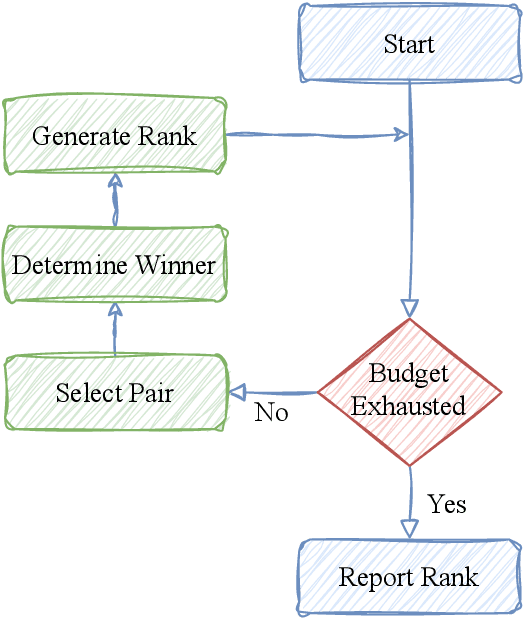
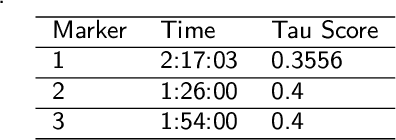
Ensuring transparency in educational assessment is increasingly critical, particularly post-pandemic, as demand grows for fairer and more reliable evaluation methods. Comparative Judgement (CJ) offers a promising alternative to traditional assessments, yet concerns remain about its perceived opacity. This paper examines how Bayesian Comparative Judgement (BCJ) enhances transparency by integrating prior information into the judgement process, providing a structured, data-driven approach that improves interpretability and accountability. BCJ assigns probabilities to judgement outcomes, offering quantifiable measures of uncertainty and deeper insights into decision confidence. By systematically tracking how prior data and successive judgements inform final rankings, BCJ clarifies the assessment process and helps identify assessor disagreements. Multi-criteria BCJ extends this by evaluating multiple learning outcomes (LOs) independently, preserving the richness of CJ while producing transparent, granular rankings aligned with specific assessment goals. It also enables a holistic ranking derived from individual LOs, ensuring comprehensive evaluations without compromising detailed feedback. Using a real higher education dataset with professional markers in the UK, we demonstrate BCJ's quantitative rigour and ability to clarify ranking rationales. Through qualitative analysis and discussions with experienced CJ practitioners, we explore its effectiveness in contexts where transparency is crucial, such as high-stakes national assessments. We highlight the benefits and limitations of BCJ, offering insights into its real-world application across various educational settings.
A Bayesian Active Learning Approach to Comparative Judgement
Aug 25, 2023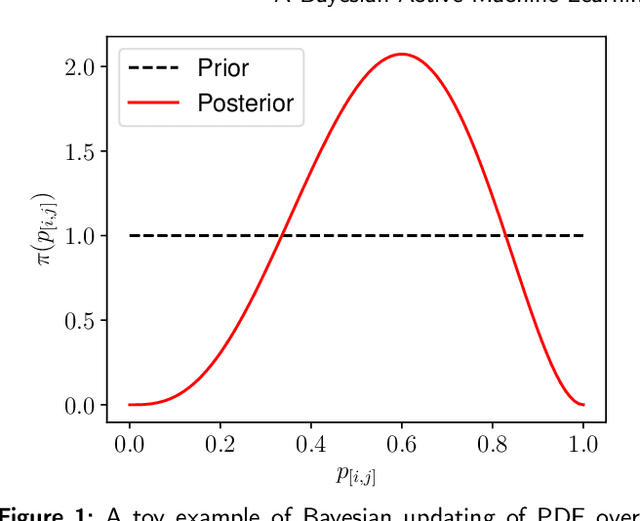
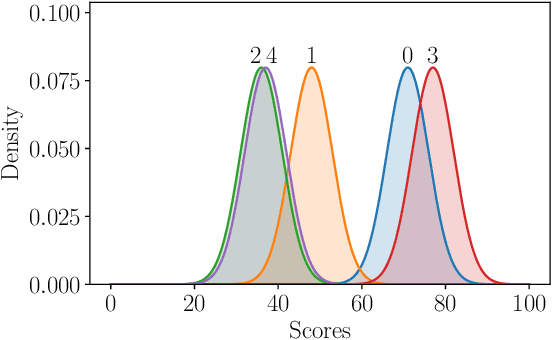
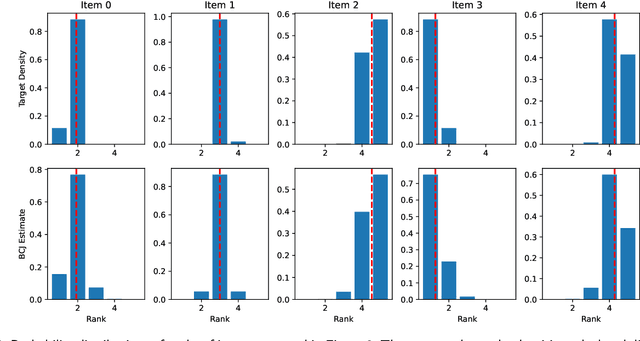
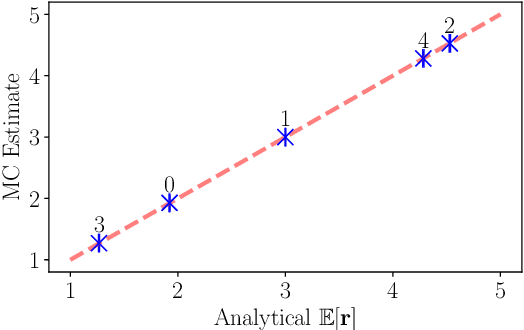
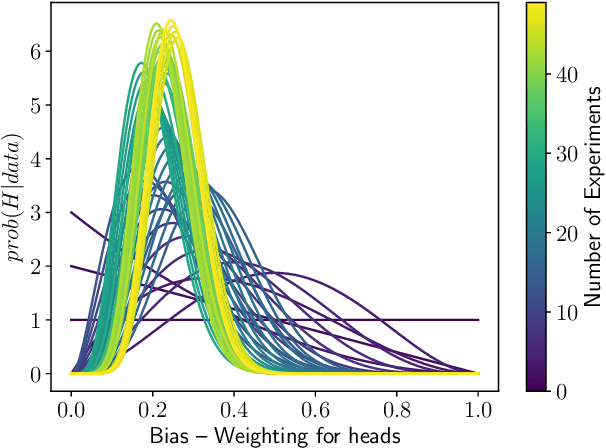
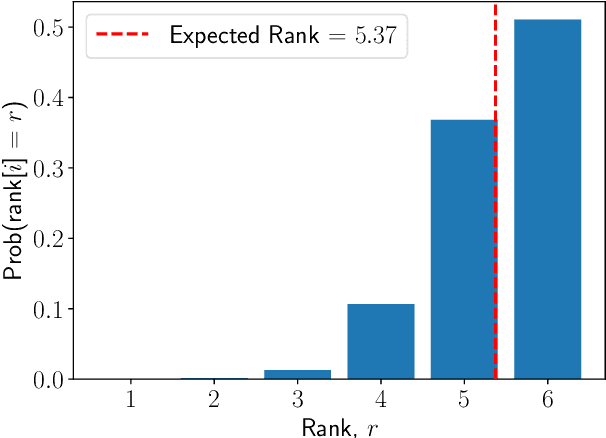
Assessment is a crucial part of education. Traditional marking is a source of inconsistencies and unconscious bias, placing a high cognitive load on the assessors. An approach to address these issues is comparative judgement (CJ). In CJ, the assessor is presented with a pair of items and is asked to select the better one. Following a series of comparisons, a rank is derived using a ranking model, for example, the BTM, based on the results. While CJ is considered a reliable method for marking, there are concerns around transparency, and the ideal number of pairwise comparisons to generate a reliable estimation of the rank order is not known. Additionally, there have been attempts to generate a method of selecting pairs that should be compared next in an informative manner, but some existing methods are known to have created their own bias within results inflating the reliability metric used. As a result, a random selection approach is usually deployed. We propose a novel Bayesian approach to CJ (BCJ) for determining the ranks of compared items alongside a new way to select the pairs to present to the marker(s) using active learning (AL), addressing the key shortcomings of traditional CJ. Furthermore, we demonstrate how the entire approach may provide transparency by providing the user insights into how it is making its decisions and, at the same time, being more efficient. Results from our experiments confirm that the proposed BCJ combined with entropy-driven AL pair-selection method is superior to other alternatives. We also find that the more comparisons done, the more accurate BCJ becomes, which solves the issue the current method has of the model deteriorating if too many comparisons are performed. As our approach can generate the complete predicted rank distribution for an item, we also show how this can be utilised in devising a predicted grade, guided by the assessor.